1. Introduction: Why Compare Dutch and German?
Dutch and German often get mistaken for siblings, close enough to resemble each other, yet different enough to confuse even experienced language learners. If you’ve ever looked at a Dutch sentence and thought it felt German, or listened to German and wondered why certain words sounded strangely familiar, you’re not alone. These two languages share deep historical roots, but modern speakers experience them in very different ways.
For learners deciding which one to study, understanding their similarities and distinctions can make the journey smoother. This is especially true if your native language is English. Because Dutch and German come from the same West Germanic family, English speakers unlock recognizable patterns early on, grammar structures, shared vocabulary, and even certain pronunciations.
In this article, we’ll break down the main differences between the two languages in a clear, practical way. You’ll see side-by-side comparisons, vocabulary examples, and audio clips. We’ll also highlight some quirky linguistic facts you might not know, including why Dutch often feels “lighter” to pronounce, or why German builds incredibly long compound words.
By the end, you’ll have a sharper understanding of the Dutch vs German language landscape and practical tips to choose the best learning path for your goals.
2. A Quick Overview of Dutch and German
Dutch and German are close relatives in the West Germanic language family, which also includes English. This shared ancestry explains why many learners feel an immediate sense of familiarity when encountering either language for the first time. But despite their common roots, Dutch and German developed in different cultural and historical directions, resulting in two distinct linguistic identities.
Historical Connection
Both languages evolved from early West Germanic dialects spoken across Northern Europe more than 1,500 years ago. Over time, communities along the Rhine and the North Sea interacted, traded, and migrated, creating a network of dialects that gradually formed the early versions of Dutch and German. However, as political borders solidified, especially during the Middle Ages, each region standardized its own writing system and pronunciation norms.
This is why German developed a stronger formal structure, while Dutch aligned itself more with coastal trade cultures, adopting a slightly more flexible approach to grammar and vocabulary.
How Similar Are They Today?
Linguists often describe Dutch as sitting somewhere between English and German. It shares the sentence structure and compound-word habits of German but uses vocabulary and pronunciation that feel lighter and more direct, closer to English in rhythm.
For example, compare the Dutch word “water” with the German word
Wasser
English speakers instantly recognize the Dutch version, while the German option feels more distant.
German also maintains a complex grammatical system, including gendered articles and cases. Articles such as
are essential parts of constructing a sentence correctly. Dutch, by contrast, simplifies many of these elements, making it slightly more approachable for beginners.
Why This Comparison Matters
Understanding this shared DNA, along with the distinct paths each language has taken, helps learners set realistic expectations. It also highlights what makes Dutch feel friendly and accessible, and what makes German powerful, structured, and precise.
3. Vocabulary Comparison: False Friends, Similar Words, and Unique Expressions
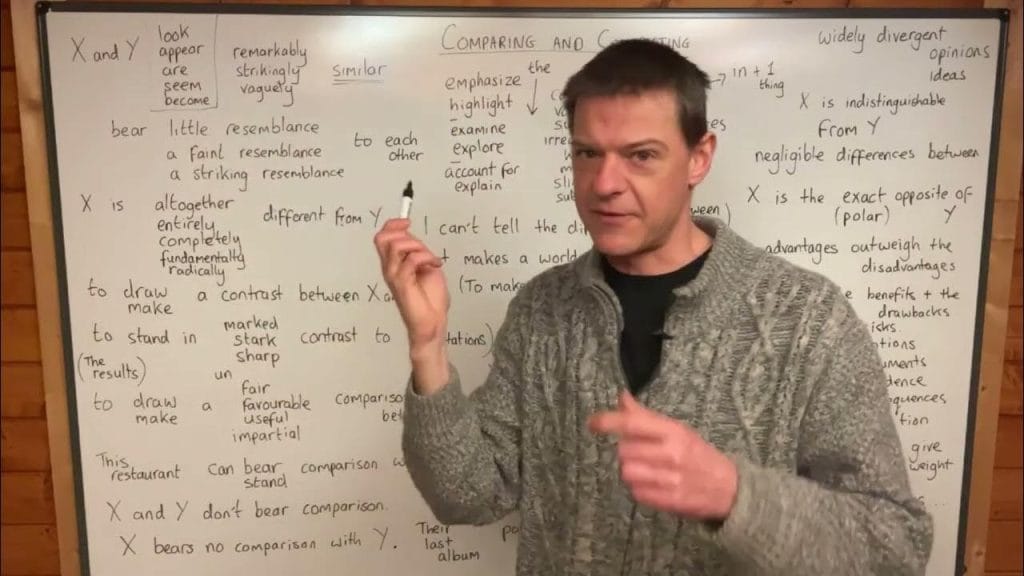
Dutch and German share a large number of cognates, words that look and sound alike because they come from the same linguistic ancestor. For English speakers, Dutch often feels more transparent, while German carries stronger pronunciation and spelling shifts. But the overlap between Dutch and German vocabulary can be both helpful and misleading.
Below is a clear breakdown of similarities, differences, and a few surprising “false friends” that can easily confuse learners.
1. Cognates That Make Learning Easier
Many Dutch and German words are nearly identical, which can speed up vocabulary acquisition if you study both languages. For example:
- Dutch “appel” and German “Apfel” (apple).
- Dutch “huis” and German “Haus” (house).
- Dutch “boek” and German “Buch“(book)
These pairs help learners quickly identify patterns in pronunciation shifts (for example, Dutch often keeps the “oo” or “oe” sounds, while German uses “u” or “au”).
2. False Friends to Watch Out For
False friends are words that look similar but have different meanings. These are some of the most common traps:
- Dutch “winkel” (shop) vs. German “Winkel“ (angle)
- Dutch “rok” (skirt) vs. German “Rock” (rock / skirt in older usage, but mostly “rock music” today)
- Dutch “bange” (scared) vs. German “bange/bang” (anxious, uneasy)
False friends often appear in daily conversation, so identifying them early prevents misunderstandings.
3. Unique Expressions That Show Cultural Differences
Some expressions reveal how each culture frames ideas differently. For example:
- Dutch uses “lekker” for everything enjoyable, food, weather, even activities.
- German uses precise, situational terms like “lecker” for food or “schön” for aesthetic pleasure.
You’ll also notice that German compounds can get very long, while Dutch prefers shorter, more accessible structures.
A classic German example is Geschirrspülmaschine (“dishwasher”), while Dutch uses the much shorter vaatwasser.
These differences may seem small, but they shape the rhythm and personality of each language.
4. Grammar Differences: Word Order, Cases, and How Sentences Work

Grammar is where Dutch and German truly separate. Even though they share the same linguistic roots, the way each language builds sentences, handles verbs, and marks grammatical relationships feels very different in practice. Understanding these contrasts helps learners anticipate what will feel intuitive, and what might require more practice.
1. Word Order: Dutch Is Flexible, German Is Structured
Both languages use verb-final constructions in certain situations, especially in subordinate clauses. However, German applies these rules more consistently.
German subordinate clause example:
Weil es regnet, bleibe ich zu Hause.
(“Because it’s raining, I stay home.”)
Dutch equivalent:
Omdat het regent, blijf ik thuis.
The Dutch sentence places the verb near the end, but Dutch word order allows more exceptions and doesn’t enforce the strict verb-final rule that characterizes German.
German word order often follows the V2 rule (verb in second position), while Dutch respects the same rule but with fewer rigid constraints in longer sentences. For learners, this means Dutch feels more forgiving, while German rewards precision.
2. Cases: The Big Divider Between the Two Languages
German uses a full four-case system (nominative, accusative, dative, genitive), which affects articles, adjectives, and sometimes nouns themselves. This system helps clarify grammatical roles in a sentence but adds a major learning curve.
Examples of case-marked articles:
- Nominative
- Accusative
- Dative
Dutch, by contrast, eliminated its case system centuries ago for everyday usage. Modern Dutch uses only two articles, “de” and “het”, with no case changes.
For learners, this creates a sharp contrast: Dutch grammar feels simpler and more aligned with English, while German provides more grammatical clarity at the cost of complexity.
3. Compound Words: German Builds, Dutch Simplifies
Both languages use compound nouns, but German takes this feature to the extreme.
Examples:
- German: Handschuh (“hand shoe” → glove)
- Dutch: handschoen
- German: Flughafen (“flight harbor” → airport)
- Dutch: vliegveld (“flying field”)
German compounds tend to be longer and more literal, while Dutch often opts for shorter, friendlier terms.
5. Pronunciation Differences: Sounds, Rhythm & Audio Examples
Pronunciation is one of the clearest markers separating Dutch from German. Even if you’ve never studied either language, you can hear immediately that Dutch has a lighter, more relaxed sound, while German tends to have sharper consonants and a more defined rhythm. Understanding these differences helps learners adjust their listening skills early on, and avoid developing habits that don’t transfer well between the two languages.
1. The Famous Dutch “G” vs. the German “ch” Sound
Dutch learners quickly encounter the throat-based “g” and “ch” sounds, harsher and more guttural than anything in English or German. In the Netherlands, this sound varies by region, but it’s generally produced further back in the throat.
German, on the other hand, uses two main “ch” sounds:
This distinction is consistent in German, while Dutch throat sounds fluctuate more across regions and speakers.
2. Vowel Length: German Is Precise, Dutch Is More Fluid
German uses strict vowel-length rules, which can change the meaning of a word entirely. For example:
Dutch vowels tend to vary more in everyday speech, and the distinction between long and short vowels is less rigid.
3. Rhythm and Melody: Dutch Feels “Flatter,” German More Structured
German sentence rhythm often feels punctuated and precise, with clear stress patterns and consistent intonation. Dutch, by contrast, has a flatter, more flowing melody, sometimes compared to English spoken with a softer accent.
Consider these two simple sentences:
- German: Wir gehen nach Hause.
- Dutch: We gaan naar huis.
German stresses the first syllable strongly, while Dutch distributes stress more evenly.
4. Final Consonants: Dutch Softens, German Stays Sharp
German often pronounces final consonants clearly, even sharply, as in
Hund (“dog”).
Dutch tends to soften equivalent endings:
hond (pronounced closer to “hont”).
6. Which Language Is Easier? Practical Learning Tips + Mini FAQ
Most learners want to know one thing: Is Dutch easier than German?
In many cases, yes, but the real answer depends on your goals, your native language, and how you prefer to learn.
1. Which Language Is Easier for English Speakers?
For English speakers, Dutch generally feels more accessible:
- simpler grammar
- no case system
- vocabulary closer to English
- softer pronunciation rules
However, German offers a clearer internal logic once you understand its structure. For learners who enjoy patterns and precision, German can feel very rewarding.
2. Practical Tips to Learn Dutch Efficiently
1. Focus on everyday vocabulary first.
Dutch is extremely functional in daily life, so learning words like eten, drinken, lopen, thuis pays off quickly.
2. Immerse yourself in Dutch listening early.
Podcasts like Echt Gebeurd or NOS op 3 help you understand natural rhythm.
3. Don’t fear the guttural “g” sound.
Exposure makes it easier, it doesn’t need to be perfect to be understood.
4. Learn basic sentence patterns before exceptions.
Dutch is forgiving; get comfortable with the main structure and refine later.
3. Practical Tips to Learn German Efficiently
1. Learn the articles with each noun from day one.
For example:
der Tisch (the table)
die Katze (the cat)
das Haus (the house)
This reduces confusion later when cases appear.
2. Understand case roles instead of memorizing charts.
Nominative = subject
Accusative = object
Dative = receiver
This mental shortcut makes grammar far easier.
3. Train your ear with short German clips.
Even 5-10 minutes of listening per day builds recognition of German’s sharper consonants and clear rhythm.
4. Use compound words to your advantage.
German compounds are long, but logical.
When you break them down, Hand + Schuh, Hoch + Schule, they become memorable.
Mini FAQ
Is Dutch really easier than German?
Generally, yes, especially for English speakers. Dutch grammar is lighter, and the vocabulary often resembles English.
Which language is more widely spoken?
German, by a large margin. It’s the most spoken native language in Europe, with over 90 million native speakers.
Does learning Dutch help with learning German later?
Absolutely. The shared vocabulary and structures give you a strong head start.
Is German pronunciation harder?
It depends on the sounds. The “ich” and “ach” sounds can be challenging, but German pronunciation rules are consistent.
Which language sounds more like English?
Dutch. Many English speakers say Dutch feels like “English with a twist.”
Summary
Learning Dutch and German can open doors personally, professionally, and culturally, but each language offers a very different experience. Dutch is direct, practical, and refreshingly accessible for beginners. German is more structured, logical, and globally relevant. Whether you want smoother travel in Europe, deeper cultural understanding, or new job opportunities, choosing between them depends on your goals and your learning style.
While Dutch often feels easier at the beginning, German rewards consistency with a rock-solid foundation that’s useful in business, academic contexts, and international careers. No matter which language you pick, immersion, daily listening, and consistent vocabulary practice will take you further than any grammar book alone.
Takeaway
If you want a fast, friendly start and everyday conversational ability, choose Dutch. If you want a globally useful language with strong cultural and professional value, choose German. Both are great, the “best” one is the one you will stay motivated to learn.
If you’re ready to take the next step in your language-learning journey, here are high-value resources that match the direction you choose. These are trustworthy platforms that offer structured lessons, quizzes, and real-world practice.
If you want to learn Dutch:
Duolingo Dutch
https://www.duolingo.com/course/nl/en/Learn-Dutch
A light, gamified introduction perfect for beginners.
https://www.dutchpod101.com/
Great for listening practice and beginner-friendly explanations.
Bart de Pau YouTube Channel
https://www.youtube.com/@learndutch
Clear and simple Dutch lessons designed for non-native speakers.
If you want to learn German:
Deutsche Welle: Learn German
https://learngerman.dw.com/en/overview
Comprehensive free courses from A1 to C2.
Lingoda German Courses
https://www.lingoda.com/en/german/
Structured classes with native teachers, excellent for serious learners.
Easy German YouTube https://www.youtube.com/c/EasyGermanVideo
Authentic street interviews that help you understand real spoken German.