First published: February 2025. Last updated: June 2026
Stem-changing verbs in Spanish mean the verb undergoes a vowel change in the last syllable of the stem. A verb form which gives the meaning to the verb is called the stem. If we want to identify the verb stem, we need to remove the verb ending (ar, er, ir).
You need to learn the stem-changing verbs to change the verbs from the infinitive to the first person, second person, or third person. Learning the stem-changing verbs and the rules to change them is essential because they help you increase your fluency in spoken Spanish.
Stem-changing verbs are part of the broader Spanish present tense system. If you need a refresher on regular AR, ER, and IR conjugations before tackling these irregular patterns, the Spanish present tense guide covers the full foundation.
What Is Stem Of A Spanish Verb
The part of a Spanish Verb that gives underlying meaning to the verb is called its stem.
When a verb is in its infinitive form and you remove the ending ar, er, and ir from the verb, the remaining part is the verb’s stem.
Let’s look at some examples to understand a Spanish Verb’s stem.
| Verb in English | Infinitive Form Spanish | Spanish Stem | Ending |
| To play | jugar | jug | ar |
| To sleep | dormir | dorm | ir |
| To dance | bailar | bail | ar |
When Does the Stem Change Happen
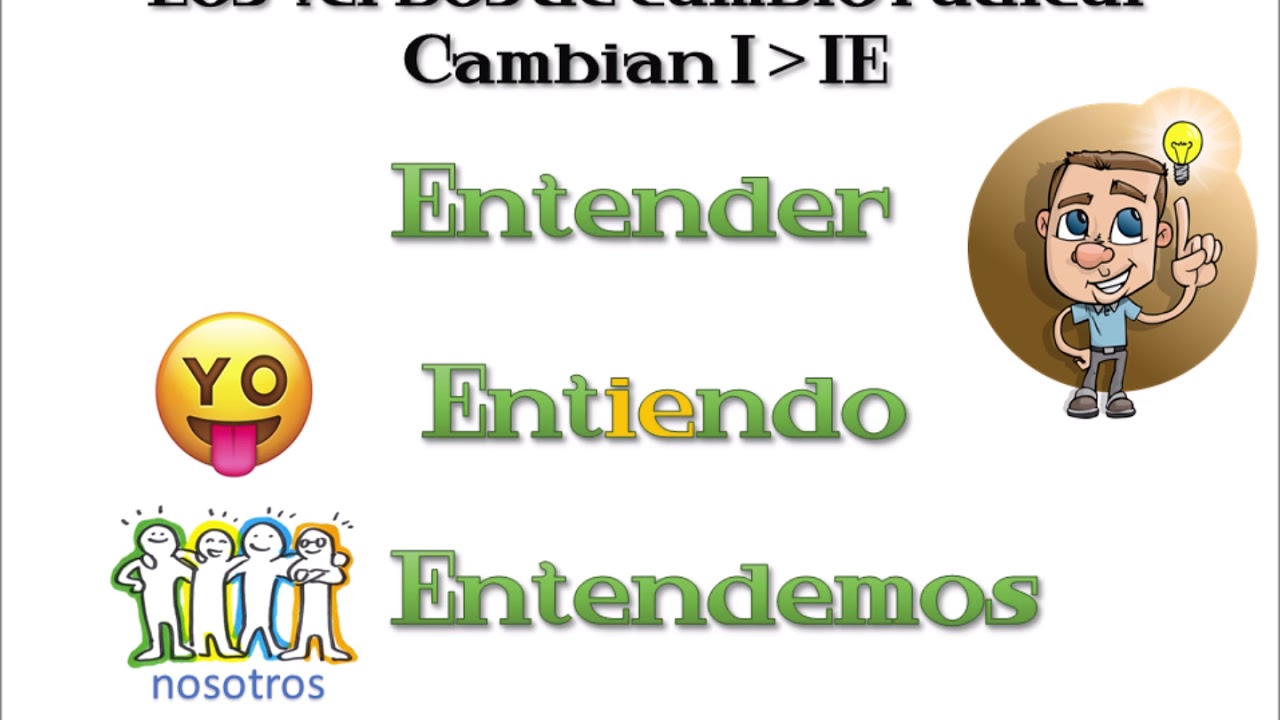
We can find that stem changes happen in all forms but not in nosotros and vosotros of the present indicative, subjunctive, and the imperative mood. These two forms maintain the original stem as it is.
What is a Stem-Changing Verb in Spanish?
In Spanish, verbs consist of two parts:
1. the stem – the base of the verb
2. the ending – the part that changes to match the subject when conjugated.
For example:
Viajar (to travel) → Stem: viaj- / Ending: -ar
Conocer (to know) → Stem: conoc- / Ending: -er
For most verbs, the stem remains the same in all conjugated forms, and only the ending changes as in:
Yo viajo (I travel) → Stem: viaj- / Ending: -o
Tú viajas (You travel) → Stem: viaj- / Ending: -as.
If you are still unsure about how to conjugate verbs in the present tense, we recommend checking out our Spanish high-frequency word list, where you will find the conjugation of common Spanish verbs.
However, in some verbs, the stem undergoes a vowel change in some conjugations. Many of these irregular verbs are among the Top 100 High-Frequency Spanish Words, so mastering them is essential if you are just starting to learn Spanish! Jolii lets you encounter stem-changing verbs in authentic Spanish content — so querer, poder, and pedir appear in real conversations rather than isolated drills, which is how the patterns actually become automatic.
Types of Stem Changes in Spanish
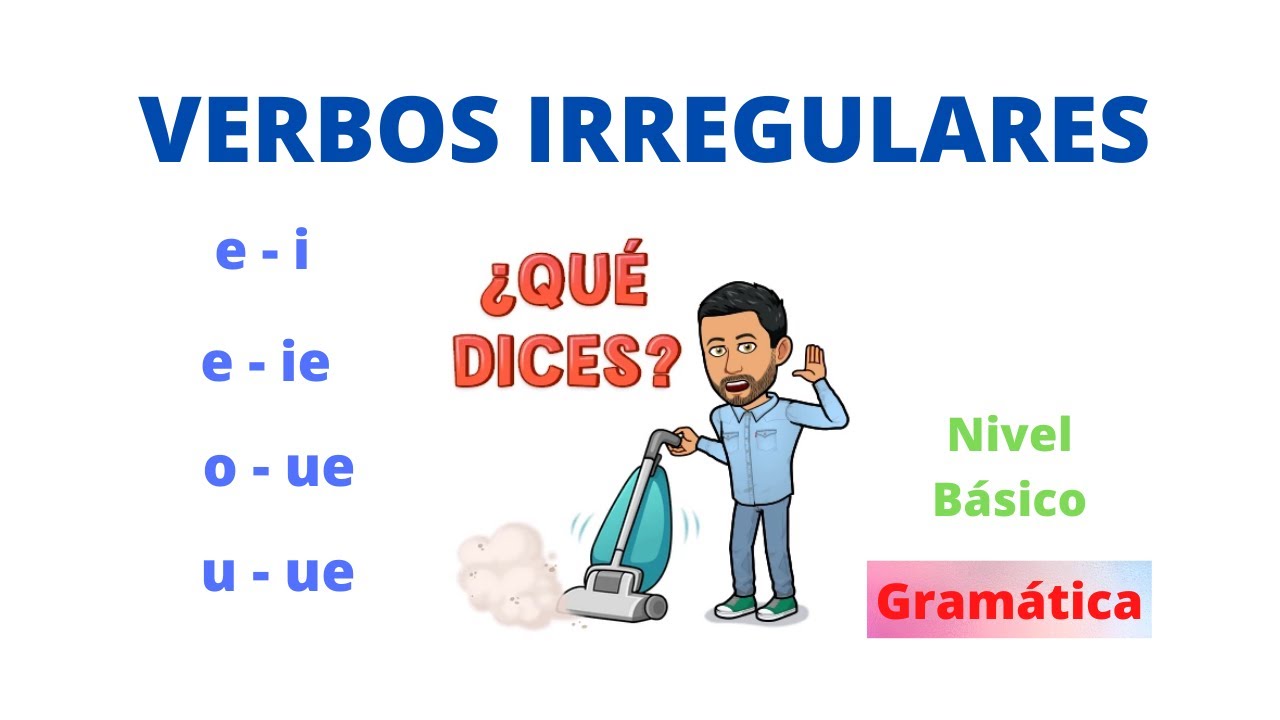
The stem in stem-changing verbs changes according to 5 different patterns:
1. E → IE → pensar (to think) → Yo pienso en ti. (I think about you.)
2. I → IE → adquirir (to acquire) → Él adquiere nuevas habilidades. (He acquires new skills.)
3. O → UE → dormir (to sleep) → Ellos duermen mucho los fines de semana. (They sleep a lot on weekends.)
4. U → UE → jugar (to play) → Tú juegas al fútbol. (You play soccer.).
5. E → I → pedir (to ask for) → Ella pide ayuda. (She asks for help.)
Rules for Stem-Changing Verbs in Spanish
Stem-changing verbs are also called boot verbs because the forms that change in the present tense (yo, tú, él/ella, ellos/ellas) create a ‘boot’ shape in conjugation tables, while nosotros and vosotros always remain unchanged. Here is an example of the verb querer (to want).

And here are the complete conjugations for all five cases.
| E → IE I → IE pensar (to think) | O → UEU* → UE (*only jugar)dormir (to sleep) | E → I pedir (to ask for) | |
| Yo | pienso | duermo | pido |
| Tú | piensas | duermes | pides |
| Él/Ella/Usted | piensa | duerme | pide |
| Nosotros/as | pensamos | dormimos | pedimos |
| Vosotros/as | pensáis | dormís | pedís |
| Ellos/Ellas/Ustedes | piensan | duermen | piden |
Common Stem-Changing Verbs in Spanish
Some of the most common stem-changing verbs.
| E → IE I → IE | O → UEU→ UE | E → I (only for -IR verbs) |
| adquirir (to acquire) cerrar (to close) entender (to understand) inquerir (to inquire) pensar (to think) perder (to lose) preferir (to prefer) querer (to want) | contar (to count) dormir (to sleep) encontrar (to find) jugar (to play) poder (to be able to) probar (to try) recordar (to remember) volver (to return) | competir (to compete) medir (to measure) pedir (to ask for) repedir (to repeat) servir (to serve) vestir (to dress) |
Spanish Stem Changing Verbs With Irregular Forms
Apart from these, there are some Spanish stem-changing verbs with irregular forms in the yo form.
| Verb (Translation) | Stem Change | Yo Form (Irregular) | Rest of the Verb |
| tener (to have) | E → IE | tengo | tienes, tiene, tenemos, tenéis, tienen |
| venir (to come) | E → IE | vengo | vienes, viene, venimos, venís, vienen |
| decir (to say, tell) | E → I | digo | dices, dice, decimos, decís, dicen |
| seguir (to follow) | E → I | sigo | sigues, sigue, seguimos, seguís, siguen |
| conseguir (to get, obtain) | E → I | consigo | consigues, consigue, conseguimos, conseguís, consiguen |
| corregir (to correct) | E → I | corrijo | corriges, corrige, corregimos, corregís, corrigen |
| elegir (to choose) | E → I | elijo | eliges, elige, elegimos, elegís, eligen |
| torcer (to twist) | O → UE | tuerzo | tuerce, torcemos, torcéis, tuercen |
| oír (to hear) | Unique Change | oigo | oyes, oye, oímos, oís, oyen |
How to Recognize Stem-Changing Verbs?
The Spanish language has both regular verbs and irregular verbs.
Regular verbs follow a set pattern when they need a conjugation.
- You will find these regular verbs following a set pattern of change.
- The stem of these verbs does not change in all forms.
- Only the verb endings change.
Stem-changing verbs have a vowel change when conjugated
- Most commonly, stem changes happen in the present tense.
- The most common changes are seen in e — o and O —ue.
When identifying stem-changing verbs, you need to recognize them in terms of these aspects.
Find the Vowel In Each Stem Of An Infinitive Verb
Identify the vowel in each stem.
- pensar → stem is pens-
- dormir → stem is dorm-
- pedir → stem is ped-
In the above examples, the vowels in the stem mentioned will change when conjugated.
Memorize Common Patterns
The change affects specific vowels in the stem. Here you go with some common changes.
- E → IE (e.g., pensar: yo pienso)
- O → UE (e.g., dormir: yo duermo)
- E → I (e.g., pedir: yo pido)
3. Learn Which Conjugations Are Affected
Not all forms get a stem change.
- It just happens in all singular forms like (yo, tú, él/ella) and third-person plural (ellos/ellas).
- We do not change the stem when it is used for nosotros and vosotros forms.
Example to Recognize the Pattern: “Dormir” (to sleep)
- Stem: dorm-
- Type of Change: O → UE
Conjugation Table
| Yo duermo | I sleep, stem changes to duerm- |
| Tú duermes | You sleep, stem changes to duerm- |
| Él/ella duerme | He/she sleeps, stem changes to duerm- |
| Nosotros dormimos | We sleep, stem stays dorm- |
Tip: Singular and ellos forms undergo a change. Nosotros and vosotros do not.
Conclusion
It is important to learn how the stem of verbs changes. These make you fluent in conversational Spanish and have deep ties to the grammatical aspects of correct sentence formation.
The key to mastering stem-changing verbs is encountering them in context rather than memorising tables in isolation. When you hear quiero un café in a real conversation, or ¿puedes ayudarme? in a scene from a show, the pattern registers differently than it does on a flashcard. That contextual exposure is what moves stem-changing verbs from rules you know to language you use automatically.
Once you’ve mastered stem-changing verbs in the present tense, the natural next step is understanding how they behave in the past — covered in the imperfect vs preterite guide.