Language has also been at the core of human connection. It would be impossible to communicate, inform, and interact with anyone if there was no language. The world has become more connected and with technological advancements, borders have virtually disappeared.
You might be born an English speaker, or you had English taught to you from childhood or you might be learning English for the first time. However, learning English which is a global language for the first time or simply to improve is certainly an exciting and daunting journey.
If you are here because you are wondering how to start this journey, you need to search no more. We will explore how English has evolved, how recent developments in AI, and which apps are great for learning English.
Now, let’s start with exploring how learning English has evolved through the years.
Evolution Of English Learning
In the 19th century, learning English was through translation. We can assume that most English learners in this period were learning as a second language. How translation worked was a word in let’s say French is translated to English and a student learns it.
There was no actual conversation. Students didn’t learn the proper pronunciation of a word or phrase.
However, this method traditional as it is, this method was very effective for huge numbers of students. Teachers could have fewer workloads as all they did was dictate and teach translations of the language to English.
The main problem was the lack of actual conversation with the teacher. Also, the hierarchy makes the teacher the most informed person in the class therefore there is no debate on how to use English in real-life events.
Let’s fast forward to the 20th and 21st centuries. Learning English evolved from translation to situational language learning. This new method takes a more active form. It also meant that English was incorporated into the learning of other subjects like science and history. This also led to a student-focused learning experience created around the four pillars of English learning which are listening, speaking, reading, and writing. With this method, students could focus on actually communicating in English.
Finally, we look at the present-day way of learning English. Now we have Communicative Language teaching (CLT), focused on developing a student’s communication skills and not just learning about grammar and vocabulary. We are not saying that you don’t need to learn these things, but rather you learn them and aim for better spoken and written English.
How AI Is Transforming English Learning
Looking at the revolution of English learning, we can see the ways it is both fulfilling and limited. AI has made headway into filling the gaps. This is how you can make use of AI to make your English learning journey easier.
- Personalized learning paths – When you look at traditional methods of English teaching, you can see that teachers already have a heavy workload managing each student’s learning. It is impossible to manage every student. So, what if we told you that AI language learning apps can give you a personalized learning experience? Each lesson is catered to your specific needs.
- Instant feedback – A teacher will take time to get back to you on your performance and progress reports. On the other hand, an AI-powered app will instantly tell you what you need to be working on and what you do very well.
- Immersive language learning – An AI language learning app features an immersive way to teach you English. For instance, you get an AI-powered chatbot that can engage with you in conversation in preparation for real-life conversations. You will get access to pronunciation exercises that will help make your speaking better. All of this helps you speak and write English better.
- Continuous learning – Maybe your traditional classes are scheduled for once a week. With an AI-powered app right on your phone, you get to learn at any time you choose. This means you can get to learn way more often than the schedule dictated by the school. You choose how often you learn.
- Access to a vast collection of learning materials – On one app, you may get more English learning materials than you have ever seen. You get to organize, curate, and make use of resources that will progress your English language learning faster.
- Breaking down language barriers – chances are, your first language is different from English. The good thing about apps is that they offer translation and interpretation services that help develop your English.
This is not to say that AI-powered apps have taken the place of traditional English learning methods. Rather, AI is supposed to make things easier and accessible for you.
Comparing Top AI English Learning Apps
Ai has revolutionized how we learn English. However, the options to consider are overwhelming. We will look for a few good options – the top AI English learning apps for you.
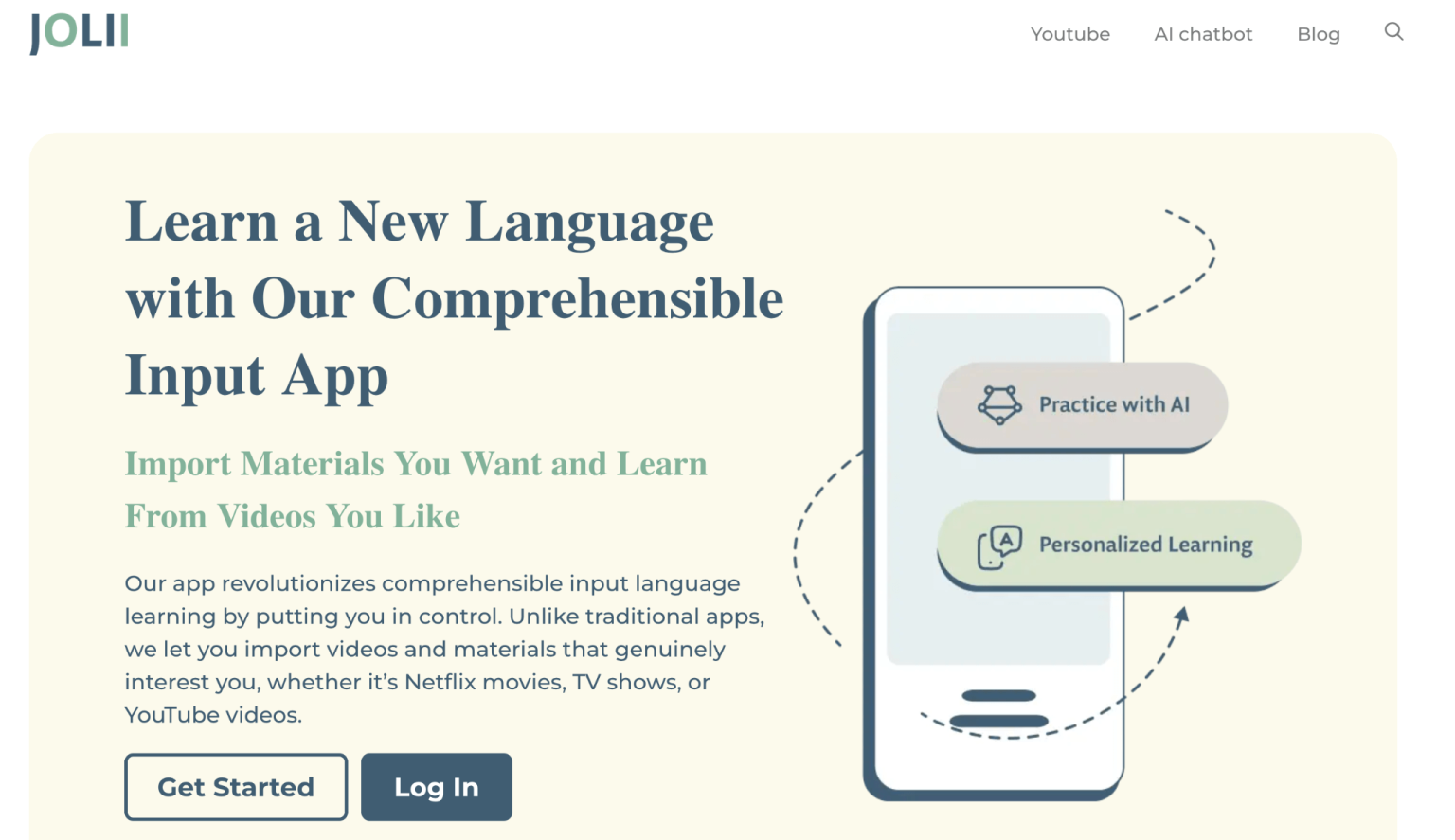
1. Jolii.Ai
Jolii is an innovative language learning app that combines cutting-edge AI with personalized lessons designed for beginner and intermediate learners, Jolii aims to make language acquisition fun, interactive, and effective. With Jolii app, you get.
- A vocabulary builder
- Grammar assistance
- Conversational AI
- Pronunciation practice
- Reading and listening comprehension
Jolii app makes learning English enjoyable, interactive, and tailored to your needs and when you are through Jolii’s extensive materials, you can consider the next app.
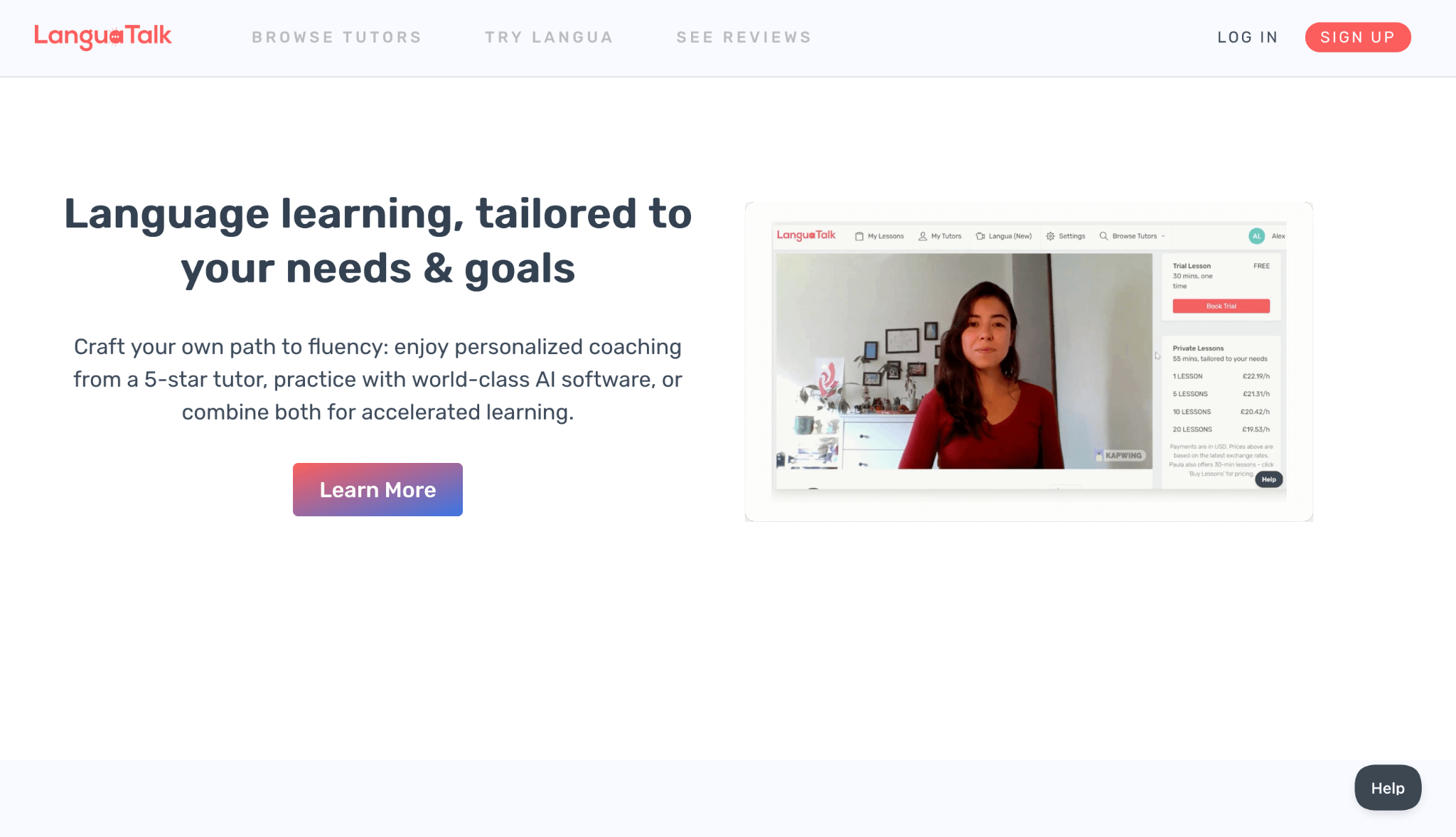
2. Langua
This is designed for the intermediate or advanced learner. It features:
- Provides a wide range of conversational tools
- Employs cutting-edge voice recognition
- Instant corrections and translations
The langua app is great. But it does not have a mobile app yet although it is optimized for web browsers.
Next, we look at one other app we can consider.
3. Univerbal
An interactive app that features a user-friendly interface. It is built for learners looking for a more gamified experience. The app also provides a levelled learning experience and structured role-plays to emulate conversations.
All these apps are capable of teaching you English. But in the next section, we will show you why the Jolii app is a good choice.
Why Jolii.ai is the Best Choice for Learning English
We have looked at how AI-powered apps will benefit your English learning journey. This is why.
- One thing about the Jolii app is that it offers a comprehensive input solution. We know that learning is not linear, each person has a different process. With the Jolii app you have complete freedom to import sources you believe are valuable for your English learning journey. Be it movies, YouTube videos, or games, Jolii lets you curate those for yourself. This approach is important as it is never going to get monotonous. Rather to you will be learning from the material you actually enjoy.
- Ai-Powered chatbot – practice speaking English with a powerful chatbot employed by the Jolii app.
- Personalized learning – with a vast number of resources at your fingertips, how you choose to use them is up to you. This means that your materials may look completely different from another learner. And Jolii app will let you have your personalized learning.
- Scheduled review – never underestimate the power of repetition exercises. The Jolii app offers regular exercises that test your understanding, and which will help you know how you are progressing.
- Progress tracking – the gamified feature of the Jolii app to keep track of your progress with a daily streak is simply amazing. You get to see how fast you are going and also get motivated to keep going.

You see, there is an app here that will turbocharge your English language journey. Now’s the time to put theory into practice. Here’s your action plan:
- Download Jolii.
- Take a placement test.
- Start learning with personalized lessons.
- Set a daily reminder. You may get busy, but consistency is your best bet to succeeding at learning a language.
- Challenge yourself and push yourself out of your comfort zone.
- Celebrate wins. Positive reinforcement will go a long way in motivating you to work harder.
Now you know what to do. How about we go ahead and get that app on our phone and learn some English? And you can best be sure that your English learning will be smooth, fun, and very rewarding with Jolii.ai.
Final Words
So, there you have it. English has come a long way from being taught through translation to our advanced AI models that can take you from non-English speaking to a fluent English speaker.
There are many options on how you can learn English. You can go to traditional mortar-and-brick schools and take an English course. Or you get an AI-powered app to be your personal tutor. And to help you we have given you some options of good apps you can trust.
And the rest is up to you. AI is still developing further, who’s to tell how better we can get with AI language apps? But you can get on the bandwagon now and reap the benefits of using AI to learn. Remember, learning English is an adventure and AI is your trusty guide.