Quick Answer (TL;DR)
You don’t learn Japanese from songs by memorizing lyrics.
Instead, you learn how meaning is shaped beneath the surface—through emotion, memory, and what is deliberately left unsaid.
That is exactly why “Lemon” by Kenshi Yonezu feels so real.
“Lemon” is the theme song of the 2018 drama Unnatural.
It quickly became one of the most iconic Japanese songs of its time, resonating deeply with listeners across Japan and beyond.
However, its success is not just about music.
It reflects something deeper:
👉 how Japanese encodes memory, loss, and emotion in an indirect and nuanced way.
And through this song, you can begin to understand how the language truly works.
When You Understand Words but Miss the Meaning
Many learners reach a frustrating stage.
They can:
- recognize vocabulary
- follow grammar
- understand translations
However, something still feels incomplete.
Even when every word is clear, the emotional meaning does not fully come through.
This happens because Japanese rarely communicates everything directly.
Instead, it often:
- softens meaning
- leaves things implied
- relies on context
As a result, translation alone is not enough.
Why Japanese Communication Is Indirect
To understand the language, you need to understand the culture.
In Japan, communication is shaped by values such as:
- harmony
- consideration
- emotional balance
From a young age, people are taught:
- not to inconvenience others
- not to express negative feelings too directly
- to maintain smooth relationships
This mindset is often linked to omotenashi—a form of thoughtful hospitality.
However, it also influences everyday language.
What This Looks Like in Real Life
Instead of saying “no,” people often say:
- 「ちょっと難しいですね」 (That might be difficult)
- 「考えておきます」 (I’ll think about it)
- 「今回は遠慮しておきます」 (I’ll pass this time)
- 「微妙ですね…」 (It’s a bit complicated)
These expressions sound neutral.
However, in many situations, they actually mean:
👉 “No.”
A Moment I Realized This Myself
When I first started working in Japan, I experienced this difference firsthand.
There was a colleague who trained me closely during my early days.
Because we communicated often, I assumed we were close enough to spend time outside of work.
So one day, I invited her to dinner.
She smiled and said:
👉 「考えておきます」 (I’ll think about it)
It sounded positive.
So I waited.
However, nothing happened.
No follow-up.
No confirmation.
At first, it felt confusing.
So I asked again another time.
And once again, the answer was:
👉 「考えておきます」 (I’ll think about it)
Eventually, I started to feel something was off.
Later, when we became closer, I asked her directly.
Why did she always say she would think about it, but never give a clear answer?
She looked surprised.
Then she said:
👉 “I thought you understood that meant no.”
In that moment, everything made sense.
The misunderstanding was not about vocabulary.
It was about how meaning is expressed.
The Same Pattern Exists in Music
This indirect way of expressing meaning does not only appear in daily conversation.
It becomes even more visible in music.
And “Lemon” is one of the clearest examples.

Why “Lemon” Feels So Real
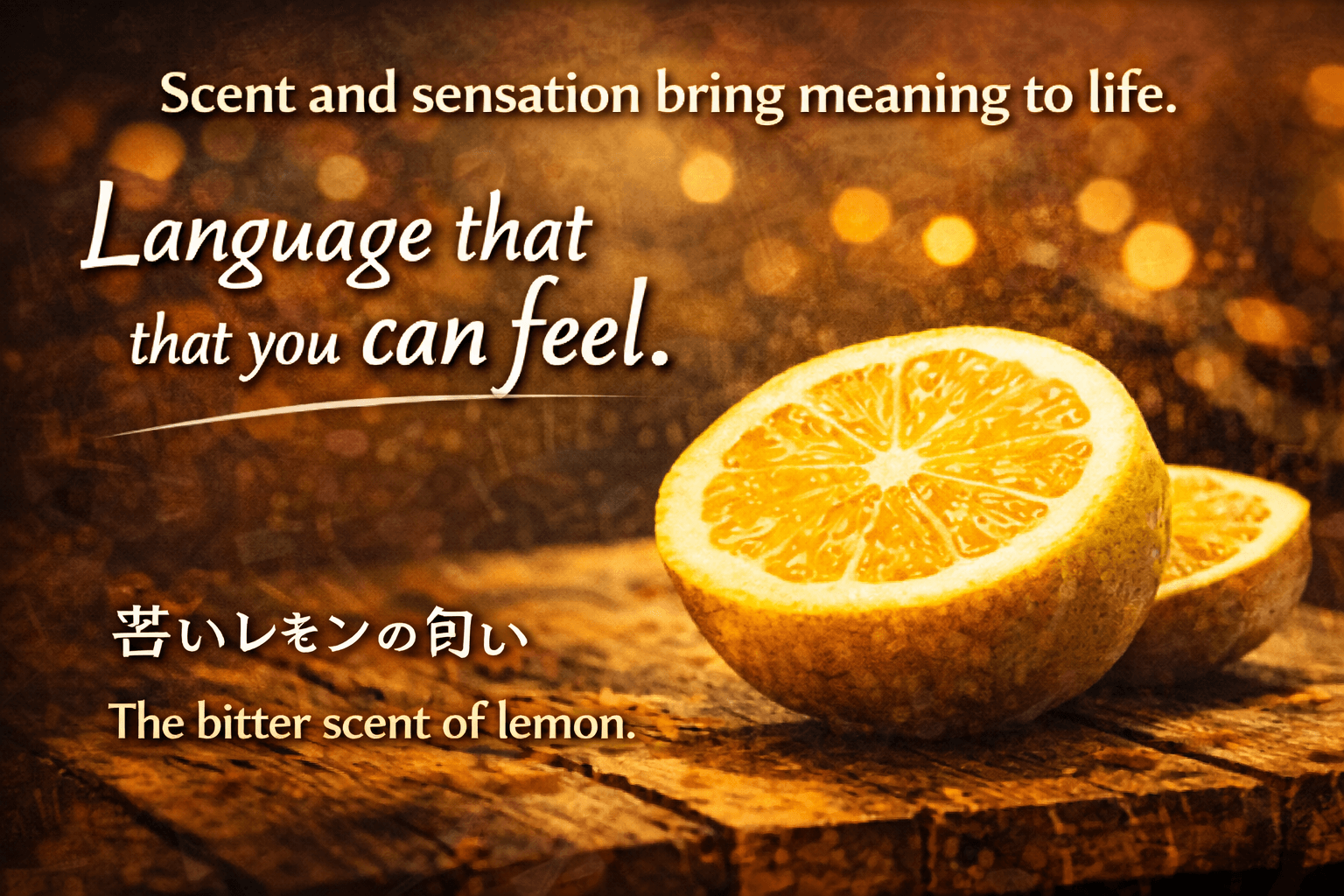
Unlike songs that describe emotions directly, “Lemon” builds meaning differently.
It does not clearly say:
- “I’m in pain”
- “I miss you”
Instead, it creates emotion through memory and experience.
Example 1

👉 「夢ならばどれほどよかったでしょう」
(How I wish it were only a dream)
This line does not explain the feeling directly.
Instead, it expresses a wish—leaving the emotion behind it for the listener to interpret.
Example 2
👉 「苦いレモンの匂い」
(The bitter scent of lemon)
This line uses sensory imagery.
Rather than explaining emotion, it lets you feel it.
Example 3

👉 「今でもあなたはわたしの光」
(Even now, you are still my light)
The expression is simple.
However, the emotional meaning is layered and not explicitly explained.
The Deeper Cognitive Insight
Language learning is not just about understanding words.
It is about understanding how meaning is built.
In Japanese:
- emotion is often implied
- context plays a central role
- meaning is shaped through experience
Because of that, learning becomes less about memorization
and more about interpretation.
Research on memory shows that repetition over time strengthens long-term retention, especially when learning is spaced across different moments.
At the same time, cognitive research shows that recognition and recall are different processes, meaning that understanding something in context does not guarantee the ability to use it independently.
In other words:
👉 Understanding is only the first step.
👉 Real fluency comes from being able to interpret and use meaning.
What “Lemon” Helps You Notice About Japanese
| What You See in the Song | What It Feels Like | What It Tells You About Japanese |
| Feelings are not said directly | You have to “sense” the emotion | Japanese often communicates indirectly |
| Use of smell and physical sensations | The emotion feels more vivid | Meaning is often connected to experience |
| Past and present mixed together | Time feels blurred | Japanese expresses emotion, not just timeline |
| Gentle and soft wording | The tone feels calm, even with heavy topics | How something is said matters as much as what is said |
Why This Matters for Fluency
Fluency is not just about speaking correctly.
It is about:
- understanding intention
- recognizing nuance
- responding appropriately
Without this, communication becomes mechanical.
Not All Content Teaches This
Some content:
- focuses on speed
- uses exaggerated dialogue
- lacks emotional depth
As a result, it does not reflect how real language works.
This is why choosing the right material matters.
For example:
👉 Learn Japanese Through “Banshaku no Ryuugi”: How Food, Context, and Everyday Speech Build Real Fluency
Because certain shows and songs provide the kind of context where meaning naturally emerges.
How to Learn from Songs Like This
Instead of translating line by line, try a different approach.
1. Feel Before You Translate
Focus on emotion first.
👉 Why: meaning comes before words
2. Notice What Is Implied
Pay attention to what is not directly said.
👉 Why: meaning is often hidden
3. Connect Language to Experience
Relate expressions to real-life situations.
👉 Why: memory strengthens understanding
4. Revisit with Awareness
Listen again with context in mind.
👉 Why: repetition deepens meaning
FAQs
Can songs really help you learn Japanese?
Yes. However, they are more useful for understanding nuance than grammar.
Why is Japanese often indirect?
Because the culture values harmony and emotional balance.
How can I understand hidden meaning?
Through repeated exposure and attention to context.
A Different Way to Learn with Jolii
Many learners stop at understanding words.
However, real progress comes from understanding meaning.
Jolii helps you:
- Focus on context instead of isolated vocabulary
- Recognize patterns instead of memorizing randomly
- See how language is used in real situations
As a result, you move beyond translation.
You begin to interpret naturally.
Final Thoughts
“Lemon” by Kenshi Yonezu is not just a song about loss.
It is an example of how Japanese expresses what cannot be said directly.
And that is the real challenge of learning the language.
Because fluency is not about knowing words.
It is about understanding meaning—even when it is hidden.