TL;DR
Some Netflix shows slow down language learning because the input is too fast, too stylized, or not comprehensible enough for the brain to process. Learning happens when input is understandable, predictable, and reusable — not when it feels overwhelming.
Not all Netflix shows are equally useful for language learning.
Some shows make learning harder because the language is too unnatural, too fast, or too disconnected from real conversation.
In many cases, the problem is not your ability—but the type of input your brain is receiving.
Why Some Shows Feel Impossible to Understand
Many learners have had this experience.
You start a new show in your target language.
Turn on subtitles.
Try to focus.
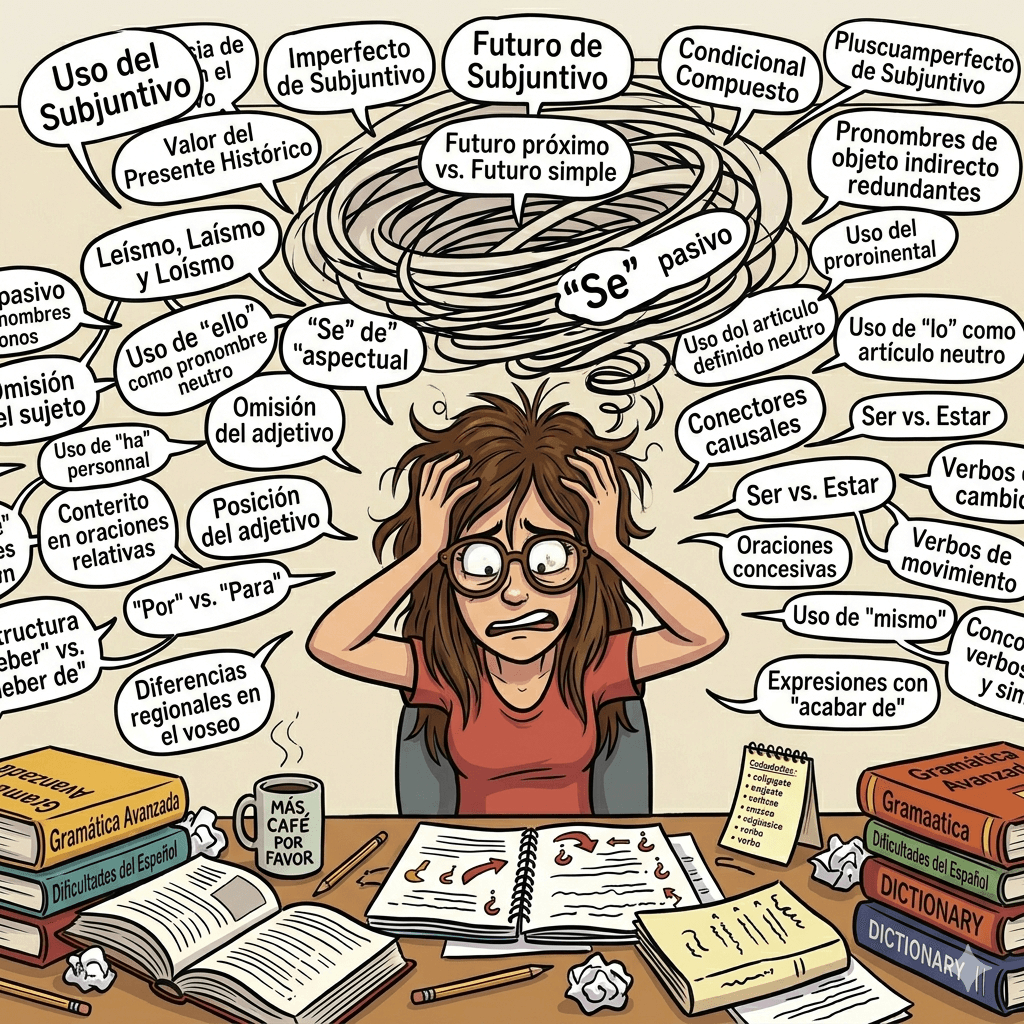
But after a few minutes, everything feels overwhelming.
The words blur together.
You lose track of meaning.
And eventually, you give up.
It’s easy to assume:
“This is too hard for me.”
But often, that’s not the real problem.
The issue is the type of language input.
Not all shows are designed in a way that supports learning.
And more importantly, not all input gives your brain something it can actually work with.
The Hidden Problem: Not All Input Works
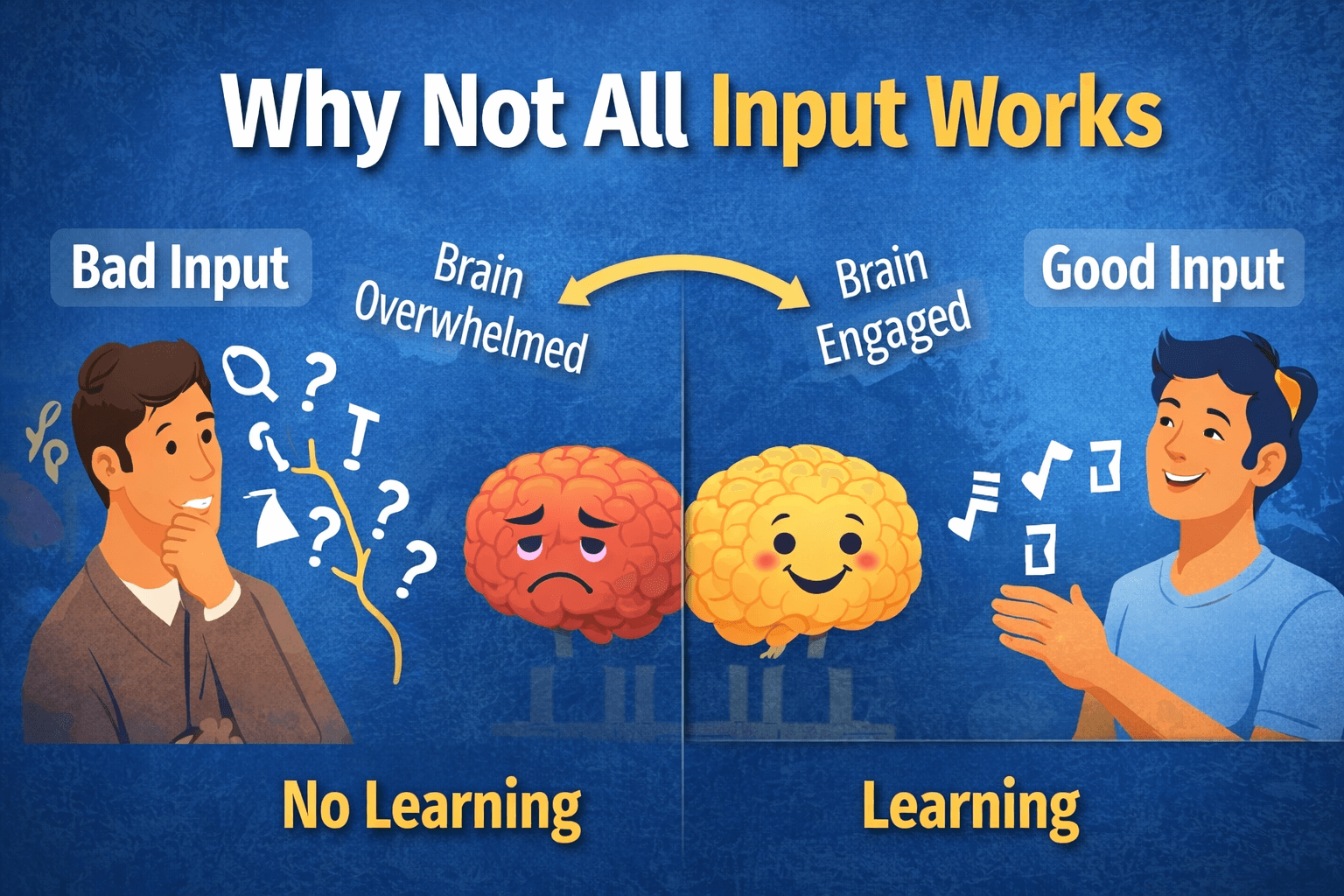
Language learning depends heavily on something called comprehensible input.
This idea comes from Stephen Krashen’s work, which suggests that learners progress best when they are exposed to language that is slightly above their current level—but still understandable with context.
When input becomes too difficult, the brain stops processing it effectively.
Instead of learning patterns, it switches into survival mode:
- Trying to decode sounds
- Guessing meaning
- Losing track of structure
At that point, exposure no longer leads to learning.
But something else happens too.
The brain begins to associate the experience with frustration.
And over time, that reduces motivation—even if the learner is still putting in effort.
Why Some Netflix Shows Make Learning Harder
Not all shows are equal.
Some are simply not built for language learning.
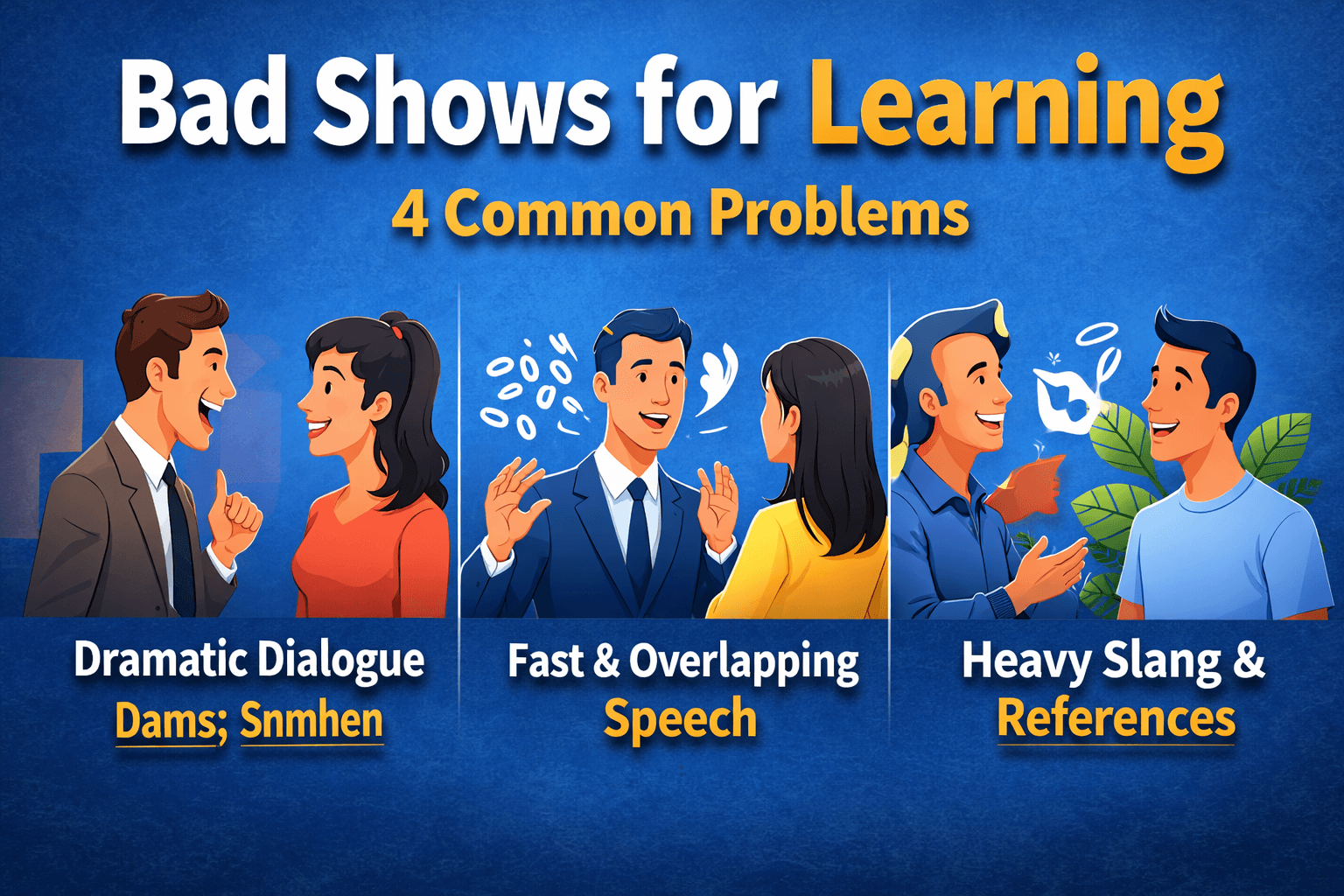
Here are a few common problems.
1. Overly Dramatic or Stylized Dialogue
In some shows, characters don’t speak like real people.
They:
- Exaggerate emotions
- Use unusual phrasing
- Speak in dramatic tones
This makes the language:
- Harder to predict
- Less reusable in real conversation
Your brain struggles to extract patterns.
Even if you understand the meaning, it doesn’t easily transfer to real-life usage.
2. Extremely Fast or Overlapping Speech
Some shows feature:
- Rapid dialogue
- Interruptions
- Multiple people talking at once
This creates a listening environment that is too dense.
Even native speakers sometimes find this difficult.
For learners, it becomes overwhelming.
And when processing load becomes too high, the brain stops noticing details.
It only tries to keep up.
3. Heavy Use of Slang or Cultural References
Certain shows rely heavily on:
- Slang
- Jokes
- Cultural context
Without background knowledge, the meaning becomes unclear.
The brain cannot connect form to meaning effectively.
So even if you hear the same phrase multiple times, it doesn’t stick.
4. Low Context Clarity
In some scenes, there is very little visual support.
Characters may:
- Speak off-screen
- Refer to past events
- Use indirect language
Without clear context, comprehension drops.
And when comprehension drops, learning slows down.
This is the same principle behind Finding the Sweet Spot — the Goldilocks zone between too easy and too hard is where learning actually happens.
The Cognitive Cost of Bad Input
When input is too difficult or unclear, the brain changes strategy.
Instead of learning, it focuses on:
- Decoding
- Guessing
- Surviving the conversation
Research in second language acquisition consistently shows that learners need to understand input for learning to happen. When input is not comprehensible, it cannot be effectively processed or stored.
This is why some shows feel exhausting rather than helpful.
You are exposed to language—but not learning from it.
A Moment I Realized This Myself
I remember trying to watch a fast-paced Korean variety show.
At first, I thought it would be great practice.
There were lots of conversations.
Lots of reactions.
Lots of natural speech.
But after a few episodes, I noticed something.
I wasn’t improving.
I was just trying to keep up.
People were talking over each other.
Sentences were cut off halfway.
Jokes relied on cultural references I didn’t understand.
I kept watching, hoping it would get easier.
But it didn’t.
It just became tiring.
And the strange part was this.
I was spending more time than before.
But learning less.
That was when I realized something important.
More exposure does not always mean better learning.
The quality of input matters just as much as the quantity.
What Makes a Show Good for Learning?

Not all content is bad.
In fact, some shows are extremely effective for language learning.
The difference comes down to a few key factors.
Characteristics of Good Learning Input
| Feature | Why It Helps |
| Clear speech | Easier to process sound patterns |
| Natural pacing | Allows prediction and comprehension |
| Strong visual context | Supports understanding without translation |
| Repetitive structures | Reinforces language patterns |
Good input helps the brain:
- Recognize patterns
- Predict meaning
- Build fluency gradually
It also reduces cognitive load.
Which means the brain has more capacity to notice details instead of just trying to survive the input.
This connects directly to The Affective Filter — when input feels overwhelming, anxiety rises and the brain shifts further away from learning mode.
Why Micro-Immersion Still Works
Even if some shows are not ideal, the method still matters.
Short, focused exposure to the right kind of content can be very powerful.
Instead of consuming large amounts of difficult content, you focus on segments that are:
- understandable
- repeatable
- meaningful
If you want to understand this idea more deeply, you can read here: The Science of “Micro-Immersion”: How 15 Minutes of Netflix Beats a 1-Hour Textbook Session
How to Choose Better Content
Here are three simple ways to avoid bad input.
1. Choose Slower, Dialogue-Driven Shows
Avoid chaotic formats.
Look for:
- Interviews
- Slice-of-life dramas
- Simple conversations
2. Test Comprehension Quickly
Watch for 2–3 minutes.
Ask yourself:
- Can I follow the general meaning?
- Can I recognize recurring phrases?
If not, it may be too difficult.
3. Focus on Reusable Language
Many shows contain language you will never use.
Instead, focus on:
- Everyday expressions
- Common sentence patterns
- Natural reactions
This makes your learning more practical.
Why Difficulty Alone Doesn’t Create Learning
There is a common belief that harder content leads to faster improvement.
But difficulty alone is not enough.
If the input is too far above your level, the brain cannot process it effectively.
Learning happens when there is a balance between:
- Challenge
- Understanding
Too easy → NO growth
Too hard → NO learning
The sweet spot is where the brain can still follow meaning while noticing new patterns.
FAQs
1. Are difficult shows completely useless?
Not completely.
They can help with exposure, but they are less efficient for learning.
2. Should I avoid slang completely?
No.
But too much slang too early can make learning harder.
3. What is the best type of Netflix content for beginners?
Slower-paced shows with clear dialogue and strong visual context.
A Simple Way to Make This Work
One challenge is finding content that is both engaging and learnable.
That’s where tools like Jolii can help.
Instead of relying on random shows, you can:
- Focus on short, curated segments
- Use dual subtitles
- Replay key moments
This makes it easier to stay within the range of input your brain can actually process.
Final Thoughts
Not all exposure leads to learning.
Some input overwhelms the brain.
Some input supports it.
The key is not to consume more—but to choose better.
Because when the input is right, learning starts to feel natural again.