First published: March 2026. Last updated: June 2026
Thinking in your target language is not something that suddenly “happens” after years of study.
It develops gradually as your brain begins retrieving words and structures automatically without translating from your native language.
Most learners start thinking in a new language when three conditions are met:
- Frequent exposure to natural input
- Repeated retrieval of familiar patterns
- Reduced dependence on mental translation
In other words, thinking in the language is not a separate skill — it is the result of automatic retrieval built through structured exposure.
Why Thinking in Another Language Feels So Difficult
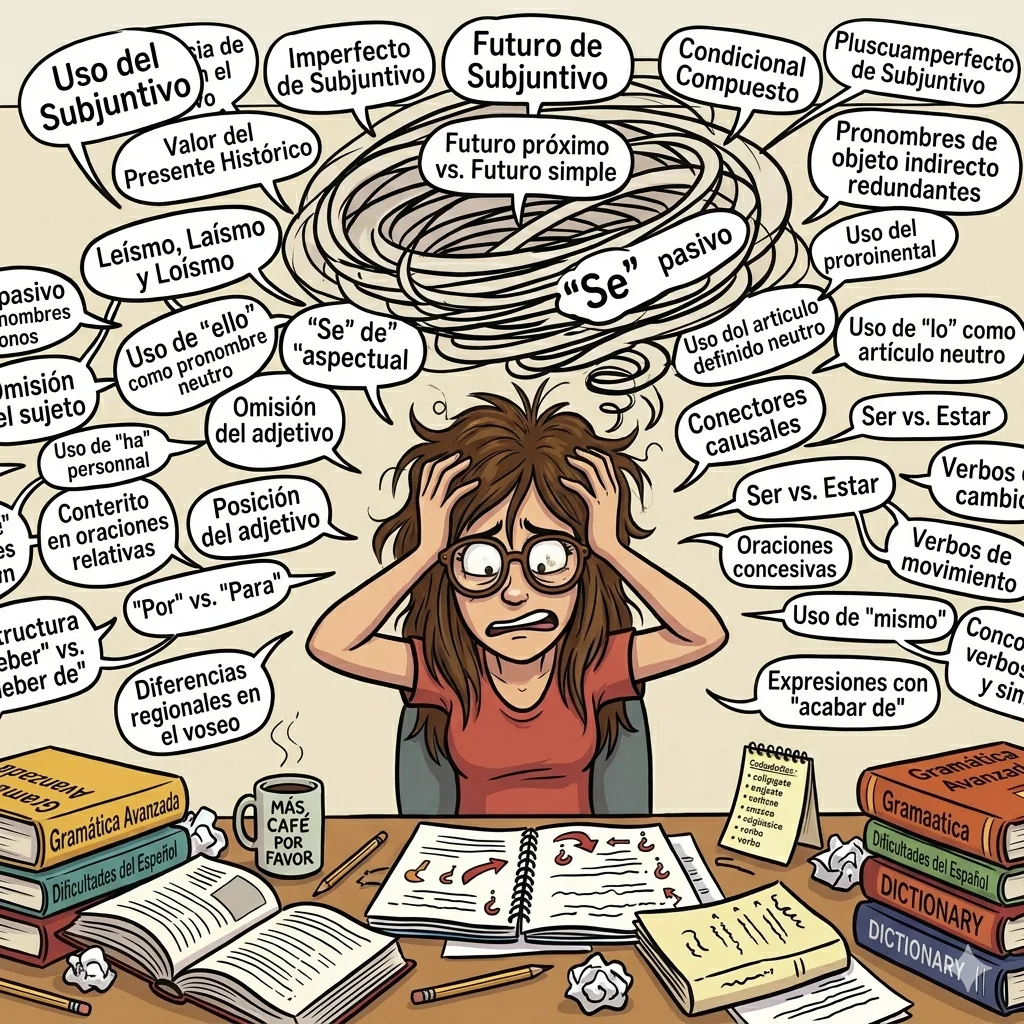
Many learners feel stuck in translation mode.
You hear a sentence, understand it, but when trying to speak you mentally translate every word first.
This happens because your brain is still relying on your native language as an intermediate processing system.
Instead of retrieving words directly, your brain follows a slower pathway:
Native language → translation → target language output.
That extra step adds cognitive load and delays speech production. Until retrieval becomes automatic, translation remains the brain’s default shortcut.
Why Translation Happens in the First Place
From a cognitive perspective, translation is a natural stage in language acquisition.
When learning a new language, the brain builds connections between known concepts and unfamiliar forms. At the beginning, these connections rely heavily on the native language.
Over time, repeated exposure gradually allows direct links to form between meaning and the new language.
A well-established finding in second language acquisition research is that beginner learners typically activate their first language when processing new vocabulary — using it as a bridge to meaning. As proficiency develops and direct connections between the new language and meaning strengthen, this dependency gradually reduces. The translation stage is not a failure of learning — it is a normal early phase that fades with sufficient exposure and retrieval practice.
As these direct connections strengthen, the need for translation tends to disappear.
A Simple Trick to Reduce the Urge to Translate
One practical way to reduce the habit of translating is to delay translation intentionally. Start with reading. When reading a sentence, read it once. Then read it a second time. Finally, pause for a moment and try to understand the meaning using context, tone, and familiar words. If you understand the main message, do not search for a translation in your native language. Instead, move on and continue reading.
This methods encourages your brain to connect the new language directly with meaning rather than immediately activating your native language. At first this may feel uncomfortable, but over time it trains your brain to rely less on translation and more on direct comprehension. I always encourage my students to try it together and over time it really helps them no longer anchoring to their native language.
What “Thinking in the Language” Actually Means
Thinking in a language does not mean forming perfect sentences in your head.
It usually starts with much smaller mental units.
Instead of translating full sentences, learners begin retrieving:
- Short phrases
- Automatic responses
- Familiar sentence patterns
Over time these small pieces combine into larger ideas.
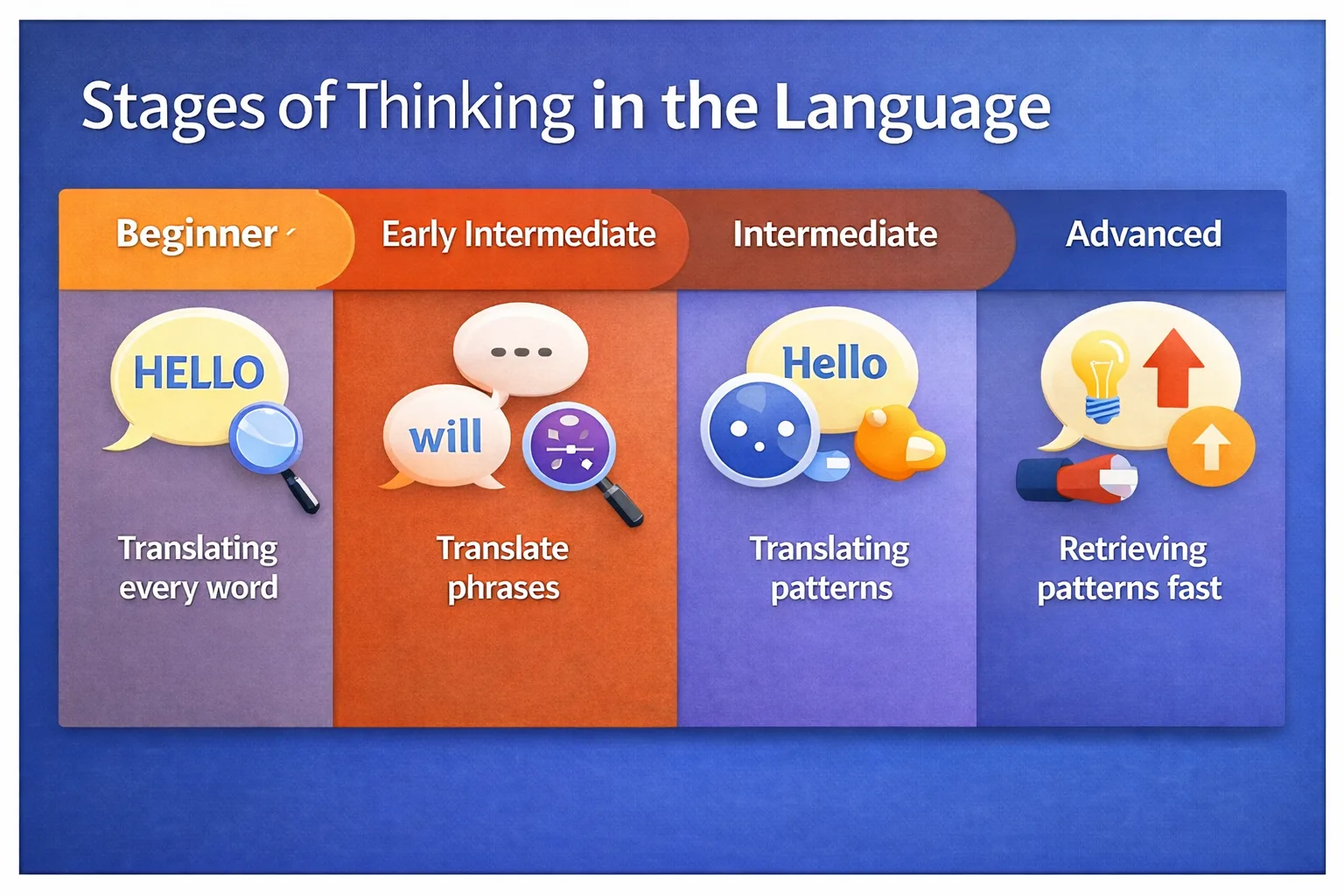
| Stage | Mental Process |
| Beginner | Translate every word |
| Early intermediate | Translate phrases |
| Intermediate | Retrieve patterns directly |
| Advanced | Generate thoughts automatically |
Thinking in the language is therefore a gradual shift from translation to direct retrieval.
A Moment I Noticed This Shift
I remember the first time this happened to me while watching a short interview in Korean.
For most of the video I could follow the conversation easily, but what surprised me was that certain phrases felt instantly understandable without any mental translation.
Expressions like 괜찮아요 (it’s okay / that’s fine) or 그럴 수도 있어요 (that’s possible / that could happen) simply appeared as meaning rather than words.
It wasn’t full fluency yet, but it was the first moment I realized that thinking in the language had started in small pieces.
Those small automatic recognitions gradually became more frequent over time.
A Step-by-Step Method to Start Thinking in Your Target Language
The goal is not to eliminate translation immediately, but to gradually replace it with faster retrieval.
Here is a simple framework that works well for many learners.
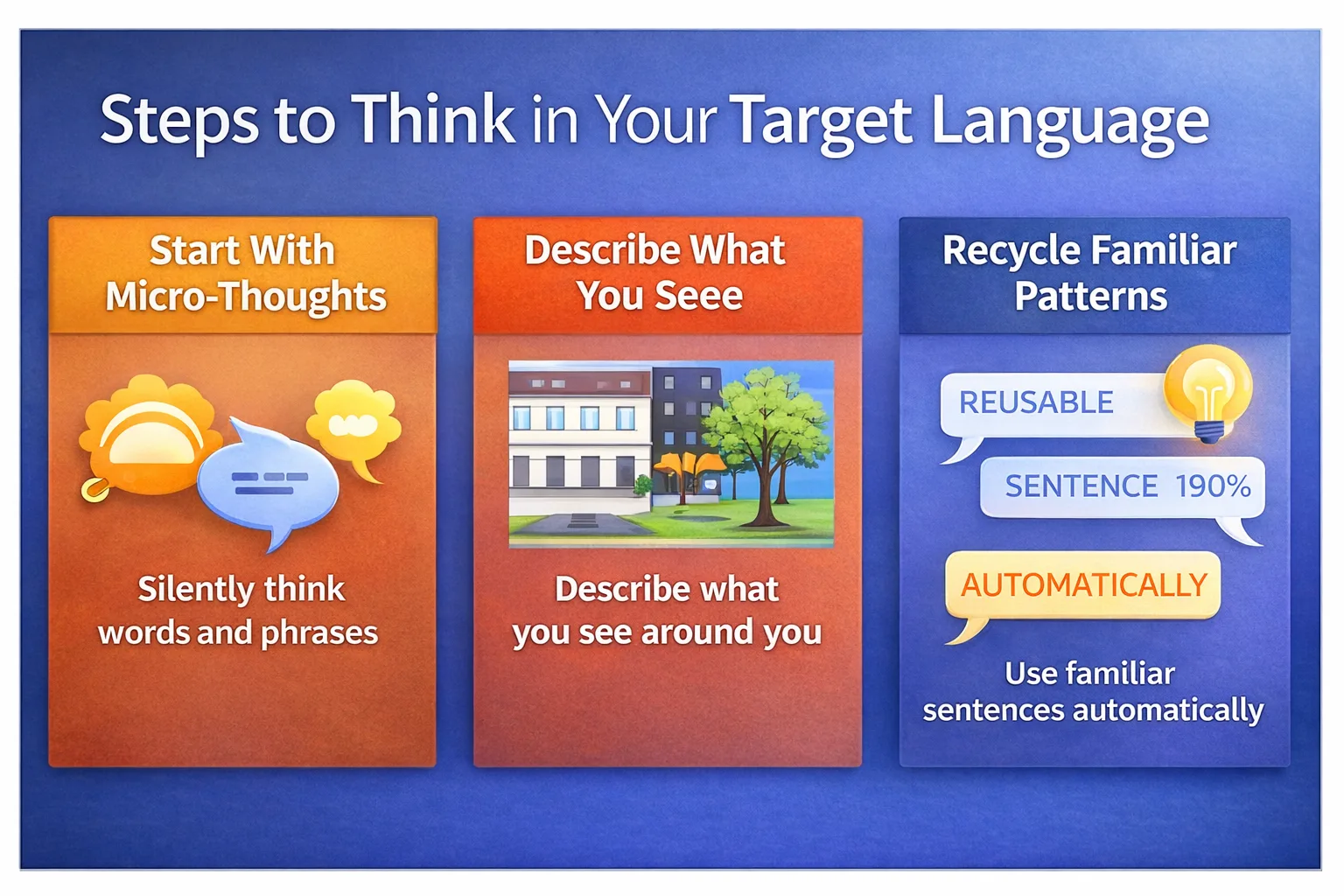
1. Start With Micro-Thoughts
Instead of translating full sentences, begin with very small mental phrases.
Examples:
- “too expensive”
- “that’s interesting”
- “I forgot”
- “maybe later”
These short expressions appear frequently in real conversations and are easy to retrieve automatically.
Because they are short, your brain begins recalling them directly instead of translating them.
2. Describe What You See
A powerful exercise is narrating simple observations in your head.
For example while walking outside:
- “It’s raining.”
- “That café looks busy.”
- “The bus is late.”
This practice forces your brain to connect visual information directly with language, bypassing translation.
Even simple descriptions strengthen direct meaning–language connections.
3. Recycle Familiar Patterns
Instead of memorizing new sentences constantly, reuse patterns you already know.
Example pattern:
“I need to ___.”
You can mentally reuse it in many situations:
- “I need to finish this.”
- “I need to call her.”
- “I need to leave soon.”
Recycling familiar patterns helps your brain retrieve language faster without building new grammar each time.
Why This Method Works
This process gradually reduces the brain’s dependence on translation.
Instead of processing language word by word, your brain starts retrieving larger chunks automatically.
Cognitive research refers to this process as chunking, where frequently used patterns become stored as single retrieval units.
Chunking dramatically reduces processing load during real-time communication.
Once chunks become automatic, thinking directly in the language becomes easier.
Common Mistakes When Trying to Think in Another Language
Many learners accidentally slow their progress by approaching the process incorrectly.
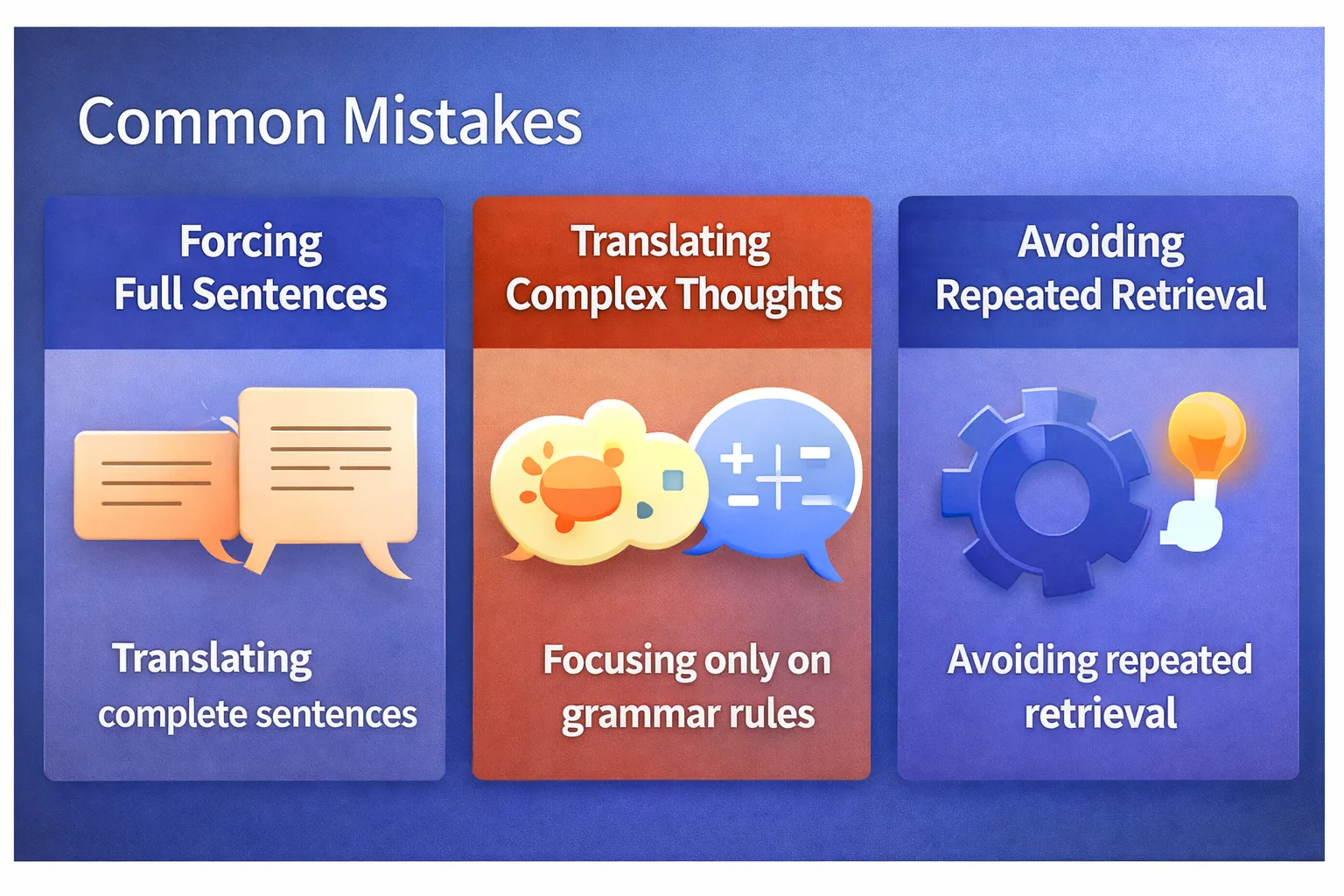
The most common mistakes include:
- Forcing full sentences too early
- Translating complex thoughts
- Focusing only on grammar rules
- Avoiding repeated retrieval
Thinking in a language grows through small automatic pieces, not perfect sentences
FAQs
1. Do fluent speakers completely stop translating?
Not always.
Even advanced bilinguals may occasionally translate unfamiliar vocabulary. The difference is that most common expressions are retrieved automatically without conscious translation.
2. How long does it take to start thinking in another language?
For many learners, the first signs appear around the intermediate stage when familiar phrases begin to feel automatic. The timeline varies depending on exposure hours and active retrieval practice.
3. Is thinking in the language necessary for fluency?
It is not required in the beginning, but automatic thinking greatly improves speaking speed and conversational comfort.
A Simple Way to Encourage This Process
One challenge with learning through videos or media is that many learners watch passively.
Passive exposure increases recognition but does not always trigger retrieval.
Tools that encourage active engagement with content can help strengthen these direct language connections.
Jolii encourages active engagement with content by prompting learners to respond to what they watch rather than simply consuming it — which strengthens direct language connections more effectively than passive exposure alone.
This kind of structured interaction encourages the brain to retrieve language directly rather than relying on translation.
If you’re interested in how exposure hours influence language development, you might also enjoy this article: “How Long Does It Really Take to Learn a Language?“ It explains how cumulative exposure and retrieval shape the timeline of language learning
Final Thoughts
Thinking in your target language is not a mysterious milestone.
It emerges naturally as your brain builds faster connections between meaning and language.
Translation fades gradually as familiar phrases become automatic.
Focus on small mental expressions, repeated retrieval, and consistent exposure.
Over time, those small moments of direct understanding grow into full conversations.
And one day you may notice something surprising — you are no longer translating at all.