AI in language learning is now built for real practice. Adaptive systems adjust lessons to your level in real time.
Voice tools analyze pronunciation down to individual sounds. Chatbots simulate real conversations around the clock.
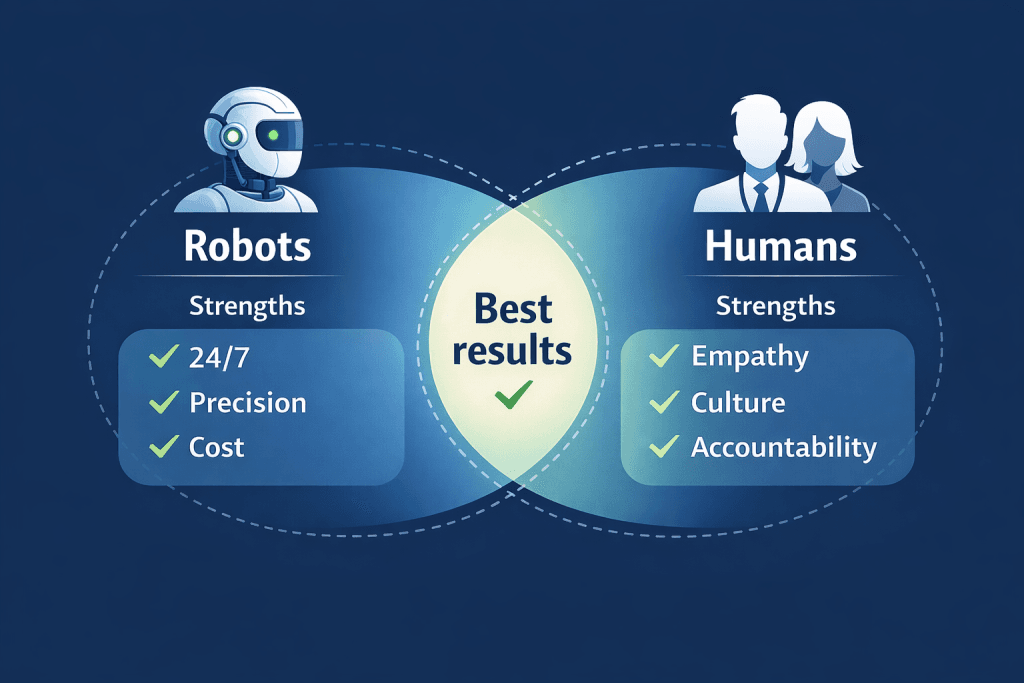
AI tools are strong for grammar, vocabulary, and low-pressure speaking practice. However, they are weak on cultural nuance, emotional support, and messy real-world audio.
The best results come from combining AI tools with real human interaction.
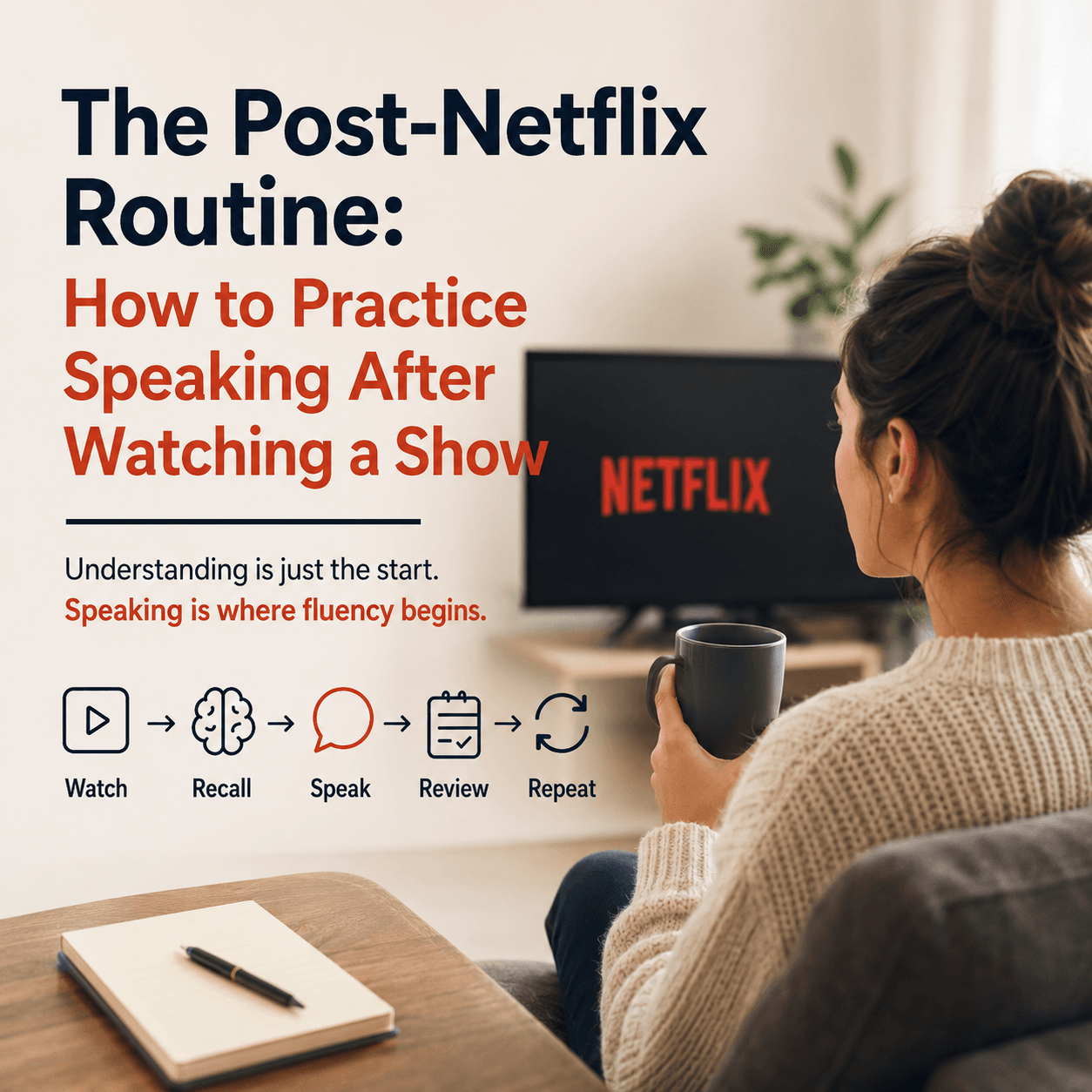
Why Do I Understand English but Still Can’t Speak?
This feeling is shared by most learners. Shows are watched and mostly understood. But real conversations are frozen through.
This is called the Passive Gap. Input and output are powered differently. One doesn’t train the other automatically.
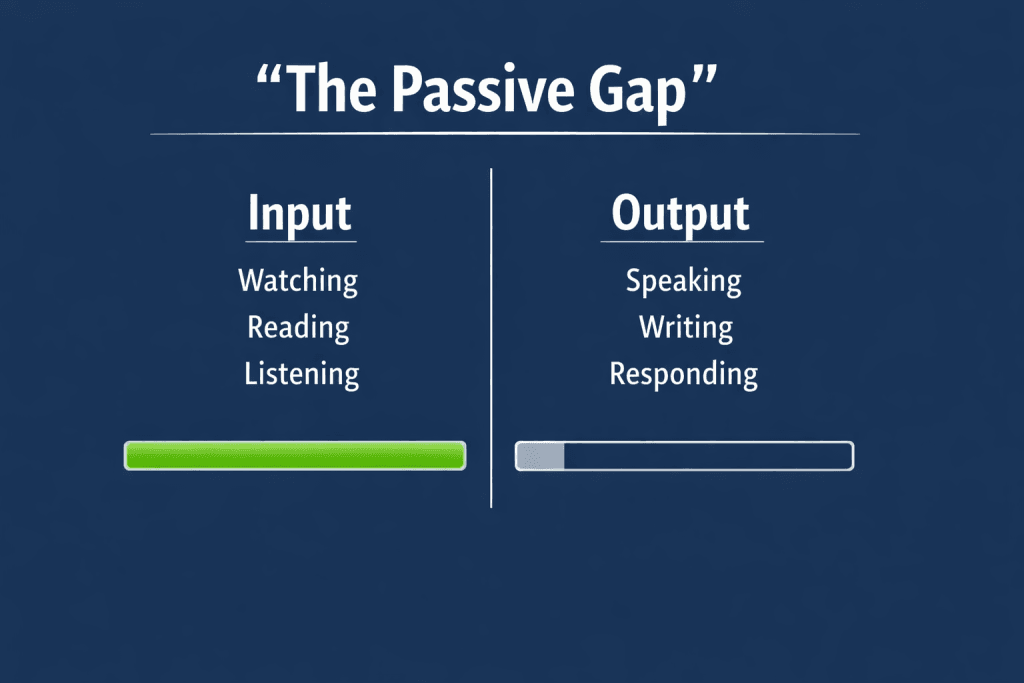
AI-based language Learning is designed for this problem.
A judgment-free space is provided for practice. Mistakes are made without social pressure. That repetition is what builds real speech.
But a chatbot alone isn’t enough. The only thing that matters is how it is being used.
Takeaway: AI in 2026 is more than flashcards.
What Is AI in Language Learning?
AI in language learning refers to systems that use machine learning, natural language processing (NLP), and large language models (LLMs) to teach languages.
These systems are not static courses. They adapt and respond. They generate new exercises based on each learner’s behavior.
In 2026, the technology runs on a “Transformer architecture”. This is the same foundation behind tools like GPT and Claude.
AI models process language by weighing relationships between words across entire passages.
That allows them to understand context, not just individual words.
The result is an AI that can hold a conversation, explain a grammar rule, and correct a pronunciation error in real time.
| Feature | Traditional Learning | AI in Language Learning (2026) |
| Personalization | Limited or static | Adaptive to each learner |
| Feedback Speed | Delayed (days or weeks) | Instant (milliseconds) |
| Practice Availability | Fixed schedule | 24/7, on demand |
| Content | Same for everyone | Generated based on your gaps |
How AI Personalizes Language Learning in 2026
Patterns are detected that learners can’t see. Mistakes aren’t graded one by one. Error trends are tracked across sessions. Weak areas are targeted automatically.
Three methods are used for this:
- Learning styles are detected. Stories are generated for narrative learners. Audio is prioritized for listening learners.
- Forgetting is predicted. Words are resurfaced right before they’re lost. Timing is based on memory patterns.
- Pronunciation is corrected live. Tongue placement errors are caught per sound. Visual guides are shown for correction.
Rosetta Stone’s TruAccent system and similar tools compare your speech against native speaker models.
On clean audio, speech recognition accuracy exceeds 97% on benchmark datasets. That precision makes phonetic feedback genuinely useful.
Natural conversation is now possible too. Responses are generated in under 250 milliseconds. That speed is fast enough to feel human.
Can AI Improve Speaking Skills?
The short answer is Yes.
AI chatbots now feel closer to real conversations. Latency has dropped significantly. Responses arrive fast enough to mimic natural turn-taking.
You can roleplay ordering food in Rome, interviewing for a job in Berlin, or asking for directions in Tokyo.
The absence of judgment matters. Research on language anxiety shows that fear of embarrassment is a top barrier to speaking practice.
AI removes that barrier entirely. You can fail, restart, and try again without consequence.
| AI Conversion Feature | Benefit |
| Voice Recognition | Accent Improvement |
| Chat Simulations | Confidence Building |
| Instant Corrections. | Faster Learning |
What AI does really well for language Learning?
Grammar, pronunciation, and vocabulary are handled at scale.
- Sound details are caught precisely. Frequencies are analyzed beyond human hearing.
- Words are taught in context. Flashcards are shaped around your real interests.
- Grammar is explained many ways. Multiple angles are tried until one clicks.
- Real scenarios are simulated. Ordering food or job interviews are practiced on demand.
For structure, accuracy, and repetition, AI is unmatched.
Where Does AI Learning Still Fall Short?
Culture, emotion, and messy speech are still missed.
Three limits are seen clearly in 2026:
- Cultural context is often missed. Slang can be defined but not used naturally. Honorifics in Japanese are frequently applied wrong. The right words are said in the wrong social moment.
- Emotions aren’t understood. Frustration and burnout aren’t detected genuinely. Encouragement can be simulated, but not felt. Long-term motivation is still driven by human connection.
- Real-world audio is handled poorly. Clean recordings are transcribed at 95–98% accuracy. Noisy settings drop that below 80%.
| Audio Condition | Expected Accuracy | What This Means for Learners |
| Quiet room, close mic | 95–98% | Near-perfect feedback |
| Standard meeting room | 80–92% | Usable with occasional errors |
| Noisy cafe or street | 60–82% | Frequent misunderstandings |
| Overlapping speakers | Below 60% | Not reliable for practice |
Learners with non-native accents are misrecognized most often. The people who need help most are served the worst.
Why AI Learning Can’t Replace Human Teachers
| Area | AI in Language Learning | Human Teacher |
| Availability | 24/7 | Scheduled sessions |
| Grammar drilling | Excellent | Time-limited |
| Pronunciation feedback | Phoneme-level precision | Intuitive but less granular |
| Cultural nuance | Surface-level | Deep and contextual |
| Emotional support | Simulated | Genuine |
| Accountability | Notifications | Personal investment |
| Cost | Low (subscription) | Higher (per session) |
Neither replaces the other. AI handles the repetitive drills. Humans handle the parts that require judgment, empathy, and cultural depth.
Real Learner Example #1: The “Netflix Fluent” Learner
Learner: Maria, intermediate Spanish learner.
Situation: Maria watched Money Heist and understood about 80% of the dialogue. She used AI apps daily for a year. Her grammar and pronunciation scores improved. Her vocabulary expanded.
Problem: During a real business meeting in Madrid, she froze. She understood everything being said. She could not respond spontaneously.
Diagnosis: Understanding is input. Speaking is output. These are different skills. Maria’s AI tools had been completing her sentences and predicting her responses. She practiced production, but in a heavily scaffolded environment. When the scaffold disappeared, so did her confidence.
Fix: Maria switched her AI tutor to an aggressive roleplay mode where it stopped helping mid-sentence. She added one weekly session with a human conversation partner. Within a month, her hesitation in live conversations dropped significantly.
Nothing else changed. Only the type of practice changed.
Real Learner Example #2: The “Grammar-Perfect Robot”
Learner: Kenji, upper-intermediate English learner from Osaka.
Situation: Kenji used AI grammar tools for eight months. His accuracy scores were consistently above 95%. Every sentence was structurally correct. Verb tenses were flawless. Word order was never wrong.
Problem: During a team dinner with his American colleagues, he was told he “sounds like a textbook.” His sentences were correct. But they were stiff. He said “I would like to express my gratitude” instead of “thanks so much.” He said “I find that agreeable” instead of “yeah, sounds good.”
Diagnosis: AI graded his output as correct. Grammar tools don’t flag formality mismatches. Register and tone are cultural skills. They aren’t measured by accuracy scores. Kenji had trained precision without training naturalness.
Fix: He started watching unscripted YouTube vlogs and podcasts. He practiced casual phrases with a human conversation partner once a week. Within two months, his colleagues stopped noticing his English at all. That was the goal.
What Are the Risks of Relying Only on AI for Language Learning?
A false fluency is built when only AI is used.
Algorithms are learned instead of language. Predicted responses are relied on. Real people become terrifying.
Over half of app-only learners feel limited. Real speakers are found harder to engage with. Unpredictable conversations are avoided entirely.
Privacy is also a concern. Voices and mistakes are collected for personalization.
More data means better lessons, but also more exposure. On-device processing is improving. The tradeoff is still unresolved.
What Comes After 2026?
AI tutors are being built with cameras. Confusion will be seen through facial expressions. Difficulty will be adjusted before frustration is felt.
AR glasses are being developed as well. Translations will be overlaid on street signs. Menus will be read in real time.
The technology is accelerating fast. But language is a human experience. Shared laughter and spontaneous connection are still required. Those are only found with real people.
FAQs About AI-based Language Learning
Is AI better than a human teacher?
For grammar and pronunciation drills, yes. But for motivation and cultural depth, no. The best results are seen when both are used.
Can fluency be reached through AI alone?
A strong intermediate level can be built. Real fluency requires human interaction. Spontaneous speech is only trained with people.
Is grammar correction accurate?
For major languages, accuracy exceeds 95%. For dialects and smaller languages, accuracy drops. Clean audio is needed for the best results.
Is slang understood by AI?
Slang can be defined by AI. It’s rarely used naturally. Sarcasm and humor are still consistent weak points.
Will teachers be replaced by AI?
No. The role is shifted upward. Routine work is automated. Human work becomes more important.
Final Word
AI in language learning has solved the practice problem.
Grammar drills are personalized. Pronunciation feedback is precise. Speaking practice is available around the clock.
The learners who progress fastest use AI for daily drills and real people for weekly conversations.
Jolii is built for that shift. It connects AI-powered practice with real content and structured speaking exercises.