(source: ccorea)
Do you love learning languages? This guide is designed for beginners who want to learn practical Korean expressions and use them correctly in real-life situations.
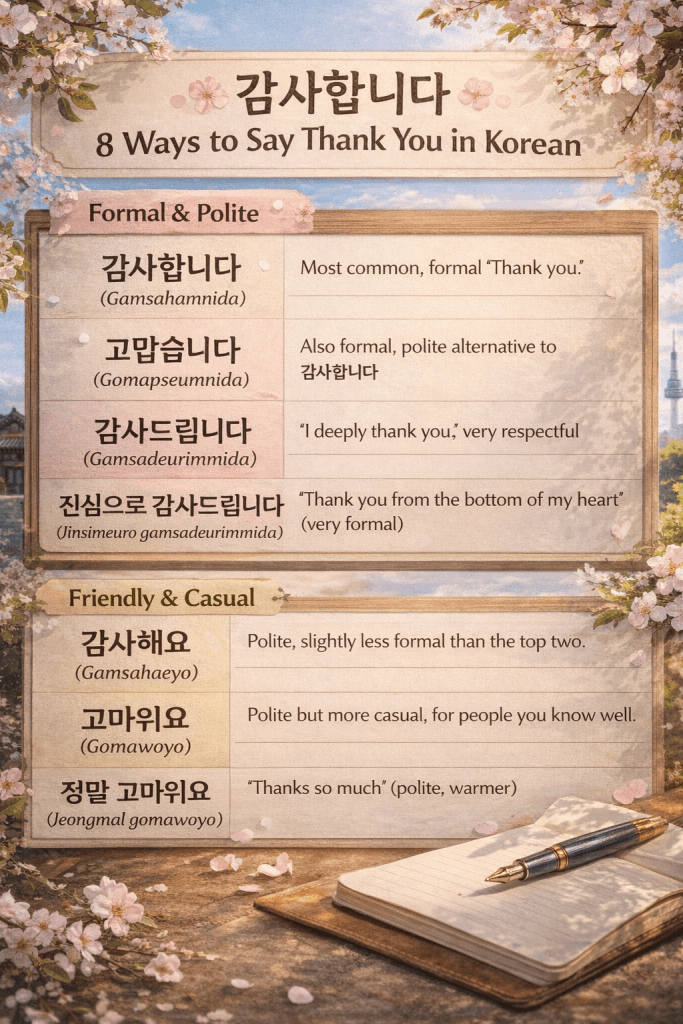
There are different ways of expressing gratitude in the Korean language, and we have brought them all on one page for you. Whether you are on a trip to Seoul, chatting with Korean citizens or just wandering in the streets, we will help you stay polite based on every level and situation.
Languages evolve with time, and it’s very important to stay up to date with the concurrent changes, speaking styles and even jargon to make the communication more smooth, free of slang and respectful.
Many Korean people speak with a mix and match of traditional and casual variations. They also use a compressed way of saying thank you in Korean, which is 감사 (gamsa) in texting or quick chats. It’s a more casual way of connecting with same age. This reflects how languages switch to a more convenient and emotional tone to make it more playful and fascinating for every age group.
The most common way to say “thank you” in Korean is 감사합니다 (gamsahamnida) for formal situations and 고마워요 (gomawoyo) for polite everyday conversations. With friends, you can say 고마워 (gomawo).
Learn the 8 Polite Ways of Saying Thank You in the Korean Language – Easy & Quick to Memorize!
We have combined different ways to say thank you in Korean that work the best for different situations, people, and gatherings. Have a quick look at our easy-to-read expressions that you will love to learn and use with your friends, family and Korean people.
1. 감사합니다 (Gamsahamnida) – A Formal Expression
This is a standard and formal way of saying thank you in the Korean language. You can use it with confidence at workplaces, with your elders and with every person who seems older. It’s polite, professional and acceptable.
2. 고맙습니다 (Gomapseumnida) – A Softer Expression
It’s slightly softer and a genuine way of showing gratitude that can be used in emails or even while communicating to build an emotional connection with people.
3. 고마워요 (Gomawoyo) – A Polite Expression
Here comes another way of connecting with your colleagues and peers in casual communications through a warm and polite thanks. It’s friendly and moderately casual, making a good balance in the tone.
4. 고마워 (Gomawo) – A Casual Expression
Want something friendlier and more informal? This is another expression of saying thanks in Korean, and it is reserved only for close friends and the people you are highly comfortable talking to.
5. 대단히 감사합니다 (Daedanhi Gamsahamnida) – An Appreciative Expression
This is another expression that works best to express your appreciative gesture through thanks. It places more on respect and extreme gratitude for someone who has exceeded your expectations.
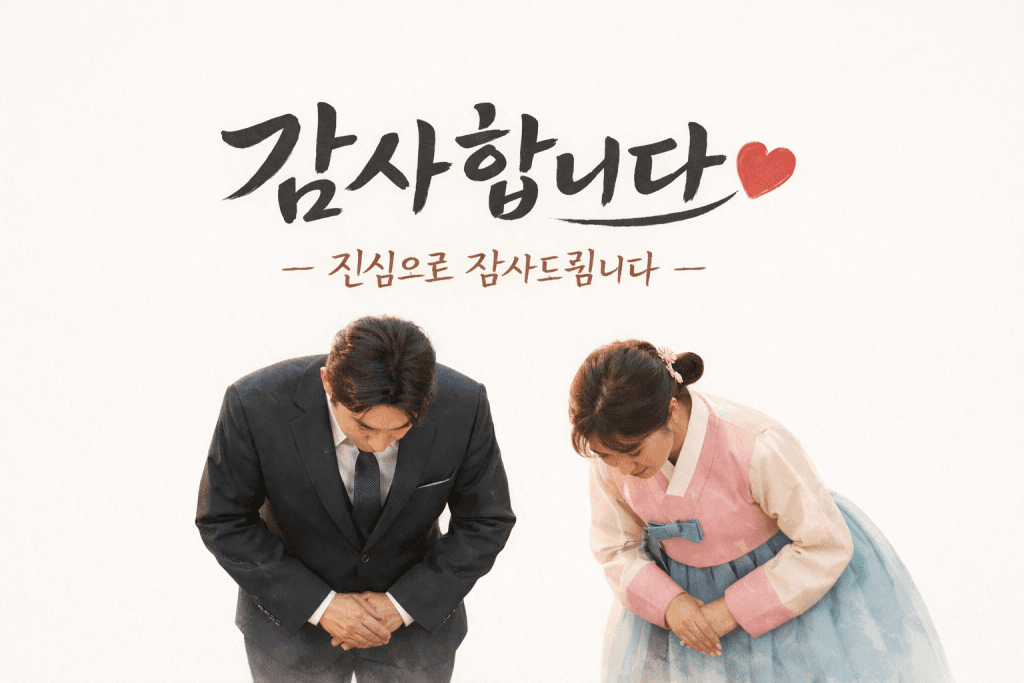
6. 진심으로 감사드립니다 (Jinsimeuro Gamsadeurimnida) – A Heartfelt Expression
Want to express sincerity in your professional texts, awards and official letters? This is the best way to express your gratitude with depth.
7. 정말 감사합니다 (Jeongmal Gamsahamnida) – A Loveable Expression
For a more loving and genuine connection, this could be a good expression to say thank you in Korean. It strengthens a personal connectivity with your loved ones.
8. 고마워 죽겠어요 (Gomawo Juggesseoyo) – An Intensive Expression
It’s a combination of casual, humorous and playful way that is a modern version to use among friends, you can creatively express it in a youthful way on social media and texts effortlessly. This expression should only be used with close friends. In formal or professional settings, it can sound inappropriate or overly dramatic.
Common Mistakes Beginners Make When Saying Thank You in Korean
Many beginners overuse very casual expressions like 고마워 in situations that require politeness, such as shops or workplaces. Others use overly strong phrases like 고마워 죽겠어요 without realizing it can sound exaggerated or sarcastic if the relationship isn’t close. When in doubt, 감사합니다 or 고마워요 are always safe choices.
Researched Back Tips To Learn Thank You In Korean
Pair Speech with the “Bowing Rule”
Koreans use the phrase, verbal thank you, which they never complete without the physical expression, the bow. It has been found that embodied cognition is a study that suggests that physical gesture (such as bowing) during speech can be used to store new vocabulary in long-term memory.

(source: knowing korea)
Use “Thematic Clustering” for Context
Neither learn words in isolation, nor acquire them by families; acquire them in families according to the verbs where they will be applied. such as
- Casual (Friends): 고마워 (Gomawo).
- Courteous (Acquaintances): 고마워요 (Gomawoyo).
- Formal (Business/Elders): 감사합니다 (Gamsahamnida)
Apply the “Spacing Effect”
Rather than a three-hour study block, there should be distributed practice. Study for 15–20 minutes daily. According to neuroscience, this forms more powerful neural pathways compared to infrequent and long sessions. Learn these phrases via the Spaced Repetition System (SRS) systems, such as Anki or Memrise, just before your brain decides to forget them.
Conclusion
If you are a keen language learner who loves to explore different languages, then expanding your learning approach would be the key. Many people show a high interest in moving to Korea and learning the language for easy communication. So, the next time you want to express gratitude, these phrases will be your go-to in translating your thoughts and building a profound connection based on respect and warmth.
From visitors and shopkeepers to friends and family, we cover every aspect of explaining single expressions in multiple ways so you can use them all in a suitable way that best in every situation. We advise all the learners to master the roots first before jumping to the advanced levels.