When I first started learning Japanese, the thing that surprised me most wasn’t the grammar or the pronunciation—it was the writing system. Japanese is often listed as one of the world’s most difficult languages to learn, and one big reason is that it uses three different scripts at the same time: Hiragana, Katakana, and Kanji.
As a beginner, I remember feeling completely overwhelmed. It honestly felt like I was learning three languages instead of one. I would open a textbook and see curved characters, sharp angular characters, and then huge complex kanji—all mixed together in the same line. I still remember thinking, “How does anyone read this without panicking?”
But after a lot of trial and error, I realized something that changed everything for me:
you don’t need to learn all three at once.
In fact, the smartest—and most calming—way to begin is to master Hiragana first.
Looking back, this was the step that helped me finally feel grounded in the language. The moment Hiragana made sense, Japanese stopped feeling like a chaotic puzzle and started to feel like something I could learn.
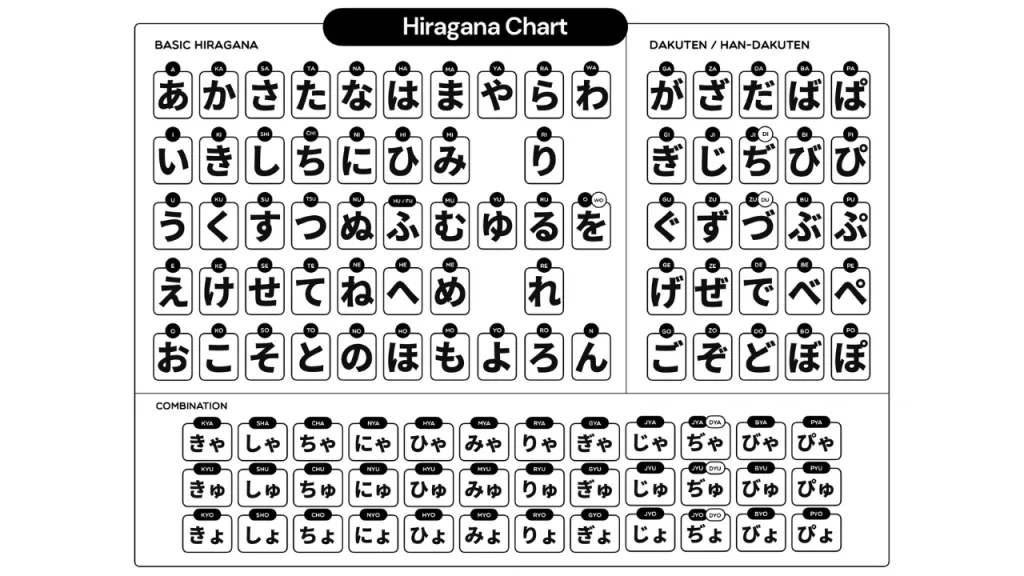
Quick Answer
- If you learn hiragana first, you can follow key grammar cues (particles and endings) right away.
- Hiragana appears constantly in beginner materials—especially for particles, okurigana, and verb/adjective changes.
- Because each character maps to a stable sound, it also supports clearer pronunciation and faster reading progress.
1. Learn Hiragana First to Make Japanese Grammar Easier to Understand
One thing many beginners don’t realize is that Japanese grammar doesn’t sit inside Kanji—it lives in Hiragana. While Kanji carries meaning, it’s Hiragana that shows how a sentence actually works. Without being able to read it smoothly, grammar explanations often feel abstract and hard to follow.
Most of the key grammatical signals in Japanese are written in Hiragana. These small characters quietly tell you what role each word plays in a sentence:
- は (wa) – topic marker
- を (o) – object marker
- に (ni) – time or direction
- が (ga) – subject marker
Once these markers become familiar, sentence structure starts to reveal itself. You’re no longer guessing where ideas begin or end, or why a sentence feels the way it does. Learning Hiragana first changes everything—grammar stops being something you memorize and becomes something you can actually read and understand.
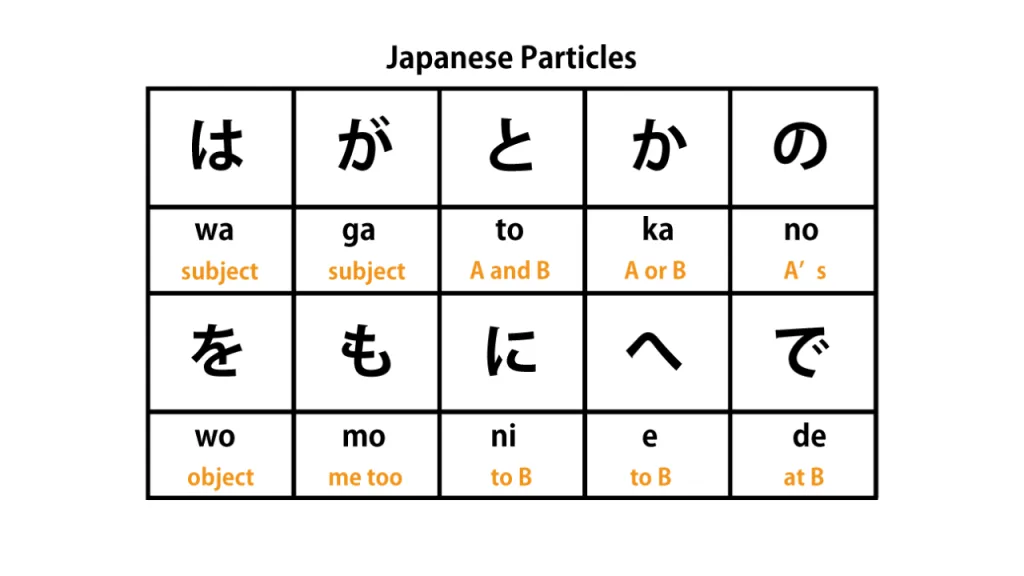
2. Most Japanese Textbooks Expect You to Learn Hiragana First
This was another lesson I learned the hard way. Whether you use Genki, Minna no Nihongo, online lessons, or language-learning apps, they all assume one thing: you learn Hiragana first.
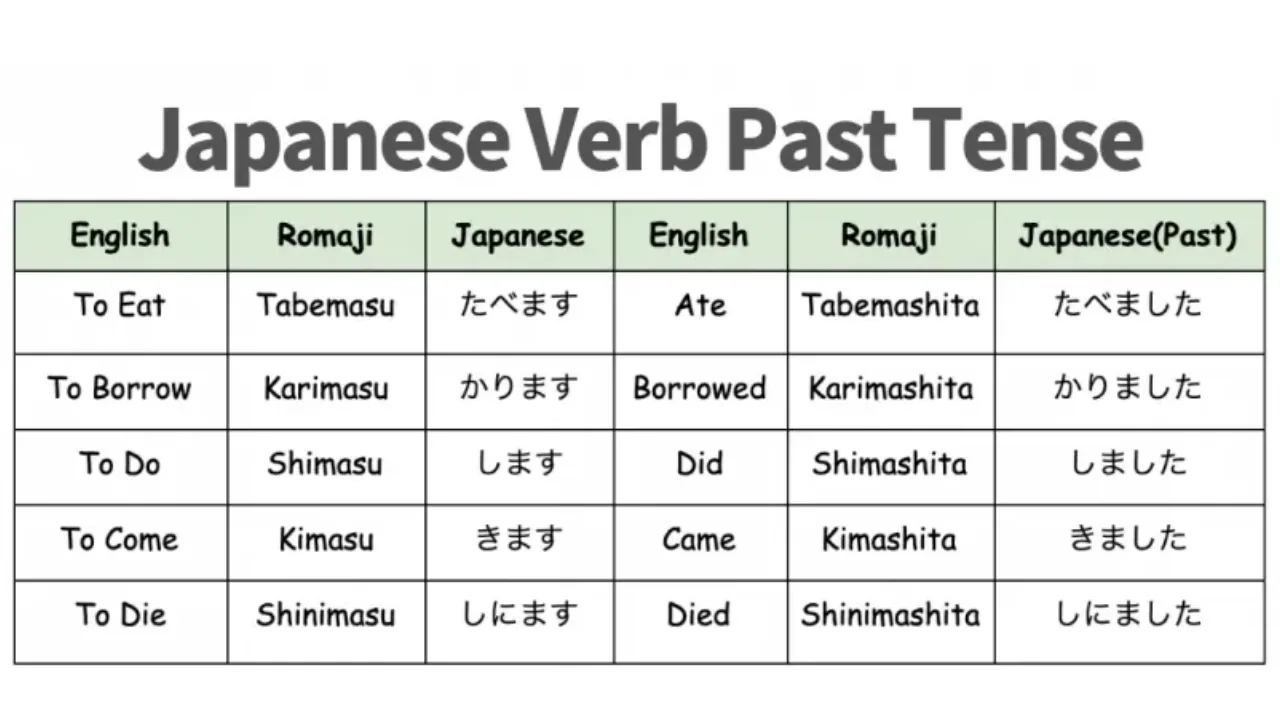
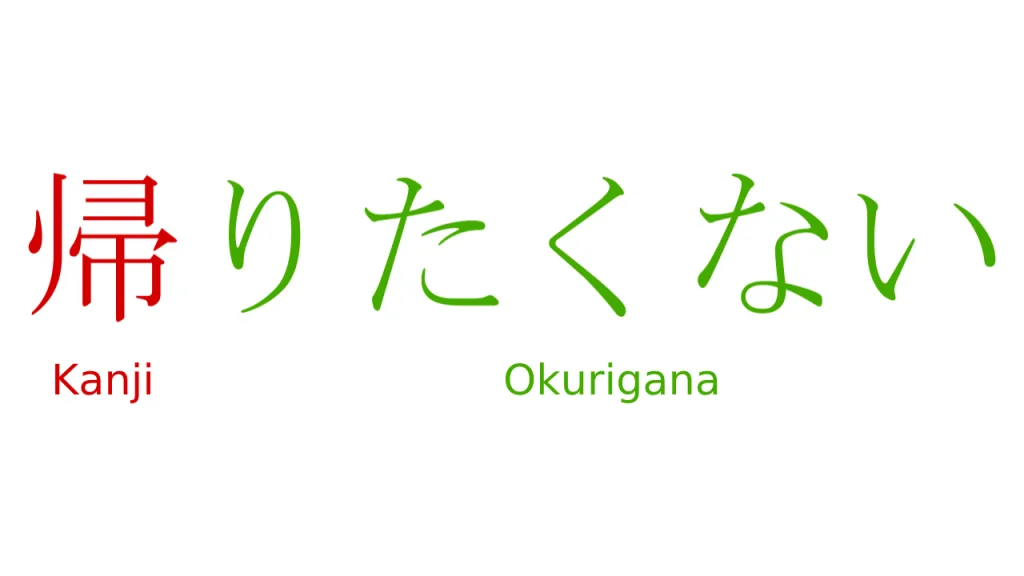
Even when a word is written in Kanji, it still relies on Hiragana endings (okurigana) to show important grammatical information, such as:
- Verb forms
- Adjective patterns
- Polite vs casual speech
- Grammatical changes
For example, the verb 食べる (taberu), meaning “to eat,” often appears as 食べました (tabemashita) or 食べて (tabete). Without Hiragana, it’s impossible to tell which tense or form you’re looking at.
The same applies to adjectives like 高い (takai), meaning “tall” or “expensive.” It can become 高くない (takakunai) for “not expensive,” or 高かった (takakatta) for “was expensive.” All of these transformations depend on Hiragana, not Kanji, which is why learning Hiragana first matters so much.
Before I knew Hiragana, I couldn’t even follow these simple changes. I remember seeing a line like 見ました (mimashita) and thinking it was just two symbols smashed together. Everything felt unnecessarily complicated, and studying took far longer than it should have.
Once I focused on learning Hiragana first, every resource suddenly felt more accessible. I stopped depending on rōmaji, my reading speed improved, and lessons finally started to make sense. Sentences that once looked like codes became readable patterns I could understand and even predict
3. Learn Hiragana First to Improve Japanese Pronunciation
Japanese pronunciation is far more consistent than it first appears, but that consistency is hard to notice if you rely on English letters. Rōmaji often hides important sound distinctions, while Hiragana shows them clearly. Each Hiragana character represents a single, stable sound, with very few exceptions.
Before I focused on learning Hiragana first, I picked up several pronunciation habits that were hard to break—especially with sounds like ら・り・る・れ・ろ and ふ. They don’t map neatly onto English sounds, so I was guessing more than I realized. Seeing and reading these sounds in Hiragana helped me hear them correctly and adjust how I produced them.
Once I started reading words directly in Hiragana:
- I could pronounce new words without guessing
- My speech became smoother and more natural
- My listening improved because I could mentally “see” the sounds
That was when it clicked for me. Hiragana isn’t just a writing system—it quietly teaches you how Japanese is meant to sound. Learning Hiragana first gave me a pronunciation guide built directly into the language, something I wish I had understood much earlier.
4. Learn Hiragana First to Make Kanji Feel Less Intimidating
Kanji used to scare me more than anything else in Japanese. It felt like an endless mountain of complex shapes, each one carrying multiple readings and meanings. No matter how much I tried to memorize them, they never seemed to stick. But as I spent more time learning Hiragana at first, that fear slowly began to fade.
Hiragana gave me the sound structure of Japanese. Once I could read it smoothly, Kanji stopped feeling random. I wasn’t just staring at symbols anymore—I could see how each Kanji fits into a larger system.
By learning Hiragana first, I already understood:
- What a word should sound like
- Where the Kanji ends and the grammatical ending begins
- How verbs and adjectives change form
- How sentences are put together
With that foundation, Kanji felt less like a wall and more like a puzzle with clear edges. I could recognize okurigana, anticipate changes, and follow meaning without panicking. Kanji didn’t magically become easy—but learning Hiragana first made it feel possible.
5. Learn Hiragana First to Build Confidence for Beginners
One of the most reassuring things about Hiragana is that it doesn’t take long to learn. Compared to the thousands of Kanji, Hiragana has just 46 basic characters, and they follow simple, predictable patterns. That alone makes learning Hiragana first feel far more manageable than tackling everything at once.
This was the Japanese learning routine that worked best for me:
- Days 1–3: Learn characters in small groups (a–ka–sa…)
- Days 4–7: Practice reading short words instead of memorizing characters individually
- Days 8–14: Stop using rōmaji and read only Hiragana
By the end of the second week, I could read simple sentences comfortably. More importantly, learning Japanese stopped feeling stressful and started to feel genuinely enjoyable. That shift in confidence was the moment I realized how powerful starting with Hiragana really is.
Pro insight:
Later on, I came across a study that put words to what I’d been feeling. In research comparing how children learn to read across different writing systems, Japanese hiragana is described as one of the most transparent scripts in the world.
In a cross-linguistic study comparing children reading Hiragana, several alphabetic systems of increasing complexity (such as Finnish, Turkish, Albanian, Greek, and English), and Kanji, the results were clear. Children read Hiragana most accurately, followed by transparent alphabets, then English, and finally Kanji. In other words, the more consistent the sound–symbol relationship, the easier the reading (Ellis et al., 2004 — Orthographic Depth and Reading).
More recent work also notes that Japanese children usually learn Hiragana first, and that Hiragana has highly consistent sound–symbol correspondences—one reason early reading can feel more straightforward.
Understanding this made everything fall into place. Hiragana isn’t “easy” just because it looks simply—it’s easy because the sound-to-symbol mapping is so consistent. And that’s exactly why learning Hiragana first gave me such a strong foundation to build on.
Looking Back: What I Wish I’d Known from the Start
Japanese has a reputation for being difficult, and I completely get why. I felt that same fear and confusion when I started. But learning Hiragana early turned out to be one of the simplest ways to lower that barrier. It didn’t make everything instantly easy—but it made everything feel possible.
It’s a small step with surprisingly large effects: grammar becomes clearer, pronunciation improves, progress feels faster, and confidence grows naturally. Hiragana is the doorway into Japanese. Once you step through it, the rest of the language no longer feels like an endless wall.
If you’re just starting out, let Hiragana be your first milestone. Build that foundation slowly and patiently. Your future self will look back and be grateful you didn’t rush past it.
Over time, I also learned that consistency matters far more than intensity. Even a few minutes a day can keep your momentum alive. Lately, I’ve been using Jolii AI to generate short reading drills, simple sentence variations, and to have a quick review that fits easily into a busy schedule. It doesn’t replace studying, but on low-energy days, it helps me stay connected instead of breaking the habit.
If you’re shaping your own Japanese routine, pairing steady Hiragana practice with a gentle support tool like this can make the journey feel lighter, calmer, and far more enjoyable.