Learning to say “how are you” in German is simple for beginners, and it is usually the natural first step. This question helps you start saying hi, makes it easier to start different conversations, and helps boost your confidence to engage with others. We’ll show you both formal and informal variations, with unique versions people sometimes say, and some fast cultural tips so you come off more authentic.
How to Say “How Are You?” in German Language: The Basics
When you try German, the way someone speaks makes an important difference. German speakers watch carefully who they are talking with, and this is mainly obvious in the way they say hello to other people. These four expressions are your foundation.
| Formal (used with strangers, professionals, or older people) | Informal (used with friends, peers, and younger people) |
| The standard polite form: Wie geht es Ihnen? | Wie geht es dir? |
| Slightly shorter version: Wie geht’s Ihnen? | Wie geht‘s? |

“How Are You?” in German Language: Formal Expressions Explained
1. Wie geht es Ihnen?
This is the most accurate and respectful way to ask “How are you?”. German society puts a fair value on keeping distance in hierarchical connections, so tossing Ihnen into your question really highlights etiquette and knowing your place.
You could run into this form too: Wie geht’s Ihnen?, which is just a hint quicker but stands firm as formal. Most folks will use it for moments like saying hi to a doctor, teacher, or speaking with older people they don’t know very well. Unsure which version fits? Go with Ihnen.
“How Are You?” in German Language: Informal Expressions Explained
1. Wie geht’s?
When you’re speaking German with friends, family, classmates, or close workmates, go with this one. It’s a solid, easy, and friendly way to say hi in everyday situations. You can’t go wrong with it!
2. Wie geht es dir?
This version is slightly more complete and literal, though still informal. It works wonders when you want to show you care, or make that “you” pop. Either one is fine.
- Wie geht’s? → quick, casual
- Wie geht es dir? → more personal
Other Ways to Say “How Are You?” in German
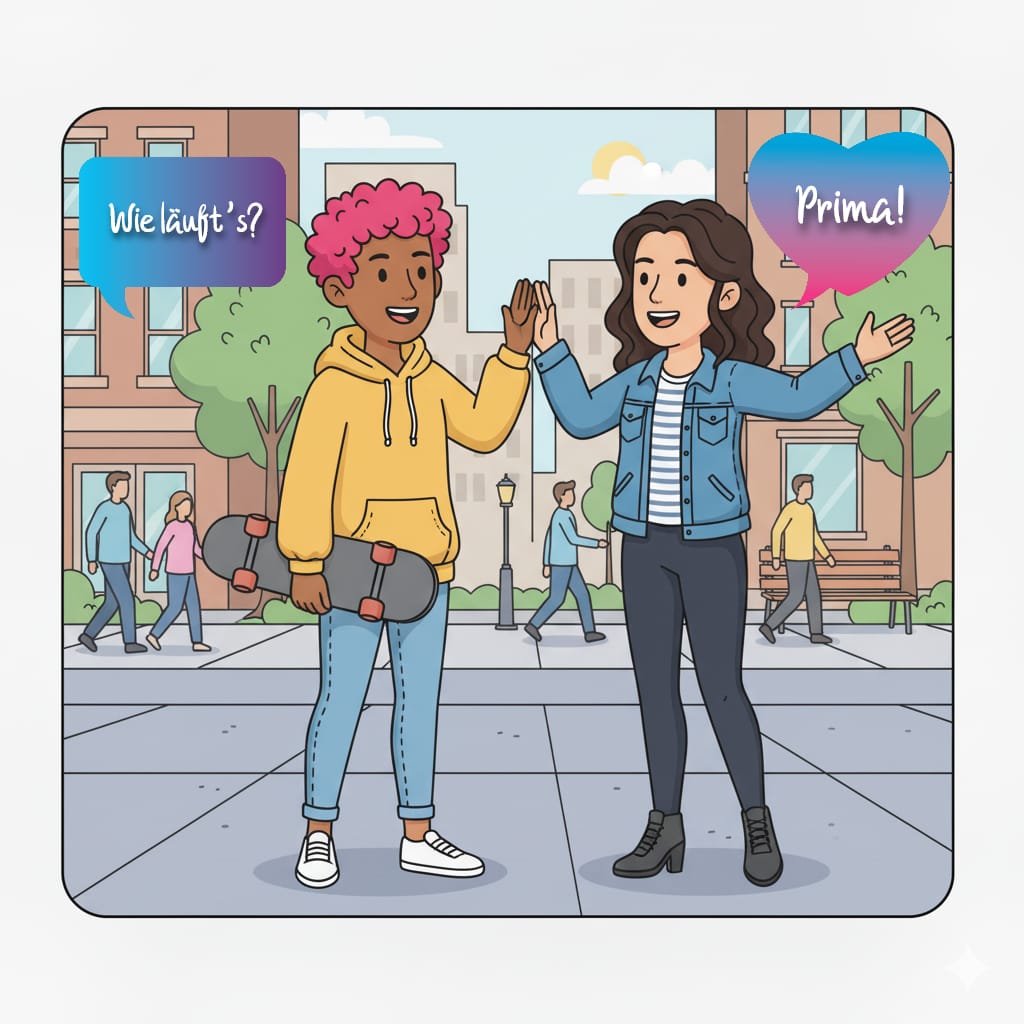
As you get more comfortable, you’ll hear variations: from slang to sweet to genuinely concerned. These sentences can make your German sound more real and not robotic.
| Friendly Variations | More Caring or Emotional Variants | Other Common Variants |
| Alles klar? — Literally “Everything clear?” but used like “All good?” | Wie fühlst du dich? — “How are you feeling?” | Wie geht’s euch? — addressing a group (plural “you”) |
| Alles gut? — “Everything good?” | Alles in Ordnung bei dir? — “Is everything okay with you?” | Wie ist die Lage? – How’s the situation? (playful and colloquial). |
| Wie läuft’s? — “How’s it going?” | Wie steht’s? – How are things? (neutral and versatile). | Na, wie geht’s? — a very natural, almost universal informal opener |
How to Respond to “How Are You?” in German
Here you will find some usual replies, for when the answer is good, bad, or just in the middle, plus responsive ones, so your conversation keeps flowing.
| Positive responses | Negative responses | Neutral responses | Reciprocal responses |
| Gut, danke! — “Good, thanks!” | Nicht so gut. — “Not so good.” | Es geht. — “It’s okay.” | Und dir? — “And you?” (informal) |
| Sehr gut! — “Very good!” | Ich bin müde. — “I’m tired.” | So lala. — “So-so.” | Und Ihnen? — “And you?” (formal) |
| Prima! — “Great!” | Es geht mir nicht so gut. — “I’m not feeling well.” | Nicht schlecht. — “Not bad.” | Und bei dir so? — “And how are things with you?” |

Cultural Tips for Greeting People in German
- German people don’t always ask the question “How are you?” like English speakers do out of habit. Especially at work, it’s normal to just say “Guten Tag” (Good Day) or “Hallo” (Hello).
- Saying “du” (informal “you”) shows you are close with a person, so you have to wait until the other person uses it for you.
- How you sound matters. Be friendly, but don’t do greetings that sound too excited or exaggerated, as these may come across as unnatural for some Germans.
Try not to worry much: After some time with German-style greetings, things feel much easier, and you start to get used to it.
FAQs
How do people say “How are you?” in German?
“Wie geht’s?” is common during informal situations, and it’s a pretty regular phrase. The formal way to say hello is “Wie geht’s Ihnen?”. Some believe it to be a strongly formal expression, but in reality, it’s just polite for strangers.
Does it seem impolite to bring up the informal “dir” too quickly?
In some situations, yes. German people are often formal to those they have just met, which means you should normally wait for the other person to pick “du” first.
What is a polite way I can answer?
You might reply with “Gut, danke. Und Ihnen?”. There are many other ways to say thank you in German, so you can pick your favorite one.
It’s normal to want to learn how to say “hello”, especially when we’re taking our first steps in any language. But greetings are more than memorizing some phrases to get by. They are the easiest way to know the people and their customs, and to reach out to them in a friendly way. Beyond its utilitarian nature, a simple greeting not only opens the door to meet new people, but it also allows you to make a human connection… and who doesn’t want that confidence boost? If you want to get better at practicing phrases like “how are you?” in German with custom activities, direct feedback, and enjoyable mini-lessons, Jolii.AI is a tool that can provide those things. Enjoy your language learning!