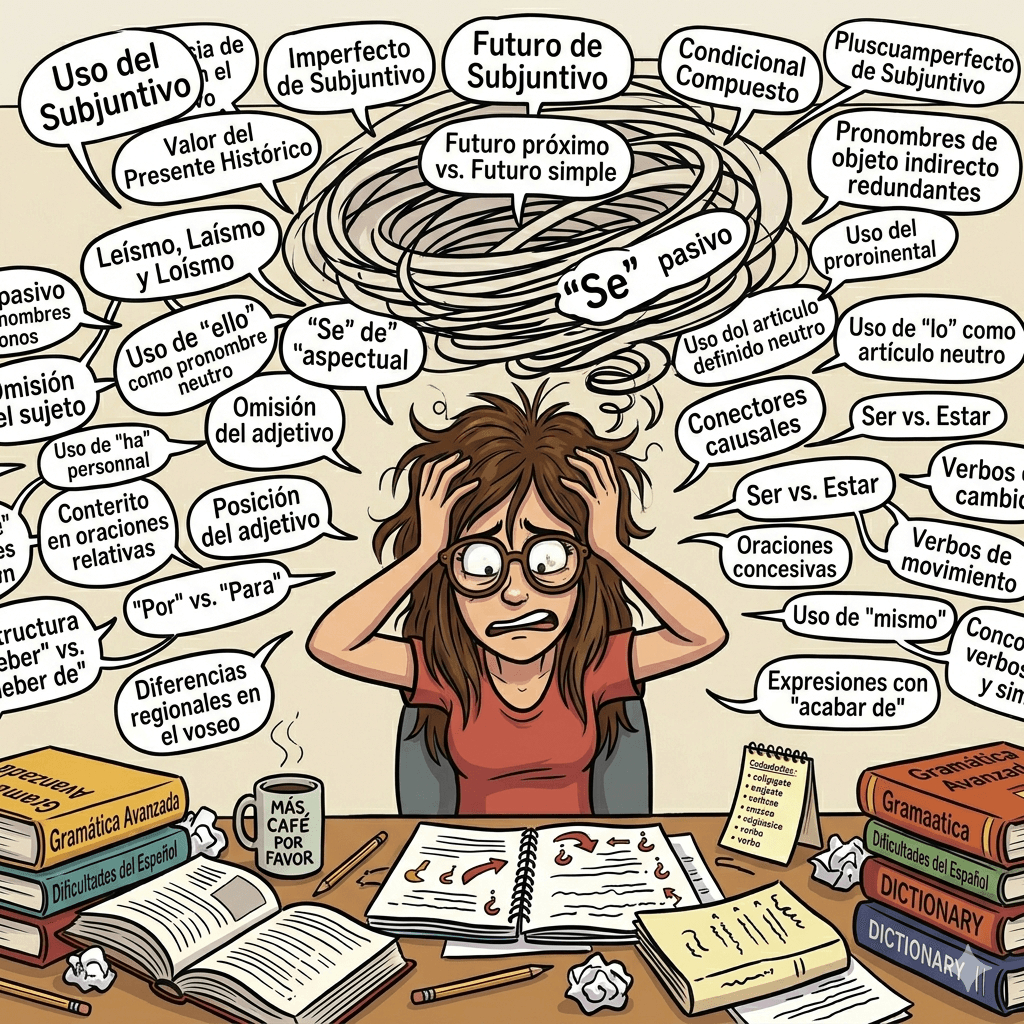
Let’s Be Real: Kids Hate Homework
Parents want their kids to learn Spanish without the meltdown, the bribery, or the “¿Por qué tengo que?” debates.
Fortunately, AI-powered Spanish learning apps are here to help!
AI-learning apps don’t just flash vocab cards. They talk back, adapt, and help your children learn using songs, games, and characters that are incredibly cute.
Why Use Spanish Learning Apps for Kids?
Neuroscience suggests that kids can learn languages faster when they’re playing or having fun.
AI-based apps analyze how your kid learns, adapt lessons, and reward them with dopamine-level joy.
A 2025 meta-analysis found that AI-supported child learners retained 35–45% more vocabulary and built 200–600 words in six months.
What Makes a Great Spanish Learning App for Kids?
Shiny interfaces don’t really matter anymore in 2025. Now its all about how smart the tech is behind the app.
Ideally, a Spanish learning app should:
- Talk back using speech recognition to fix pronunciation.
- Be ad-free (because who wants “Buy More Coins!” mid-lesson?).
- Track learning so parents can see results without nagging.
- Use bright visuals, voiceovers, and songs.
Top Spanish Learning Apps for Kids:
To begin developing Spanish fluency, you do not need any costly subscription.
Children are more likely to learn faster via fun activities and lessons.
Here are some of the best AI apps for Kids:
1. Jolii.ai
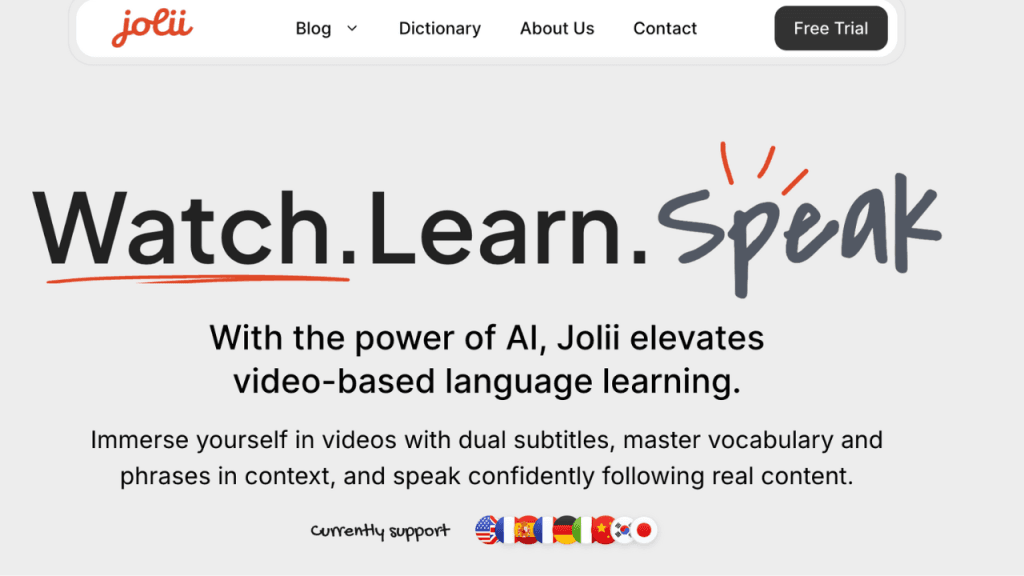
Age: 5–8
Jolii.ai uses LLM-powered chatbots to talk to kids in Spanish, adapting on the fly.
Features:
- AI voice coach for pronunciation correction
- Interactive exercises and songs that evolve with skill level
- Works offline (a.k.a. long car ride survival mode)
Pro Insight: In 2025 trials, AI apps improved pronunciation accuracy by 30–40% using real-time speech analysis. That’s more than most classroom drills manage in months.
2. Gus on the Go: Spanish
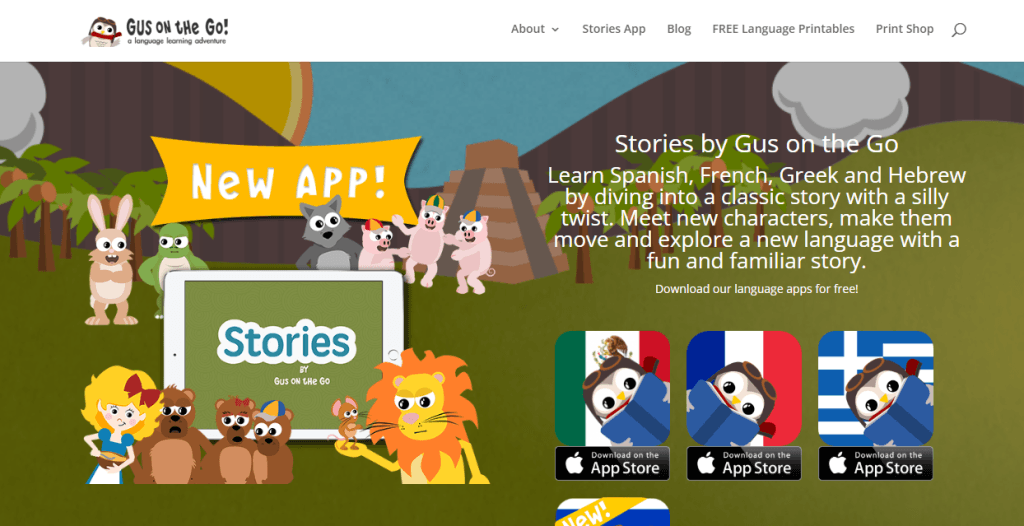
Age: 4–7
This AI app is still one of the best entry points for toddlers. Gus keeps it offline, ad-free, and privacy-perfect.
Features:
- Mini-games by theme (animals, colors, food)
- Native speaker narration
- Ad-free, one-time purchase under $4
3. Mondly Kids: Spanish
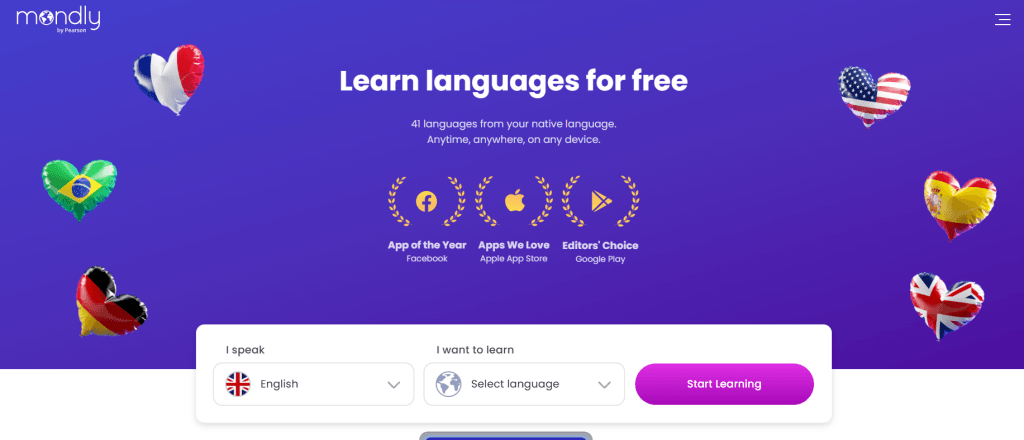
Age: 6–12
If your kid’s obsessed with streaks and badges, then this AI app does the trick.
Mondly Kids uses speech-recognition AI and VR elements. This allows children to hold real-time conversations with animated Spanish friends.
Features:
- Real conversations with an AI chatbot
- AR/VR missions like “ordering in a café”
- Tracks progress via badges, trophies, and daily streaks
Pro Insight: A Frontiers in Education (2025) study showed 47% confidence gains in speaking Spanish after just three months of Mondly use.
4. FabuLingua
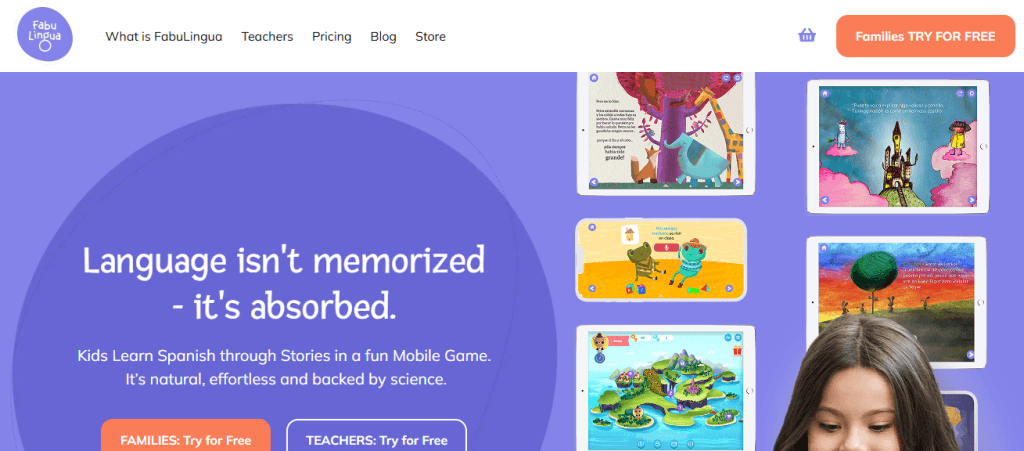
Age: 5–10
This one teaches Spanish through storytelling.
Features:
- Interactive storybooks with tap-to-translate
- “Magical Translations” method (hear Spanish, then English)
- Stories grow in complexity as comprehension rises
Pro Insight: Based on the Comprehensible Input theory, kids acquire language naturally when they understand the story.
5. Studycat: Learn Spanish for Kids
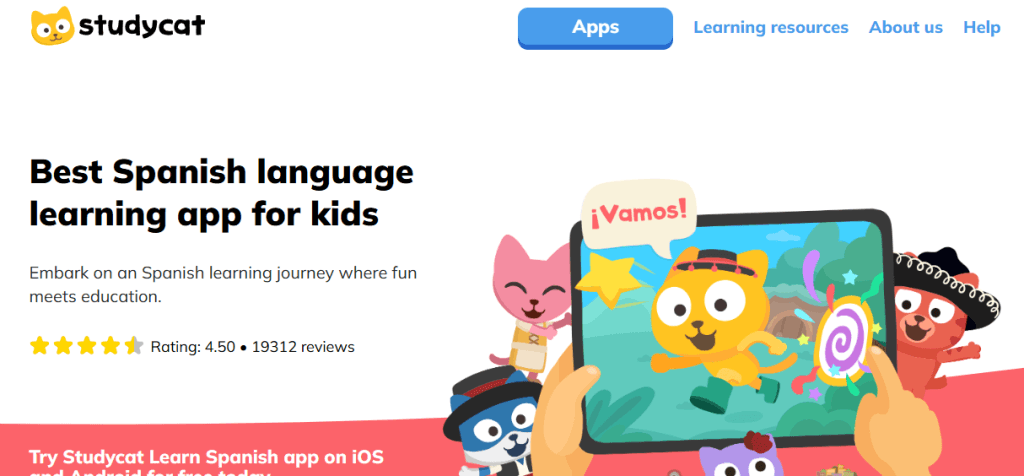
Age: 5–10
This app is the closest thing to having a Spanish teacher trapped in your iPad.
Features:
- Immersive games using Total Physical Response (TPR)
- Pronunciation feedback through built-in AI
- Parent dashboard tracks time, vocab, and reading skills
- Certified kidSAFE and COPPA-compliant
Pro Insight: Studycat’s internal data (2025) showed an 85% engagement rate across 4–10-year-olds and tangible vocabulary growth validated by independent reviews.
How Parents Can Use These Apps With Kids
Don’t just toss them the tablet and walk away — this isn’t babysitting tech.
- Set micro goals (10 minutes a day beats one-hour marathons).
- Play together and repeat new phrases IRL.
- Let your kid teach you a word — it reinforces recall.
- Celebrate milestones (“10 words = more bedtime stories”).
Safety and Screen Time: What to Watch Out For:
AI apps are powerful, but balance still matters.
- Stick to 1 hour a day (WHO’s 2025 rec).
- Go for ad-free or premium versions — fewer distractions.
- Use airplane mode when possible to keep focus tight.
- Double-check privacy settings. All mentioned apps comply with COPPA and GDPR-K standards.
Pro Insight: What’s New in 2025?
Forget static lessons!
AI apps are now able to adjust tone and difficulty based on your kid’s mood.
Learners using AI-powered language tools showed a 22% higher retention rate over three months compared with non-adaptive models in 2025.
Apps like Jolii.ai, even let kids import YouTube clips to turn their favorite cartoons into live vocabulary lessons.
FAQs
Q. Are these apps good for complete beginners?
A. Yes. Jolii.ai and Gus start from zero and need no reading skills.
Q. How frequently should my child use these apps?
A. Just 10 to 20 minutes a day and—voilà!—you’ll stack up 300 to 500 shiny new words in just 3 to 6 months
Q. Can these AI apps replace traditional classrooms?
A. No. They support learning, but real progress comes from live conversation.
Q. At what age should my child start?
A. Ages two to seven are ideal for perfect pronunciation. Children up to ten can still learn well with steady practice.
Final Word:
AI apps have made Spanish learning faster and fun, thanks to interactive lessons and adaptability.
Just don’t act surprised when your 7-year-old corrects your accent.
Recap:
- Jolii.ai = conversational AI + adaptive fun.
- Studycat = detailed dashboards + safe immersion.
- Mondly Kids = AR/VR lessons + gamified streaks.
- FabuLingua = story-first learning + natural flow.
- Gus on the Go = offline simplicity + total safety.
Want a head start? Try Jolii.ai. It makes Spanish language learning faster with adaptive lessons and real-time feedback.