First published: November 2025. Last updated: June 2026
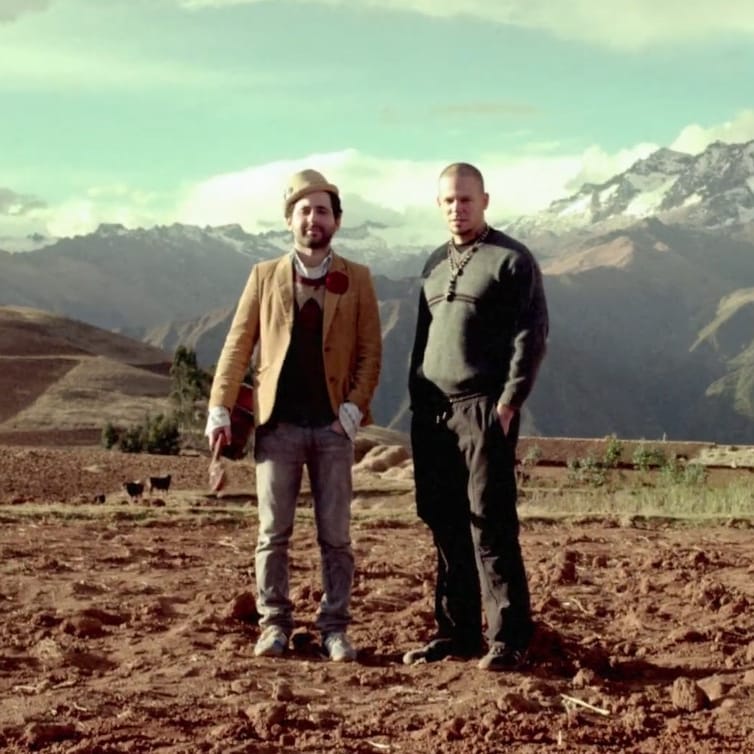
Released in 2011, “Latinoamérica” by Calle 13 is not a love song. It’s a manifesto — a declaration of identity from a continent that has spent centuries being told its resources, its land, and its people are available for purchase. For Spanish learners, it’s also one of the most linguistically rich songs available: clear pronunciation, politically charged vocabulary, and cultural references that open conversations no textbook ever will.
Calle 13 are a Puerto Rican duo led by René Pérez, known as Residente — one of the most celebrated figures in Latin American music. They have spoken about how the legendary Argentine folk singer Mercedes Sosa inspired the song. Sosa was known for her powerful voice and her lifelong commitment to social justice, and her legacy of folk and protest music made her a symbol of resistance across the continent.
This article breaks down the song’s most significant verses — what the words mean, why they matter culturally, and what Spanish learners can take from them into real conversation.
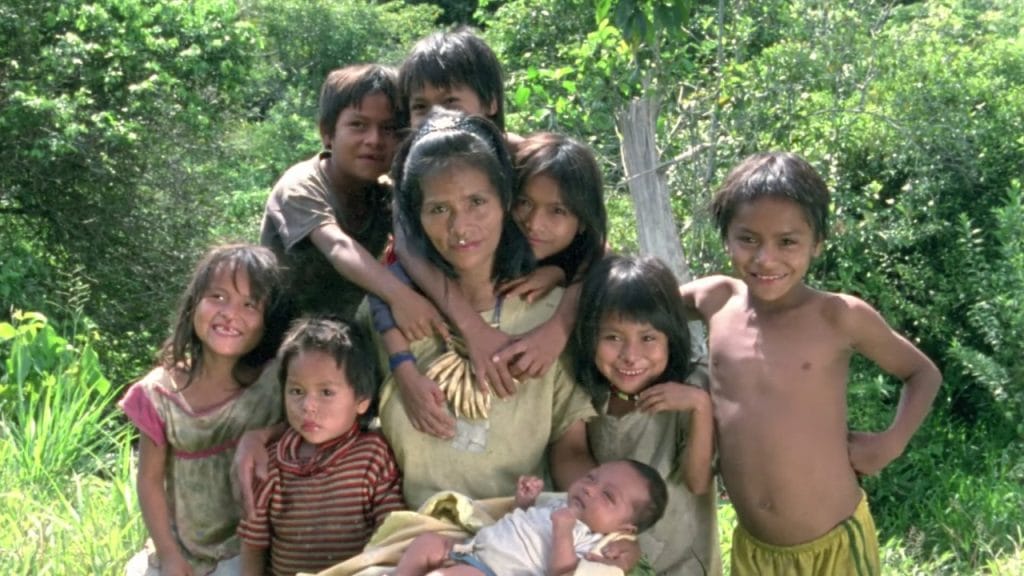
Before reading the analysis, watch the official video once. The imagery — indigenous communities, workers, landscapes, protest — adds a layer of meaning that makes the language land differently.

Why “Latinoamérica” is a Perfect Way to Learn Spanish With Music
“Latinoamérica” dropped as a single in 2011, and was created by Calle 13, a music duo from Puerto Rico. Many people see it as a perfect delivery of a poetic manifesto. As a track, it makes a powerful declaration, speaking out against what Latin America has gone through historically. Those learning Spanish can find plenty to learn in the song for several reasons.
- There is clear pronunciation from René Pérez, the singer known as Residente, so people find the lyrics simpler to understand.
- The vocabulary brings a wealth of words, weaving in topics like politics, nature, daily life, and emotions.
- And the cultural exposure? It’s massive, as you pick up much more than just the language: you get glimpses into the region’s history and the challenges it still faces.
Calle 13 themselves have pointed out that Mercedes Sosa, an iconic singer from Argentina, really sparked the idea for the song. Sosa is pretty well-known for her powerful voice and for her fight for a fair society. Her shows, featuring folk and protest songs, ended up making her a symbol that people connect with justice and resistance.
Decoding “Latinoamérica”: Language and Politics Verse by Verse
The song moves through twelve verses, a repeating chorus, and a final section in Portuguese. The four sections below cover the most linguistically and culturally significant moments.
The Chorus: What Cannot Be Bought
The chorus opens with a series of declarations — the wind, the sun, the rain, the heat — things that exist beyond ownership. The structure repeats the same construction throughout, making it one of the most grammatically useful sections in the song for learners.
The key line: “Tú no puedes comprar al viento“ — you cannot buy the wind.
Language notes: The construction tú no puedes + infinitive (you cannot + verb) is one of the most common patterns in everyday Spanish. Viento (wind), sol (sun), lluvia (rain), calor (heat) are all high-frequency weather and nature vocabulary. The repetition makes them impossible to forget.
Cultural note: The chorus is a direct challenge to neocolonial resource extraction — the idea that foreign companies can purchase Latin America’s land and natural wealth. The elements named are specifically those that sustain life and cannot be commodified. It’s an assertion of what belongs to everyone.
Verse 1: The Scars of Plunder and Strength
The first verse establishes the narrator’s identity as something forged from what was left behind after centuries of exploitation. The land’s people are described as hidden on mountaintops — physically present but socially invisible — with skin tough enough to withstand any climate.
The key line: “Soy toda la sobra de lo que se robaron“ — I am all the leftovers of what was stolen.
Language notes: Sobra (leftover, remainder) is a useful everyday word beyond its political meaning here — las sobras are also dinner leftovers. Se robaron uses the reflexive passive construction common in Spanish — literally “what got stolen” rather than naming who stole it.
Cultural note: “Un pueblo escondido en la cima” — a people hidden on the summit — references indigenous and marginalised communities who preserved their culture in remote highlands while remaining invisible to the political and economic centres below them.
Verse 4: The People as the True Wealth
This verse builds a series of identity statements, each one rejecting the idea that Latin America’s value lies in its extractable resources. The narrator identifies with a photograph of a disappeared person, with blood in veins, with land that feeds people, with a basket of beans.
The key line: “Soy un pedazo de tierra que vale la pena“ — I am a piece of land that is worth it.
Language notes: Vale la pena — literally “worth the pain” — is one of the most common expressions in everyday Spanish. It is used wherever English speakers would say “it’s worth it.” Frijoles (beans) appears throughout Latin American literature and music as a symbol of basic subsistence. It is food that keeps people alive rather than food that impresses.
Cultural note: Desaparecido — disappeared one — refers to the thousands of people taken, tortured, and killed by authoritarian governments across Latin America during the military dictatorships of the 1970s and 1980s. The word carries enormous weight across the continent and is never used casually.
Verse 12: Resilience and Cultural Heritage
The final verse shifts to collective action and reconstruction. The work is described as brute but proud. What belongs to one person belongs to everyone. The community doesn’t drown in waves — and if it collapses, it gets rebuilt.
The key line: “Trabajo bruto pero con orgullo” — brute work but with pride.
Language notes: Marullos (large waves, rolling seas) is a less common word worth noting. It’s used here as a metaphor for the political and economic upheavals that have repeatedly threatened to overwhelm Latin American communities. Se ahoga (drowns) and se derrumba (collapses) are reflexive constructions useful for describing things that happen to subjects rather than things subjects do.
Cultural note: Lo mío es tuyo — what’s mine is yours — is a direct statement of collectivism over individualism, a recurring theme in Latin American political thought and a direct counter to the extractive logic the song critiques throughout.
Complementary Learning Activities
Vocabulary scavenger hunt
Listen to the song and write down every word you recognise in three categories:
| Category | Examples from the song |
|---|---|
| Nature | viento, sol, tierra, río |
| Family and community | sangre, venas, pueblo, corazón |
| Struggle and resilience | trabajo, orgullo, reconstruyo |
Then find two more words for each category that aren’t in the song.
Cultural reflection
After working through the analysis, consider:
- What does Latinoamérica mean to you after this breakdown?
- How does the song define what is truly valuable — and what does it reject?
- Can you think of a song from your own culture that similarly defends its identity?
Grammar drill — tú no puedes + infinitive
Write five new sentences using the same structure as the chorus. Start simple:
- Tú no puedes comprar la felicidad. (You cannot buy happiness.)
- Tú no puedes comprar el tiempo. (You cannot buy time.)
Then try with different subjects: ella no puede, nosotros no podemos.
“Latinoamérica” rewards repeated listening. The first time you hear it, you catch the hook. The second time, you hear the vocabulary. By the third or fourth listen — especially after working through this analysis — the cultural weight of each line starts to land differently.
The expressions here are worth learning beyond the song. Vale la pena, lo mío es tuyo, trabajo con orgullo — these appear in everyday Latin American Spanish in contexts far removed from political songs. Learning them through a track this specific and this memorable means they arrive with emotional anchoring that no vocabulary list can replicate.
For more Latin American music analysis using the same method, the Soy Yo article applies this approach to Bomba Estéreo — a very different register, but the same commitment to identity and cultural specificity.
Jolii lets you practice the vocabulary and grammar structures from this analysis interactively — so the language moves from recognition into something you can actually produce in conversation.