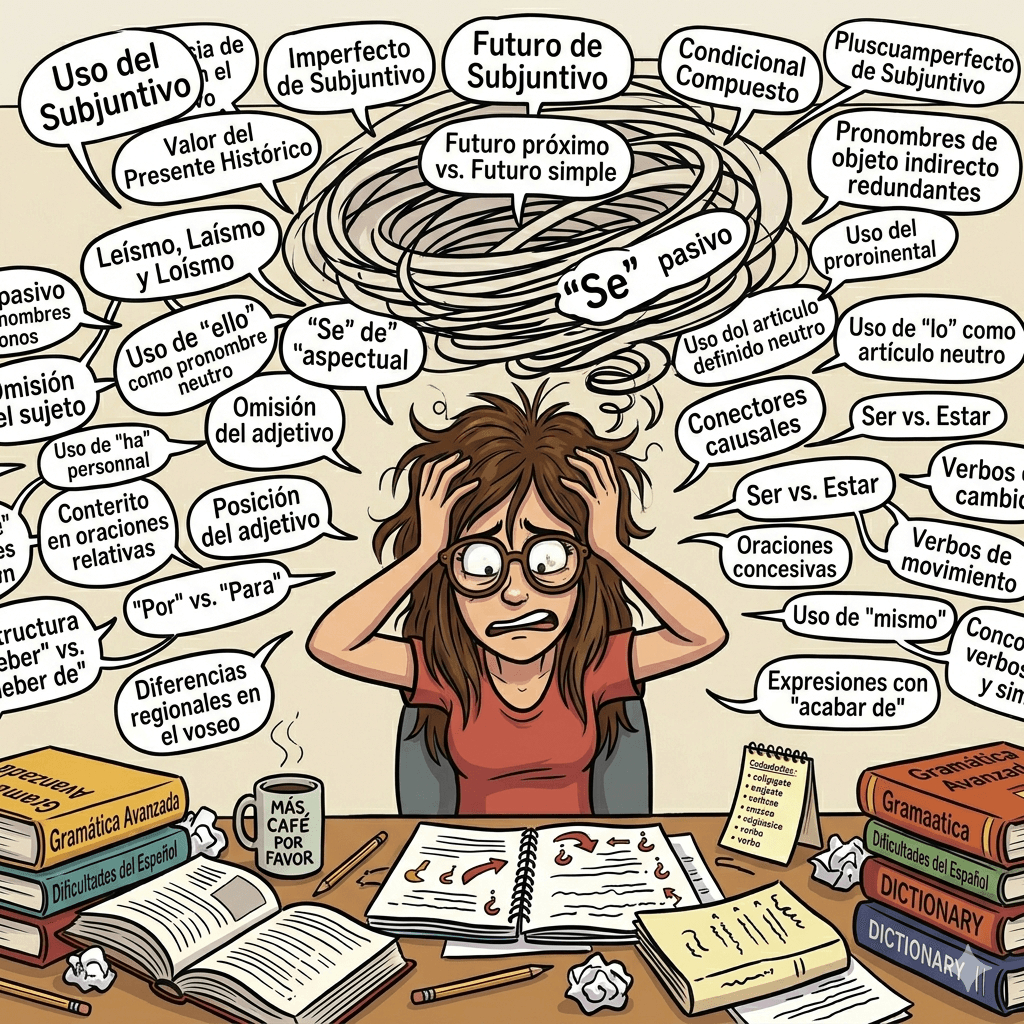
¿Quieres mejorar tu español? Do you want to improve your Spanish? One of the best ways to do this is to come up with a daily routine and stick to it. If you dedicate yourself to learning a little Spanish every day, you will see results in no time!
How Does a Daily Routine Help You Improve in Spanish?
Consistency is key in learning Spanish. If you just study Spanish every now and then, or if you just study in one big burst before an exam, you won’t get very far. However, if you create a daily routine, you will learn Spanish fast because you are using it often and forming new neural pathways in your brain that make the language a permanent part of it.
According to the University of North Carolina at Chapel Hill, research has proven that “cramming” or studying Spanish in hours-long sessions before a test is not an effective way to learn. Instead, you should use a learning strategy called “distributed practice,” which means spreading out your study time.
Practicing Spanish in small, manageable chunks every day creates long-lasting knowledge as well as a sense of satisfaction that comes from accomplishing this daily task. That satisfaction, in turn, keeps you motivated and engaged with your lessons.
Takeaway: A daily Spanish routine can help you improve in Spanish by forming a habit you will stick with.
Ways to Incorporate Spanish into Your Day
One of the best ways to learn any language is via immersion. Immersion can be described as surrounding yourself with a language so that you start to think in that language. Here are some examples of how you can incorporate Spanish into your daily routine without much effort at all.
- Switch your phone’s language to Spanish – This way, every time you check your teléfono móvil (which is probably often), you will be pressed to exercise your Spanish.
- Watch videos, shows, and movies in Spanish – Watching videos in Spanish helps you get an ear for the language, and it makes for good practice because it is entertaining. Jolii.ai can help with this by providing subtitles for videos as well as other useful content.
- Read the news in Spanish – You should probably stay up-to-date with current events anyway, so why not do it by reading news stories in Spanish?
- Read books in Spanish – Start off with a Spanish translation of a book you already know well in your native language, and challenge yourself to read at least a chapter a day. You can also start with children’s books and work your way up to adult novels!
- Write a journal in Spanish – Take 10 minutes to write about your thoughts or what happened during your day to practice your Spanish writing skills.
Takeaway: There are many small ways to add Spanish to your daily routine and immerse yourself in the language.

Example Daily Routine to Improve in Spanish
There are two ways to create a Spanish routine. The first is to set aside 10-15 minutes a day to dedicate to studying Spanish every single day. The other is to make Spanish a part of the daily routine you already have, which could be even more effective since it immerses you in the language and gets you thinking in it for longer periods of time.
Here’s an example of how to work Spanish into your existing daily routine:
- Change your phone language to Spanish so that whenever you look at it during the day, you will think in Spanish.
- While you eat breakfast or drink your morning coffee, read a news article in Spanish.
- On the way to work, listen to Spanish music or a Spanish podcast.
- On your lunch break, try to think of the Spanish names for the foods and drinks you and your coworkers consume (is anyone drinking agua? Or un refresco?)
- When you get home, greet your spouse or family members in Spanish to get in some speaking practice. Try to tell them about your day, too!
- After dinner, watch a show, movie, or video in Spanish.
- Then, if you have time, use the notes app on your phone to write a few lines about your day in Spanish.
You can incorporate all of these or just some of them to make Spanish a part of your daily life.
Takeaway: Adding Spanish to your existing daily routine is easy and will help you keep learning constantly.
FAQs
Does a daily routine really help you improve in Spanish?
Yes! Studies have shown that practicing Spanish for a few minutes a day leads to quicker absorption and long-term retention.
What types of Spanish resources should I use?
Aside from textbooks, you can also use videos, movies, shows, podcasts, books, comic books, newspaper articles and apps like Jolii.ai to learn Spanish.
How much time should I spend studying Spanish each day?
Many sources like the University of North Dakota recommend studying Spanish for at least 30 minutes a day. If you find your attention waning, try splitting the time up into two separate sessions, or switch your focus from reading to speaking, for example.
Final Takeaway
Creating a daily routine can improve your Spanish skills by immersing you in the language. Jolii.ai helps with that by offering entertaining and informative exercises and videos to make learning more fun.