First published: November 2024. Last updated: June 2026
Would you love to learn French but don’t know where to start? Are you planning a trip to Paris and hoping to engage with locals during your holiday? Or maybe you have already tried learning French but ended up learning a lot of complex grammar rules without gaining any practical speaking skills?
If you answered “yes” to any of the above questions, then you are in the right place! In this blog article, we are going to help you get started with French. Whether you are learning French to prepare for your next vacation or just out of interest, with just a few basic French phrases, you will be able to try your first conversations in French in no time. Are you ready? On y va!
6 Useful Tips to Start Speaking French (or any other Language) Quickly
Did you know? Research shows that 100 words are enough to understand 50% of daily conversation. This means that you don’t need to learn thousands of words to be able to engage in basic conversations with French people. Sounds amazing, right? But why do many people struggle and find it difficult to say even simple French phrases after months or years of learning French? Here are a few tips on how to start speaking quickly.
- Accept that you will make mistakes. The truth is mistakes are inevitable, even at an advanced level. Once you acknowledge it, you will stop worrying too much about saying it all right.
- Focus on the message rather than on the form. If the person you are speaking with gets your message, then you have already done a good job. There is no need to aim for perfection.
- Keep it simple. Avoid getting into too complicated sentences; you might get stuck. Simple, oversimplified sentences are your best ally. Something like subject-verb-object is more than enough.
- Learn with context. You will be able to memorize easy French words and phrases only if you learn them in real-life situations. While learning, imagine the situation and visualize it. You won’t go far if you just pick up the dictionary and try to memorize words without context.
- Don’t rush it. We often hear people saying: “I understand many beginner French phrases, but I cannot speak.” Before starting to speak a language, you need some basics and some exposure to it. We first need to passively absorb basic concepts and hear them a few times before being able to actively speak.
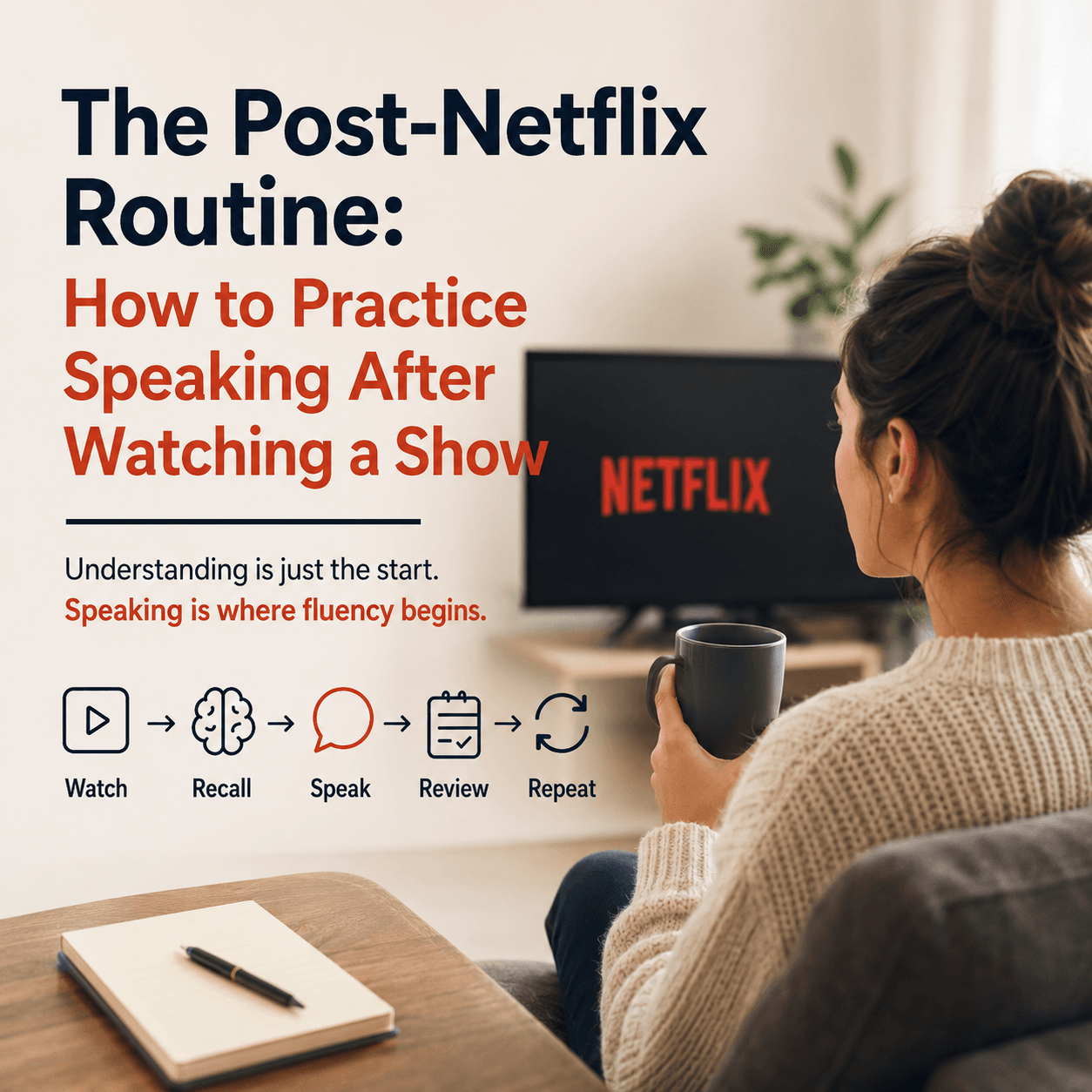
- Last but not least, Have fun! Learning a language should be an enjoyable experience. With Jolii, you can import videos and learn from them while enjoying your favorite songs and shows.
3 Must-Known Facts About the French Language
Let’s now get into the practical part. But, before getting into actual basic French words and phrases that will help you quickly build conversational skills, it’s important to first cover three things to know about the French language.
- Pronunciation
French is well known for its tricky pronunciation, so knowing basic pronunciation rules is important. In this article, you can listen to common French words and sentences as you read along. And with Jolii, you can also practice your pronunciation skills and get instant feedback. Focus on learning the basics, but don’t stress too much about perfect pronunciation for now.
- Basic French Words to Get Started
Here is a list of high-frequency French words that are essential for getting started with French. Make sure you master these as they are used daily in French conversation.
| Personal Pronouns | |
| French | English |
| Je | I |
| Tu | You |
| Il | He / She |
| Elle | She |
| Nous | We |
| Vous | You (plural) |
| Ils | They (m) |
| Elles | They (f) |
| Question Words | |
| French | English |
| Comment? | How? |
| Où? | Where? |
| Combien? | How much? How many? |
| Pourquoi? | Why? |
| Quoi? | What? |
| Quand? | When? |
| Quel? | Which? |
| Qui? | Who? |
| Essential Verbs | |
| French | English |
| Être | To be |
| Avoir | To have |
| Aller | To go |
| Venir | To come |
| Faire | To do |
| Parler | To speak |
| Manger | To eat |
| Boire | To drink |
| Vouloir | To want |
Please note that verbs in French are conjugated, which means their endings change depending on the subject, and some are irregular.
For instance the verb être (to be), changes to je suis (I am), tu es (you are), etc… The full conjugation is out of the scope of this article, but did you know? With Jolii, you can learn verb conjugations and practice basic French words.
3. Formal and Informal Language
French, like many other languages, has two ways of addressing people depending on the level of formality: tu et vous . Understanding this difference will help you interact better with others according to the situation.
The basic rule is:
– use tu with friends, family, and children.
– use vous with strangers, especially with older people.
For instance:
S’il te plaît. (Please,informal)
S’il vous plaît. (Please, formal)
In the basic expressions in French below, we will use the form you are most likely to use, depending on the situation.
Essential Beginner French Phrases for Quick Conversational Skills
Learning a few key French words and phrases is the best way to start your journey into the French language. With just a few beginner French phrases, you can confidently handle everyday situations such as asking for directions, checking in at your hotel, ordering something to eat and drink, and even meeting locals. In the next paragraphs, we’ll show you how.
Asking directions
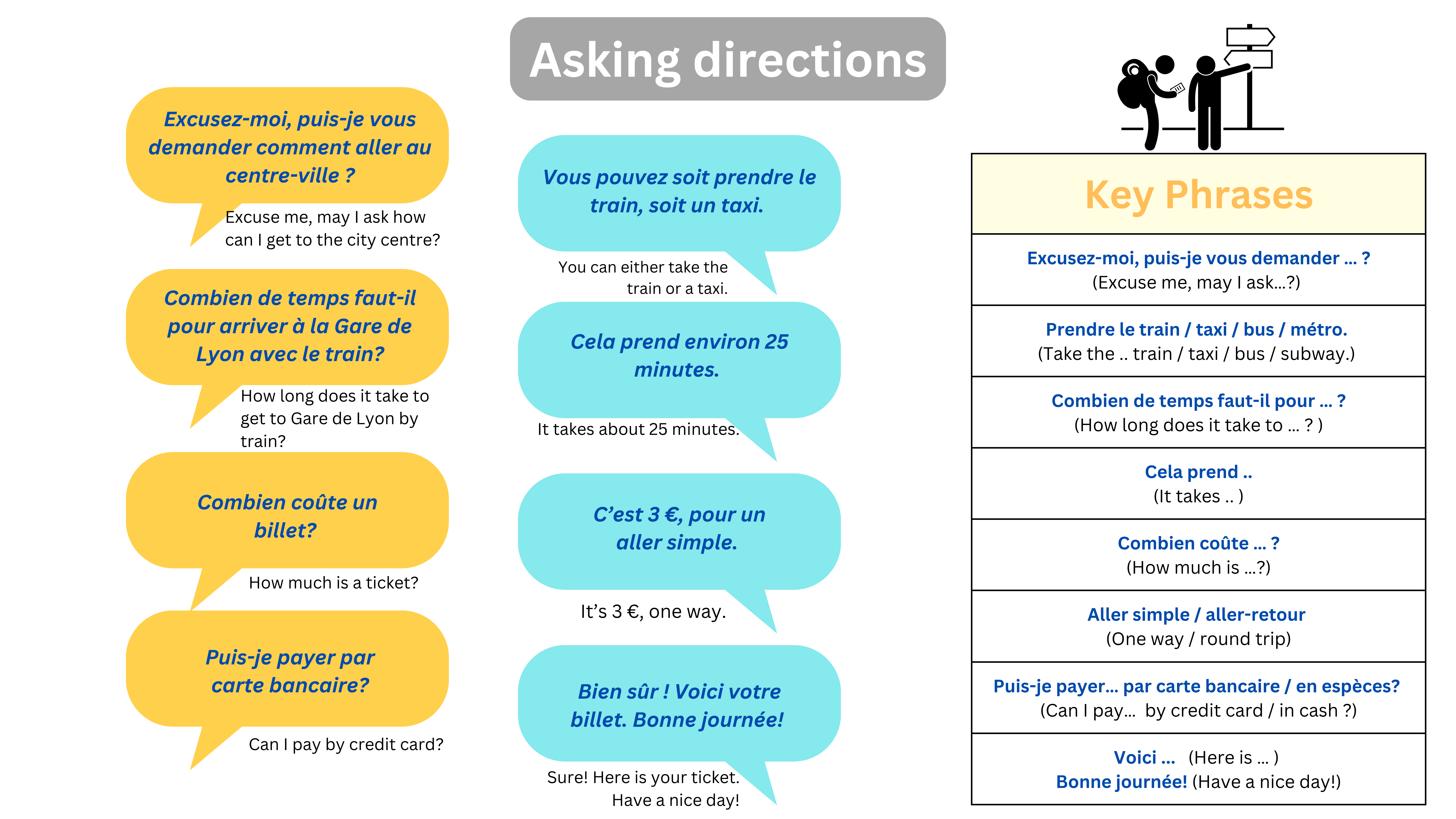
Imagine you have just landed at the airport in Paris and are excited to start exploring the city. But wait – how do you get to your accommodation? Let’s start with a dialogue to ask for directions at the ticket office (in French: guichet des billets. )
Checking-in
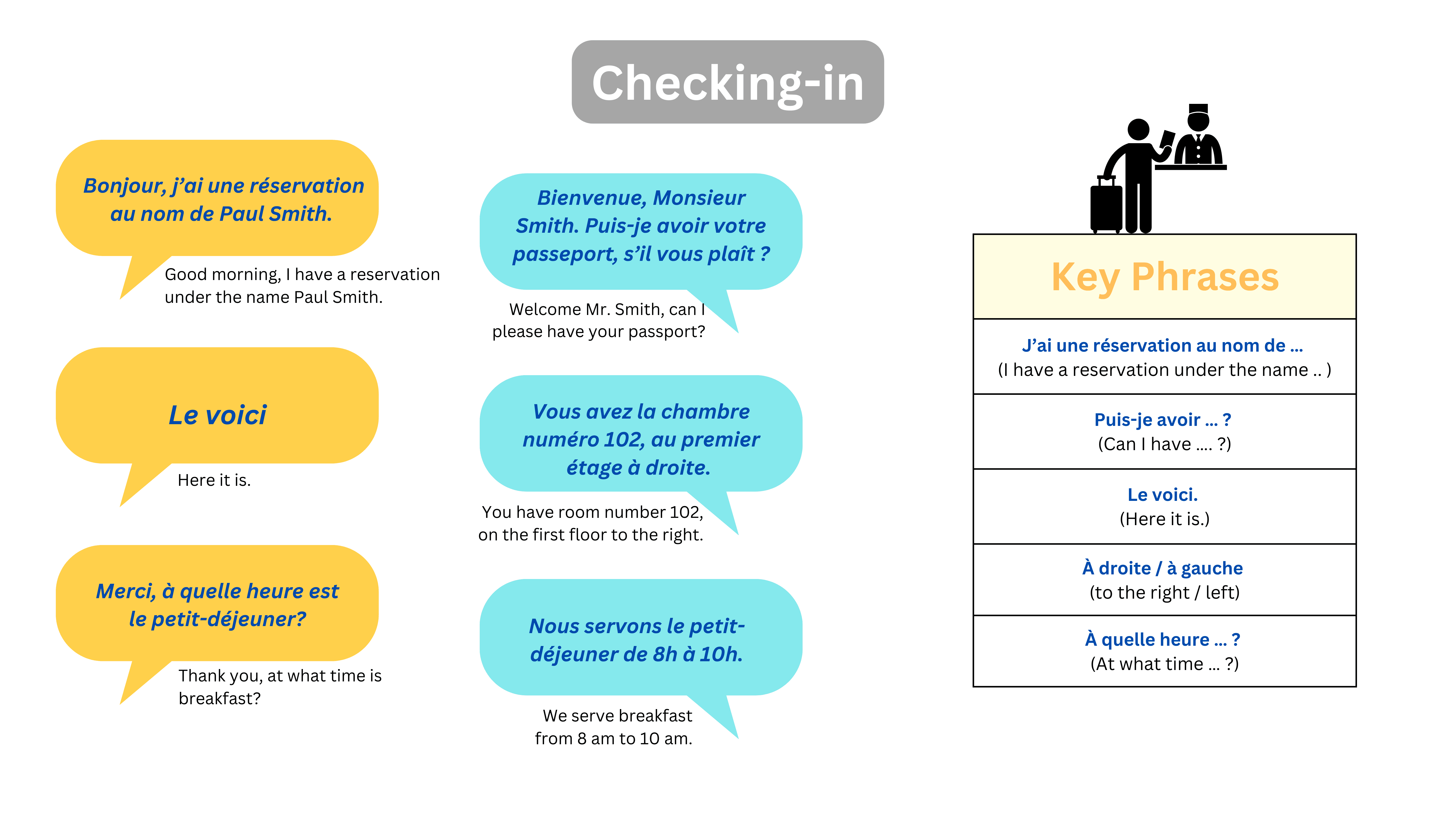
After taking the train to the central station, you have finally reached the hotel; it’s time to check in!
| Checking-in | ||
| French | English Translation | Key Phrases |
| Bonjour, j’ai une réservation au nom de Paul Smith. | Good morning, I have a reservation under the name Paul Smith. | J’ai une réservation au nom de … (I have a reservation under the name .. ) |
| Bienvenue, Monsieur Smith. Puis-je avoir votre passeport, s’il vous plaît ? | Welcome Mr. Smith, can I please have your passport? | Puis-je avoir … ? (Can I have …. ?) |
| Le voici | Here it is. | Le voici. Here it is. |
| Vous avez la chambre numéro 102, au premier étage à droite. | You have room number 102, on the first floor to the right. | À droite / à gauche (to the right / left) |
| Merci, à quelle heure est le petit-déjeuner? | Thank you, at what time is breakfast? | À quelle heure … ?(At what time … ?) |
| Nous servons le petit-déjeuner de 8h à 10h. | We serve breakfast from 8 am to 10 am. | |
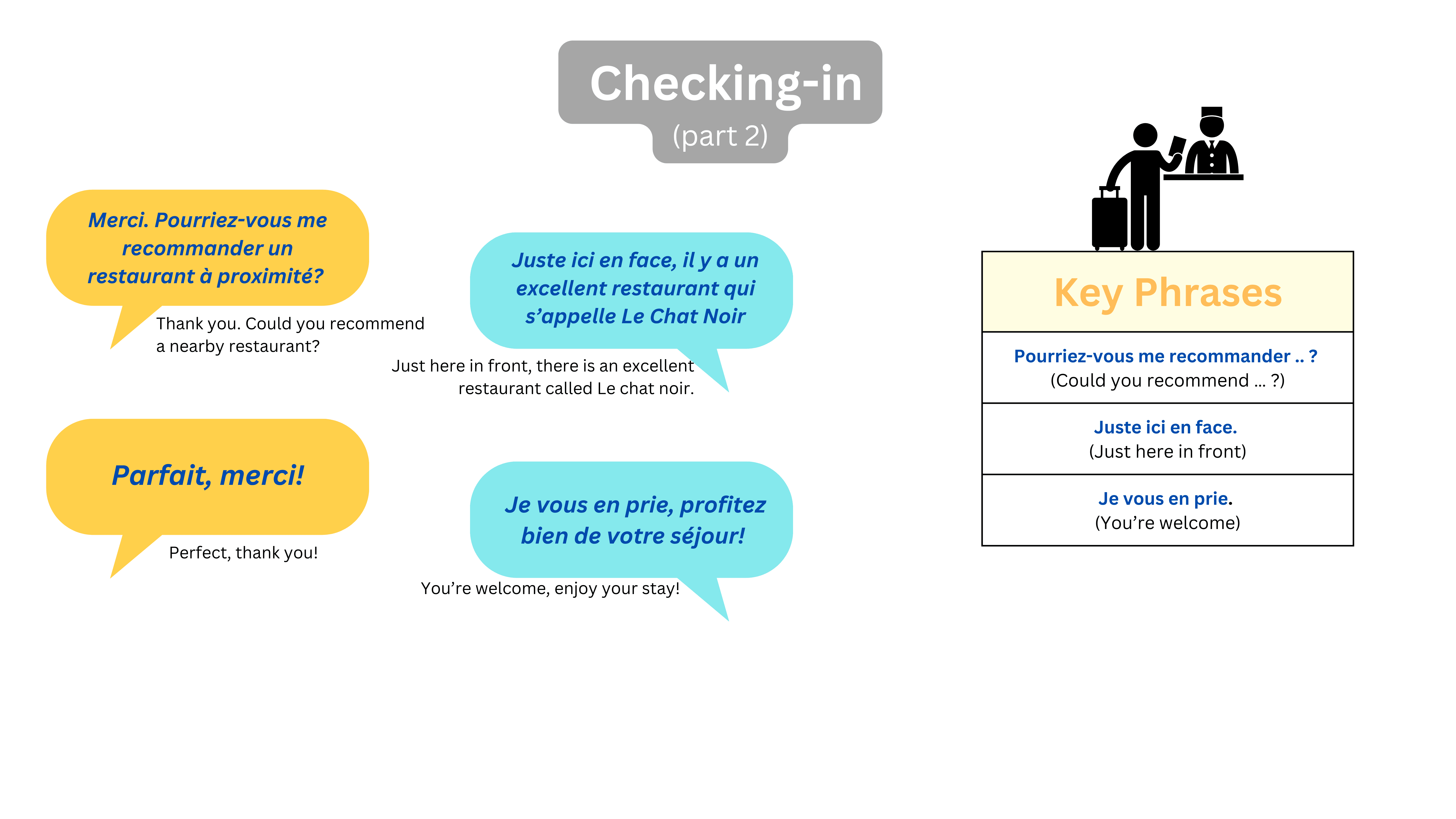
| Merci. Pourriez-vous me recommander un restaurant à proximité? | Thank you. Could you recommend a nearby restaurant? | Pourriez-vous me recommander .. ? (Could you recommend … ?) |
| Juste ici en face, il y a un excellent restaurant qui s’appelle Le Chat Noir. | Just here in front, there is an excellent restaurant called Le chat noir. | Juste ici en face. (Just here in front) |
| Parfait, merci! | Perfect, thank you! | |
| Je vous en prie, profitez bien de votre séjour! | You’re welcome, enjoy your stay! | Je vous en prie. (You’re welcome) |
Ordering Food & Drinks
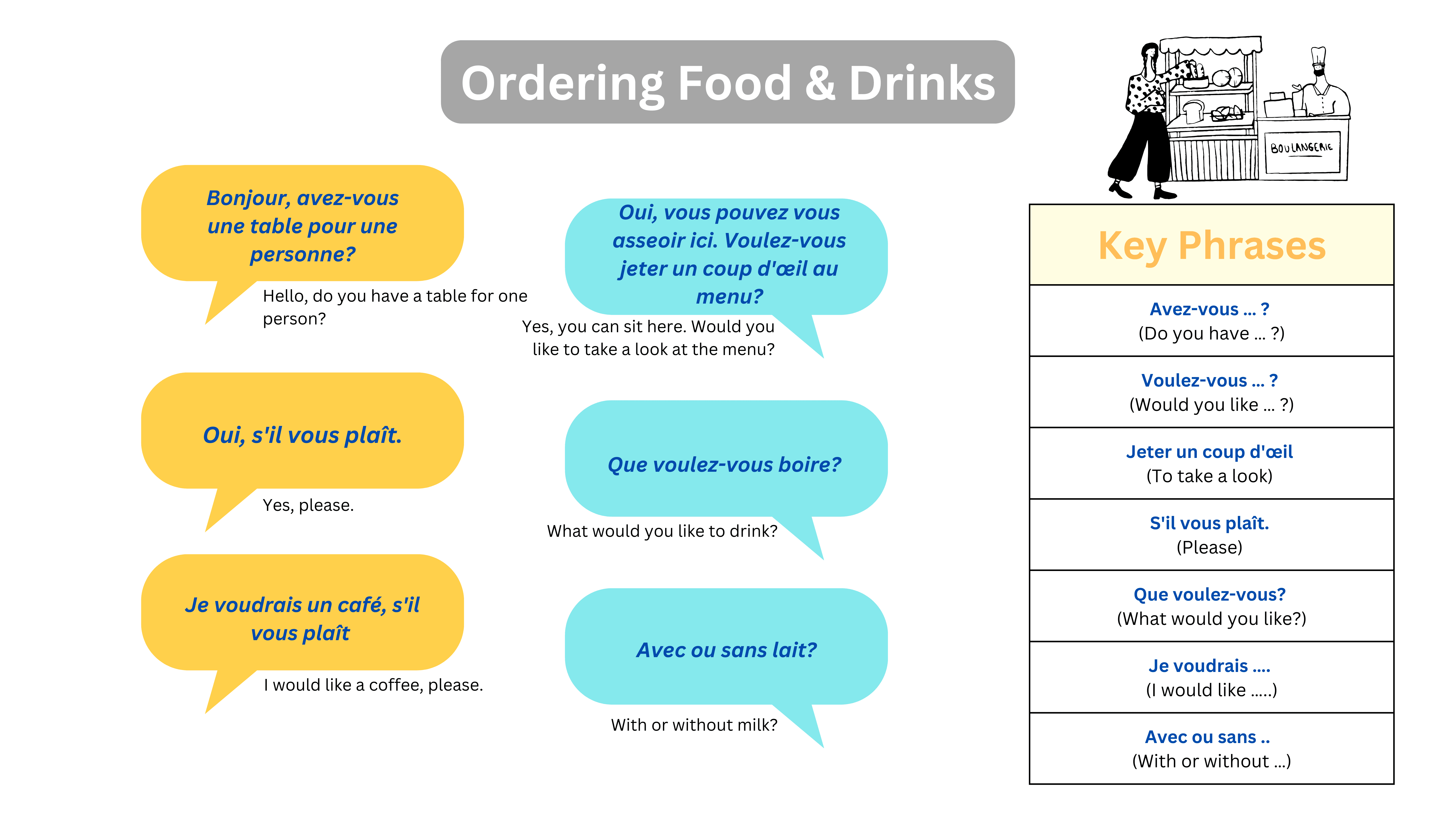
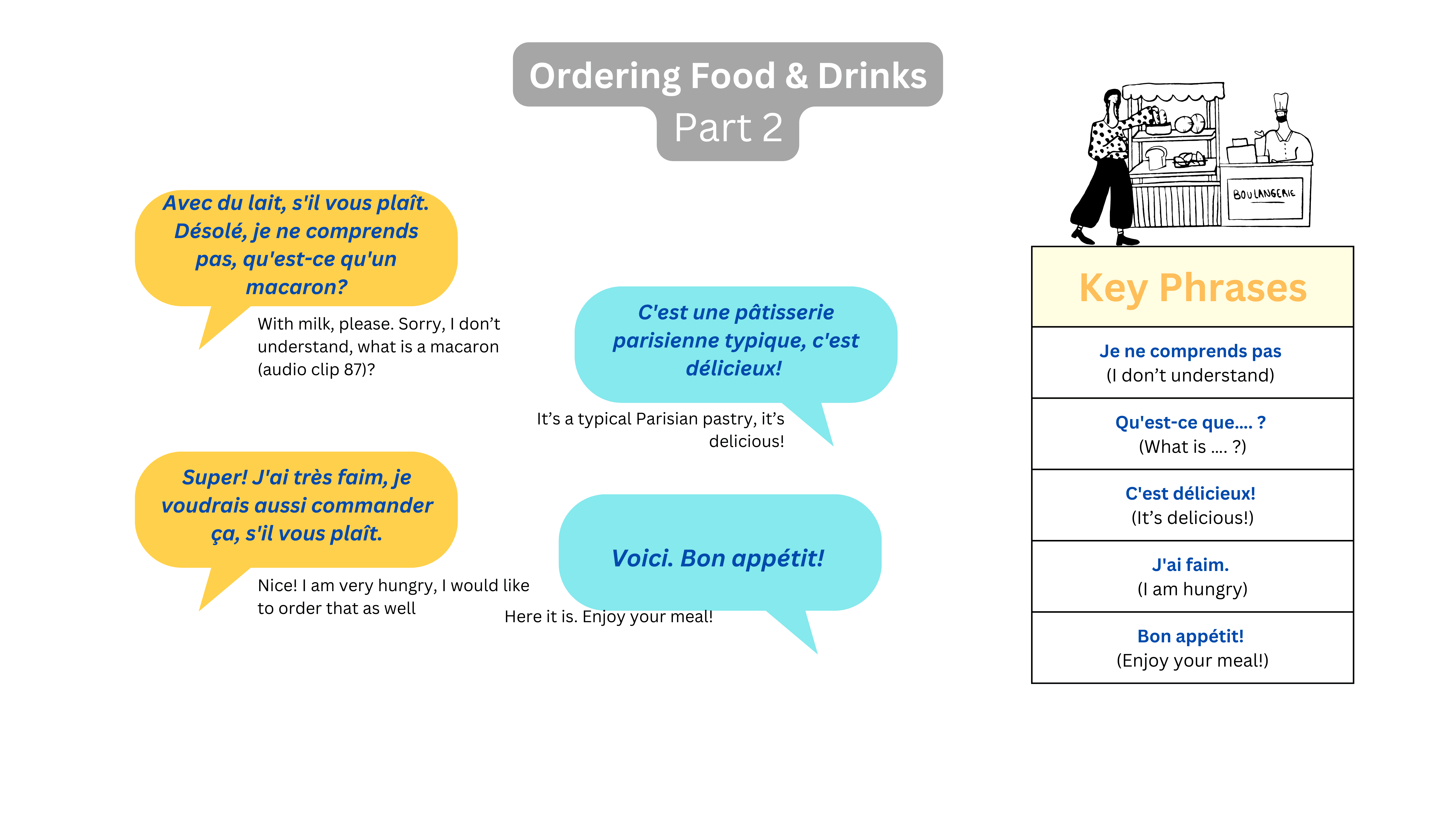
Now that you are finally settled, it’s time to go out and explore the city. Hey, but aren’t you hungry? Let’s have coffee at the closest bakery (in French: boulangerie )!
| Ordering Food & Drinks | ||
| French | English Translation | Key Phrases |
| Bonjour, avez-vous une table pour une personne? | Hello, do you have a table for one person? | Avez-vous … ? (Do you have … ?) |
| Oui, vous pouvez vous asseoir ici. Voulez-vous jeter un coup d’œil au menu? | Yes, you can sit here. Would you like to take a look at the menu? | Voulez-vous … ? (Would you like … ?) Jeter un coup d’œil (To take a look) |
| Oui, s’il vous plaît. | Yes, please. | S’il vous plaît. (Please) |
| Que voulez-vous boire? | What would you like to drink? | Que voulez-vous? (What would you like?) |
| Je voudrais un café, s’il vous plaît | I would like a coffee, please. | Je voudrais …. (I would like …..) |
| Avec ou sans lait? | With or without milk? | Avec ou sans .. (With or without …) |
| Avec du lait, s’il vous plaît. Désolé, je ne comprends pas, qu’est-ce qu’un macaron? | With milk, please. Sorry, I don’t understand, what is a macaron ? | Je ne comprends pas (I don’t understand)Qu’est-ce que…. ? (What is …. ?) |
| C’est une pâtisserie parisienne typique, c’est délicieux! | It’s a typical Parisian pastry, it’s delicious! | C’est délicieux! (It’s delicious!) |
| Super ! J’ai très faim, je voudrais aussi commander ça, s’il vous plaît. | Nice! I am very hungry, I would like to order that as well | J’ai faim.(I am hungry) |
| Voici. Bon appétit! | Here it is. Enjoy your meal! | Bon appétit! (Enjoy your meal!) |
Meeting People
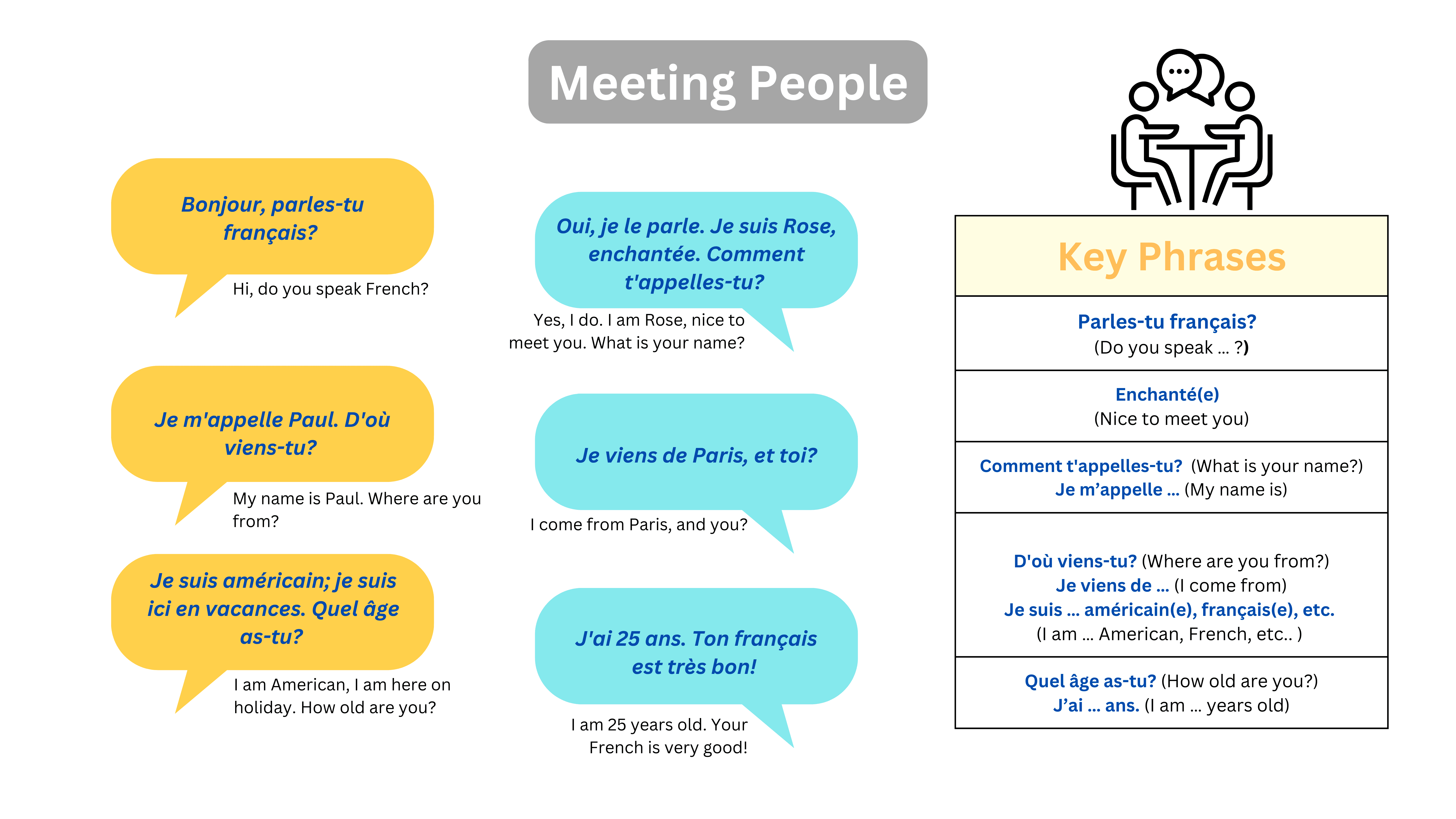
While you enjoy your coffee and macaron , you try practicing French with the girl at the table next to you.
| Meeting People | ||
| French | English Translation | Key Phrases |
| Bonjour, parles-tu français? | Hi, do you speak French? | Parles-tu français? (Do you speak … ?) |
| Oui, je le parle. Je suis Rose, enchantée. Comment t’appelles-tu? ) | Yes, I do. I am Rose, nice to meet you. What is your name? | Enchanté(e) (Nice to meet you)Comment t’appelles-tu? (What is your name?) |
| Je m’appelle Paul. D’où viens-tu? | My name is Paul. Where are you from? | Je m’appelle … (My name is)D’où viens-tu?(Where are you from?) |
| Je viens de Paris, et toi? | I come from Paris, and you? | Je viens de … (I come from) |
| Je suis américain; je suis ici en vacances. Quel âge as-tu? | I am American, I am here on holiday. How old are you? | Je suis … américain(e), français(e), etc. (I am … American, French, etc.. )Quel âge as-tu? (How old are you?) |
| J’ai 25 ans. Ton français est très bon! | I am 25 years old. Your French is very good! | J’ai … ans. (I am … years old) |
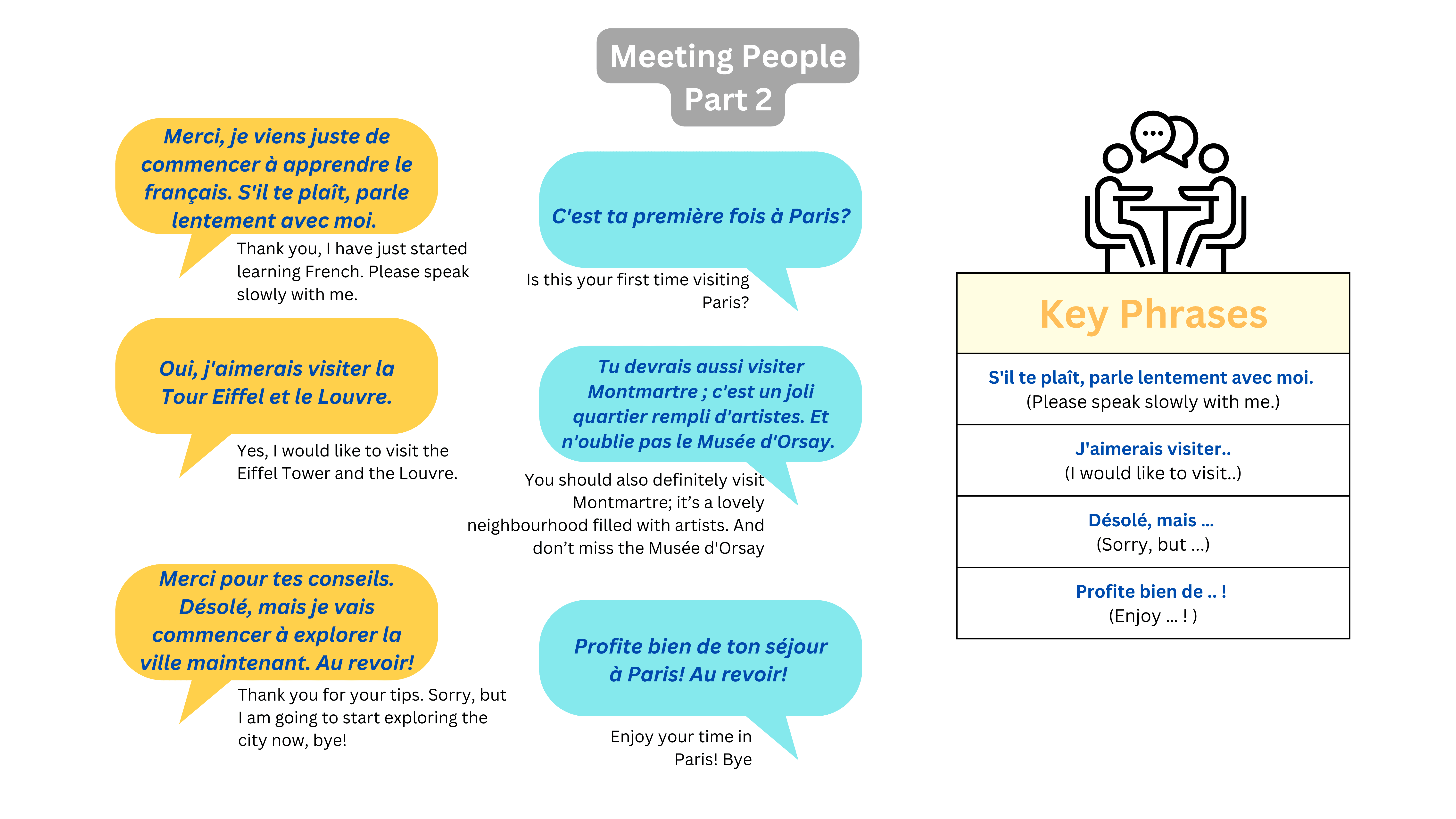
| Merci, je viens juste de commencer à apprendre le français. S’il te plaît, parle lentement avec moi. | Thank you, I have just started learning French. Please speak slowly with me. | S’il te plaît, parle lentement avec moi. (Please speak slowly with me.) |
| C’est ta première fois à Paris? | Is this your first time visiting Paris? | |
| Oui, j’aimerais visiter la Tour Eiffel et le Louvre. | Yes, I would like to visit the Eiffel Tower and the Louvre. | J’aimerais visiter.. (I would like to visit.. |
| Tu devrais aussi visiter Montmartre ; c’est un joli quartier rempli d’artistes. Et n’oublie pas le Musée d’Orsay. | You should also definitely visit Montmartre; it’s a lovely neighbourhood filled with artists. And don’t miss the Musée d’Orsay | |
| Merci pour tes conseils. Désolé, mais je vais commencer à explorer la ville maintenant. Au revoir! | Thank you for your tips. Sorry, but I am going to start exploring the city now, bye! | Désolé, mais … (Sorry, but …) |
| Profite bien de ton séjour à Paris! Au revoir! | Enjoy your time in Paris! Bye! | Profite bien de .. ! (Enjoy … ! ) |
Congratulations! You have only been in France for a few hours, and you have already spoken some French! Sounds too good to be true? Well, in real life, you might need a few more words and sentences to speak French with ease during your trip. With Jolii you can go further and learn more basic expressions in French that will help you make the most out of your trip. What about starting today?
Conclusion
Getting to speak with locals through basic expressions in French might be easier than you think. With Jolii, you can practice easy French words and phrases in context, practice pronunciation, and get instant feedback. Don’t wait any longer; start your language-learning journey today!
FAQs
Q: Is learning French possible in three months?
A: It depends. With the right method and with the right tools you can learn some beginner French phrases quickly and get by during your trip to France. To get to an advanced level, you will have to keep practicing. With Jolii, you can import your favorite YouTube and Netflix videos and learn while watching!
Q: How does Jolii help with learning easy French words and phrases?
A: With Jolii you can practice pronunciation, vocabulary, and listening skills that help you get conversational in French quickly. With its advanced AI tools, you can practice before your upcoming trip to France!
Q: Can I learn French by myself?
A: Yes, you can learn French by yourself, and using the Jolii app makes it easier and more engaging. Jolii offers interactive lessons tailored to your learning style, helping you learn basic French sayings and improve your pronunciation. By setting realistic goals and practicing regularly with Jolii, you can make meaningful progress in your journey to learn French independently.
Bonus: 6 French Words To Impress Native Speakers
And now, let’s learn some slang words to surprise your French friends! These words are commonly used by native speakers but hardly found in textbooks.
| French slang | Meaning in French | Explanation | Examples |
| Truc | Chose | This is probably the most common Slang word, used by all speakers. it just means stuff. | C’est un truc intéressant. (It’s an interesting thing.)Donne-moi ce truc. (Give me that thing.) |
| Pote | Copain | Used to talk about a close friend or buddy. It’s gender neutral and similar to the word ‘mate.’ | Je sors avec mon pote. (I’m hanging out with my buddy.)C’est mon pote depuis longtemps. (He’s been my buddy for a long time.) |
| Mec | Garçon | This is French slang for a guy, dude, etc. It’s basically the same as the English word ‘bro’. | Regarde ce mec, il est cool! (Look at that guy, he’s cool!)C’est un mec sympa. (He’s a nice guy.) |
| Ouf | Fou / incroyable | Used to express surprise or amazement, conveying a sense of something being impressive | Ce film était ouf! (That movie was crazy!)C’est ouf comme elle danse! (It’s crazy how she dances!) |
| Bordel | Désordre | While literally meaning brothel, it is used to refer to a mess or a chaotic situation | Arrête de faire le bordel ici!(Stop making a mess here!)C’est le bordel dans ma chambre! (It’s a mess in my room!) |
| Boulot | Travail | Used to refer to a job, used in casual conversations to refer to work or tasks. | Aujourd’hui j’ai beaucoup de boulot. (Today I have a lot of work.) Je dois aller au boulot maintenant. (I have to go to work now.) |