First published: January 2026. Last updated: June 2026
Several months after studying German, I discovered something unexpected and honestly, quite scary.
During my learning period, I read German textbooks, watched movies, and used flashcards. I could conjugate verbs in German and assign gender to nouns, but something was missing.
Speaking German just didn’t come easy to me. I was as confused as you probably are right now. I knew everything by heart, but whenever I opened my mouth to speak, it wouldn’t cooperate.
It was as if my brain and mouth were experiencing a disconnect. At that time, I was scared, but I eventually realized that I wasn’t alone, and my experience wasn’t uncommon.
Through my research, I discovered I was experiencing something called ‘Foreign Language Anxiety,’ a combination of hesitation, self-doubt, and fear that stops a person from using a language. This anxiety stems from worrying that you’ll make a mistake, struggle to communicate, or be judged when you speak. Knowing the language rules doesn’t stop hesitation from creeping in.
This is the same psychological mechanism explored in The Affective Filter — anxiety doesn’t just make speaking uncomfortable, it actively blocks the brain’s ability to process and produce language.
I faced this fear for weeks until I overcame it. I joined a language exchange platform and started speaking with Germans there. My hands were sweaty, my voice was shaky, and I’m pretty sure my pronunciations were rusty, but it was a moment that changed things for me. If you’re having a similar experience, I hope my story helps you to understand your situation better and overcome it.
Why I was Afraid to Speak German (And Why You Might Be Too)
After a lot of introspection and research, I discovered that I wasn’t scared of speaking German because of a knowledge gap, but I was hesitant about putting everything I learned to test.
- I was worried that I would mispronounce some German words
- I thought I would suddenly forget some vocabulary and embarrass myself.
- I imagined that I would sound weird and awkward.
- I didn’t trust my accent and fluency.
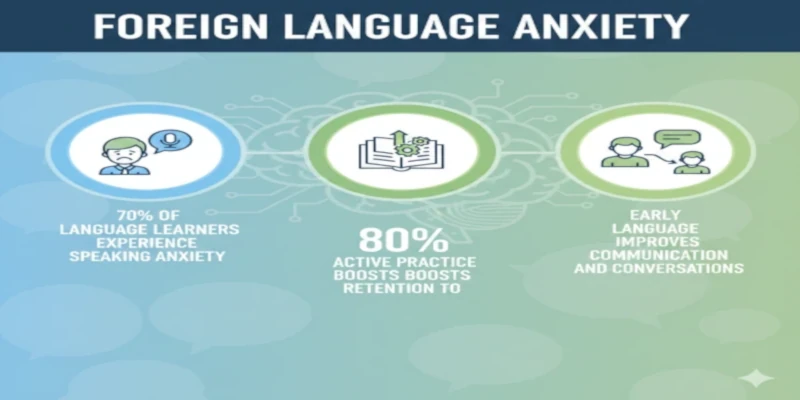
If you have ever felt this way, it doesn’t mean you didn’t learn the language correctly. You’re reacting naturally. Speaking a foreign language is risky, and a majority of people experience anxiety related to speaking.
Foreign language anxiety is well documented in language learning research — studies consistently find that speaking anxiety affects the large majority of learners, often more than anxiety related to reading or writing.
The anxiety can even be higher when you’re learning a Category II language like German that has many unfamiliar words, sounds, and language structures.
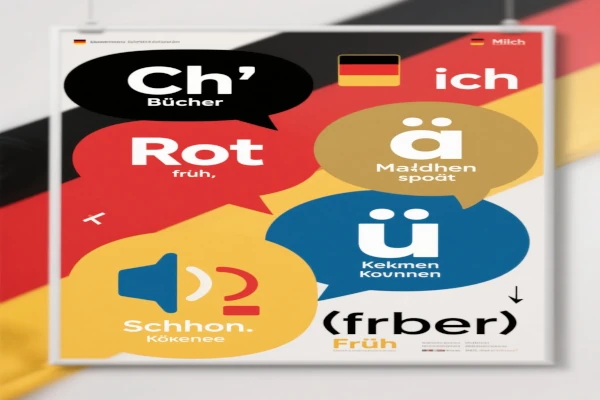
Sounds like “ch,” found in words like “ich”, “nicht”, “Bach”, and “Buch” with its hard and soft pronunciations, that many English speakers pronounce like a “sh” or “k” no matter how hard they try.
There’s the “r” that’s not sounded like the English “r” sound, found in words like “Bruder” and “rot.”
Of course, I can’t forget the ä, ö, ü, that sound completely different from English vowels.
Despite my fears, I decided to trust everything I had learned and speak the language, as not doing so wasn’t an option.
What You Stand to Lose When You Give in to Fear
Choosing to stay silent because you’re afraid to speak German doesn’t do you any good. Your panicking mind might convince you that it’s safer to avoid it, but you’ll be wasting a good learning opportunity.
Active practice — actually speaking, even imperfectly — builds retention far more effectively than passive study alone. The research on this is consistent: production strengthens memory in ways that reading and listening alone cannot. Why would you pass that up?
I didn’t. I put on my adult boots and started speaking German despite my fear. You should too, because the consequences are dire:
When you avoid conversations:
- Your comprehension suffers
- Your vocabulary fades quickly.
- You have little to no fluency.
In reverse, speaking German, even when you’re afraid, improves comprehension, reinforces grammar knowledge, improves memory and retention, and builds confidence over time.
If you’re wondering whether to wait until you feel more prepared before speaking, The “Speak From Day 1” Myth explains why waiting often makes the anxiety worse, not better.
How to Overcome Your Fears: What Helped Me
Your fears are valid, but they will only hold you back. These strategies can help you overcome your fears or give you confidence to speak German despite them.
- Start Small
You don’t need to delve into full-scale narrations or hold full conversations just yet. Start with short exchanges that you’re confident about. Use simple words and phrases that are easy to pronounce. A 5-minute micro conversation a day can build your confidence
- Choose Phrases over Full Sentences
Learn the most important phrases, and simplify them. Sentences are a mouthful, so they can be scary. Instead of full sentences, use phrases that hit the main points.
For instance:
- “Ich suche”… (I’m looking for…)
- “Ich hätte gern” (I’d like…)
- “Können Sie mir helfen?” (Can you help me?)
These phrases are easy to complete, and they come in handy in daily conversations and common situations.
- Accept Your Mistakes and Learn from them
Mistakes aren’t a sign of failure; they mean there’s room to learn more. When you make a mistake, note it, learn the correct word or pronunciation, and try again.
For every mistake you learn from, you’re one step closer to mastering the language.
- Increase Your Difficulty Level Gradually
It’s good to start small, but growth is an integral part of speaking German. So, once you’re comfortable with the smaller phrases, begin to take up more difficult sentences and conversations.
- Practice Listening Alongside Speaking
Great listening skills contribute to great speaking skills. Listen to podcasts, watch videos, and pay attention to how German natives speak.
The more you listen to the German language being spoken and gain familiarity with the sounds, structures, and speech patterns, the easier it is to replicate them when speaking.
- Practice With the Best Resources
Practice makes perfect, and supportive learning tools make your journey to perfection easier. Download apps that support German language learning, such as Jolii.ai or language exchange platforms like Speaky and HelloTalk.
These platforms help you to learn without real, practical support and without judgment.
Why You Need to Start Speaking Now
The sooner you start speaking, the faster your German speaking skills will improve. Fluency takes time, but the benefits of early language speaking should motivate you to start now.
Research on early speaking practice consistently links it to better pronunciation, more agile conversation skills, and stronger grammar retention compared to delaying speech until you “feel ready.”
Will you continue being afraid to speak German? Or will you face your fear now?
If you’re ready to start speaking German today, here’s a list of ways to get started:
- Re-enact everyday situations (pretend like you’re at the bus station, in a mall, or in a café with friends) and practice conversations that happen in these settings.
- Talk about things you find interesting (including your hobbies, favorite food, best color, or favorite pet).
- Narrate your day at the end of every day (talk to yourself, correct yourself, and learn by yourself every day).
- Learn with fun (play games like 20 questions, watch your favorite German movies, and shadow the actors or use flashcards with friends).
Key Takeaways
- It’s normal to be afraid to speak German.
- Rather than avoid speaking, start simple and small
- Embrace mistakes and learn from them.
- Fluency is achieved by speaking even when you’re imperfect
- Have fun while learning.
Get started today, overcome your fears, and speak German to your heart’s content.