First published: December 2024. Last updated: June 2026.
“I want to speak English fluently.” Do you? Let’s learn it with Netflix.
I have been trying to speak in English for ages, but I still can’t figure out why my spoken English has not improved. Such frustration can arise at times with any aspiring language learner.
You have already spent a lot of time and energy with the goal of speaking good English, yet things do not favor you.
Learning a language and speaking it are two different parts of language acquisition. Grammar rules, comprehension, and composition all help write, read, or understand the language. These do not aid in improving your speech.
For speaking good English, you need a different mindset. You need to talk in English if you want to speak fluently, and it’s as simple as that. How about binge-watching Netflix’s “The Crown” to improve that fluency? You can sharpen your dialogues with authentic accents and storytelling and pair it with the Jolii app, which helps you turn your watching into actionable practice. Ready to take your English to the next level?
How Can You Learn Spoken English With Netflix
Netflix has some promising ways to help aspiring learners learn any language. We have chosen 5 of the most effective ways to learn to speak English by watching Netflix.
5 Of The Best Ways To Improve English Speaking With Netflix
1: Listen To The Dialogues To Improve Listening Skills
On your first watch, focus on the dialogues and try not to read the subtitles. This will give you an initial idea of what is going on in the show and help train your listening skills.
2: Switch The Subtitles On and Read What You Hear
On your second watch, you can turn on the subtitles and read along while you are watching. We recommend keeping the subtitles in English, not in your native language, so you can fully immerse yourself in the English language. If you are having a hard time understanding the show, you can download Jolii so you can add subtitles in your native language. This will help you take a look at both subtitles while you are still engaging with the English dialogue.
3: Listen To Different Accents
Pay attention to the actors in the show. Do they speak with a British or American accent? Can you notice the difference? It’s important that you get exposure to both accents, as well as to other English accents in order to train your hearing and improve your listening skills.
4: Use ‘Shadowing’ Technique To Improve Pronunciation
Select sentences from the show and try repeating them out loud. If you import a scene into the Jolii App, you can receive instant feedback on your pronunciation skills and tips on how to improve, helping you perfect your English accent!
5: Keep Track Of Difficult Words: Note Down and Practice
Many people learn better with visuals, so if needed, you can write down difficult words that are key to understanding the scene. With Jolii, you can also practice that vocabulary and save it in the app, so you will get reminders to practice when needed. This way, you won’t forget your newly acquired words!!
Breaking Down Easy Ways To Speak English: Step-by-Step
It would be great if learning English were as simple as picking up the dictionary and learning words. But, unfortunately, language learning doesn’t quite work this way. Very often, learners memorize long vocabulary lists but don’t know how to put words together in order to form sentences and engage in conversations. Here is a step-by-step guide on how to learn to speak English for real.
Stage 1: Passive Learning
This stage is about absorbing the language to build a foundation before actually speaking it.
- Focus on phrases, not just words: Speaking English goes far beyond learning vocabulary. Whenever you learn a new word, learn it in the context of a sentence. For instance, don’t just learn the word “view” in isolation. Instead, explore how it’s used in sentences like:
We booked a room with a sea view.
- Don’t rush it: Just like a baby needs time to learn to speak, you need time to absorb a lot of content before being able to actually produce language. Immerse yourself in the language through reading, listening, and watching, and don’t worry if speaking doesn’t come naturally – not just yet.
- Learning phrases in context: Learning in context rather than isolation makes words and phrases stick far longer than vocabulary lists.
Stage 2: Active Learning
Once you have absorbed enough, it’s time to start producing the language.
- Start singing: Read the lyrics of your favorite songs, try to understand them, and practice singing them. In no time, you will learn the lyrics of your favorite songs by heart, naturally acquiring expressions that you can later use in real-life situations.
- Accept that you will make mistakes: Mistakes are part of learning. Your English won’t be perfect at first, but you need to accept that over time, you will learn by doing. Focus on communication rather than perfection: if the recipient understands your message, it means that you are already doing a great job!
- Watch and listen more: The key at this stage is volume — the more you produce, the faster the language becomes automatic.
Stage 3: Speak, speak, speak.
The final stage is about fully immersing you in the English language.
- Find a language partner or tutor: Do not rely on conversations with a mirror. Instead, find a real person who can speak with you in real life, whether it is a fellow learner or an English teacher. Trust us, it is much more rewarding!
- Immerse yourself in real situations: Use English in your daily life. You can find a community of expats in your city, use English at work, or practice while travelling. Every opportunity counts and brings you a step closer to proficiency!
Scene Analysis Of The Crown So You Can Speak Like A Queen
In the following scene, Queen Elizabeth and Philip discuss the disappearance of Mark Thatcher, the son of English Prime Minister Margaret Thatcher. In 1982, he got lost in the Sahara desert during the Paris-Dakar rally.
Watch the scene once before reading the analysis. Pay attention to the register — the Queen and Philip speak with extreme precision, using formal constructions and understatement that are characteristic of upper-class British English. That gap between what is said and what is meant is exactly what makes The Crown valuable for learning this variety of English.
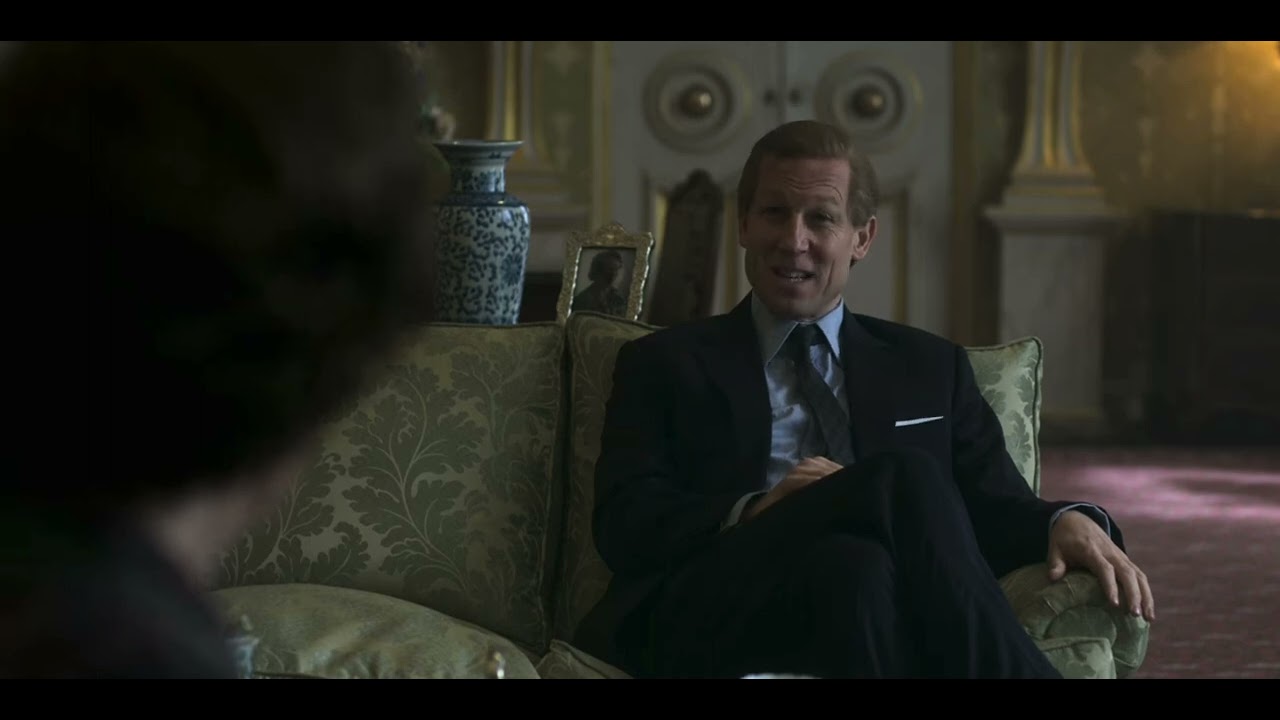
Here are three ways how you can improve your English from the scene:
- Full Immersion into English Culture and History: The Queen and her husband discuss a real historic event, making the series a perfect way to immerse yourself into English culture. It is a great opportunity to learn the language and the cultural context behind it.
- British Pronunciation: By listening to their dialogue, you can get exposure to the British accent. With Jolii, you can also practice pronunciation to improve your speaking skills
- Vocabulary in Use: Through Netflix, you can learn vocabulary in a real context. In the following table, we have selected a few expressions present in the dialogue and provided a few additional examples to help you learn them in context.
Now watch the video a second time and pay close attention to these expressions! And with Jolii you can import this scene or any scene you like and keep practicing. Practicing English with Jolii is fun and interactive, so you can learn how to speak like a Queen!
Other Netflix Shows for British and American English
We have learned how we can use Netflix to immerse ourselves in learning English. To improve your speaking abilities, you can keep watching Netflix for some other spoken English practice. Among the top picks, we have the best Netflix shows that can help beginners improve their spoken English.
Friends: the gold standard for conversational American English. The dialogue is natural, the pace is manageable, and the same phrases repeat across ten seasons — which means high-frequency vocabulary appears often enough to stick. Best for learning informal American expressions and conversational rhythm.
Stranger Things: 1980s American slang and cultural references alongside natural teen dialogue. Useful for learners who want exposure to informal American English beyond Friends-era vocabulary. The emotional scenes are particularly good for shadowing — characters speak clearly under pressure.
House of Cards: formal American political English with more complex sentence structures than the other two. Best for intermediate to advanced learners who want exposure to the register used in professional and political contexts. Vocabulary density is high.
Conclusion
The Crown works for English learning precisely because its register is so specific — upper-class British English, formal understatement, precise vocabulary. That specificity is a feature, not a limitation. Once you can follow a conversation between the Queen and Prince Philip, everyday conversational English feels significantly more accessible by comparison. The expressions in the table above — on balance, without equivocation, lack of self-knowledge — transfer directly into professional and formal English contexts. Jolii lets you import this scene or any Crown episode and practice the vocabulary with pronunciation feedback built in.
FAQs
Can I learn to speak English with The Crown?
The English used in ‘The Crown’ is a bit posh and can be considered as Upper Received Pronunciation (URP), the language of the upper class or aristocracy. One can definitely learn how to speak English with ‘The Crown’.
How can I learn royal English?
You can learn royal English by listening to the royal’s speech and imitating them. With the Jolii app, you can import any speech. You can listen to the recordings and can pause at any time to imitate.
What is the best way to learn British English?
Speak English like English does; this is the best way to learn British English. Watch the Netflix series ‘The Crown’ and practice it. Jolii can help you with the right pronunciation and accent Britishers use in the movie.
How accurate is The Crown’s portrayal of events?
The Crown is a dramatisation, not a documentary. Key historical events are broadly accurate, but conversations, motivations, and interpersonal dynamics are often fictionalised for dramatic effect. The Mark Thatcher Sahara incident depicted in the scene above is a real historical event — he did get lost during the 1982 Paris-Dakar rally — but the specific dialogue between the Queen and Prince Philip is invented.